

🤖 AI Summary
Overview
This episode explores President Trump’s decision to enforce a naval blockade at the Strait of Hormuz, aiming to disrupt Iran’s economy and regain control of the critical shipping channel. The discussion delves into the strategy, risks, and early outcomes of this high-stakes maneuver, as well as its broader implications for global energy markets and geopolitics.
Notable Quotes
- Imagine every time your E-Z Pass went through, it put 2 million bucks on your credit card.
– David E. Sanger, on Iran’s toll system in the Strait of Hormuz.
- This is ultimately a blockade by the US of a blockade by Iran, which makes it really messy.
– Michael Barbaro, summarizing the complexity of the situation.
- The entire world of energy and energy infrastructure could end up changing because of this war and to a degree because of this blockade.
– Rebecca F. Elliott, on the long-term impact of the conflict.
🌊 The Strategy Behind the Blockade
- David E. Sanger explains that the blockade was initiated after failed negotiations with Iran, which had begun charging tolls for passage through the Strait of Hormuz—a critical shipping channel for global oil.
- The U.S. Navy aims to reverse Iran’s control of the strait, leveraging its military presence to deter Iranian oil shipments and pressure Iran back to the negotiating table.
- Eric Schmitt highlights that a naval blockade is inherently an act of war, involving the threat or use of force to prevent ships from transiting.
⚠️ Risks and Blowback
- Eric Schmitt identifies the risk of Iranian retaliation, including attacks on U.S. Navy ships, which could escalate the conflict.
- David E. Sanger points to potential tensions with China, as much of Iran’s oil is shipped on Chinese vessels. This could complicate U.S.-China relations ahead of planned diplomatic talks.
- Rebecca F. Elliott warns of long-term damage to energy infrastructure in the Persian Gulf, which could disrupt global oil supply for years.
🚢 Early Outcomes of the Blockade
- Eric Schmitt reports that the blockade has successfully deterred Iranian oil shipments, with several vessels turning back after U.S. Navy intervention.
- However, David E. Sanger notes that while Iranian oil exports are halted, the blockade’s broader impact on global commerce remains uncertain, particularly for neighboring Gulf states.
🌍 Long-Term Implications for Energy and Geopolitics
- Rebecca F. Elliott outlines three potential shifts in global energy strategy: alternative shipping routes, increased demand for oil from non-Gulf sources, and accelerated adoption of renewable energy.
- David E. Sanger discusses proposals for international management of the Strait, though such cooperation may be challenging given current U.S. foreign policy.
- The blockade could reshape energy markets and infrastructure, with ripple effects lasting well beyond the conflict itself.
🛑 Sustainability of the Blockade
- Eric Schmitt emphasizes the strain on U.S. military resources, as maintaining the blockade diverts assets from other global priorities, including countering China and supporting Ukraine.
- David E. Sanger notes that both the U.S. and Iran are testing each other’s ability to endure economic pain, with domestic political consequences for President Trump if gas prices remain high.
AI-generated content may not be accurate or complete and should not be relied upon as a sole source of truth.
📋 Episode Description
Over a month into a war with Iran that has no clear end, President Trump has enforced a blockade, which went into effect on Monday at the Strait of Hormuz.
The New York Times reporters David E. Sanger, Rebecca F. Elliott and Eric Schmitt discuss the strategy behind the blockade, the dangers that it poses and whether or not it’s actually working.
Guest:
- David E. Sanger, a White House and national security correspondent for The New York Times.
- Rebecca F. Elliott covers energy for The New York Times.
- Eric Schmitt, a national security correspondent for The New York Times.
Background reading:
- Mr. Trump is setting up a test of which side can endure more economic pain with his blockade of the Strait of Hormuz.
- His oil blockade could provoke retaliation that inflicts more damage on energy assets and the global economy.
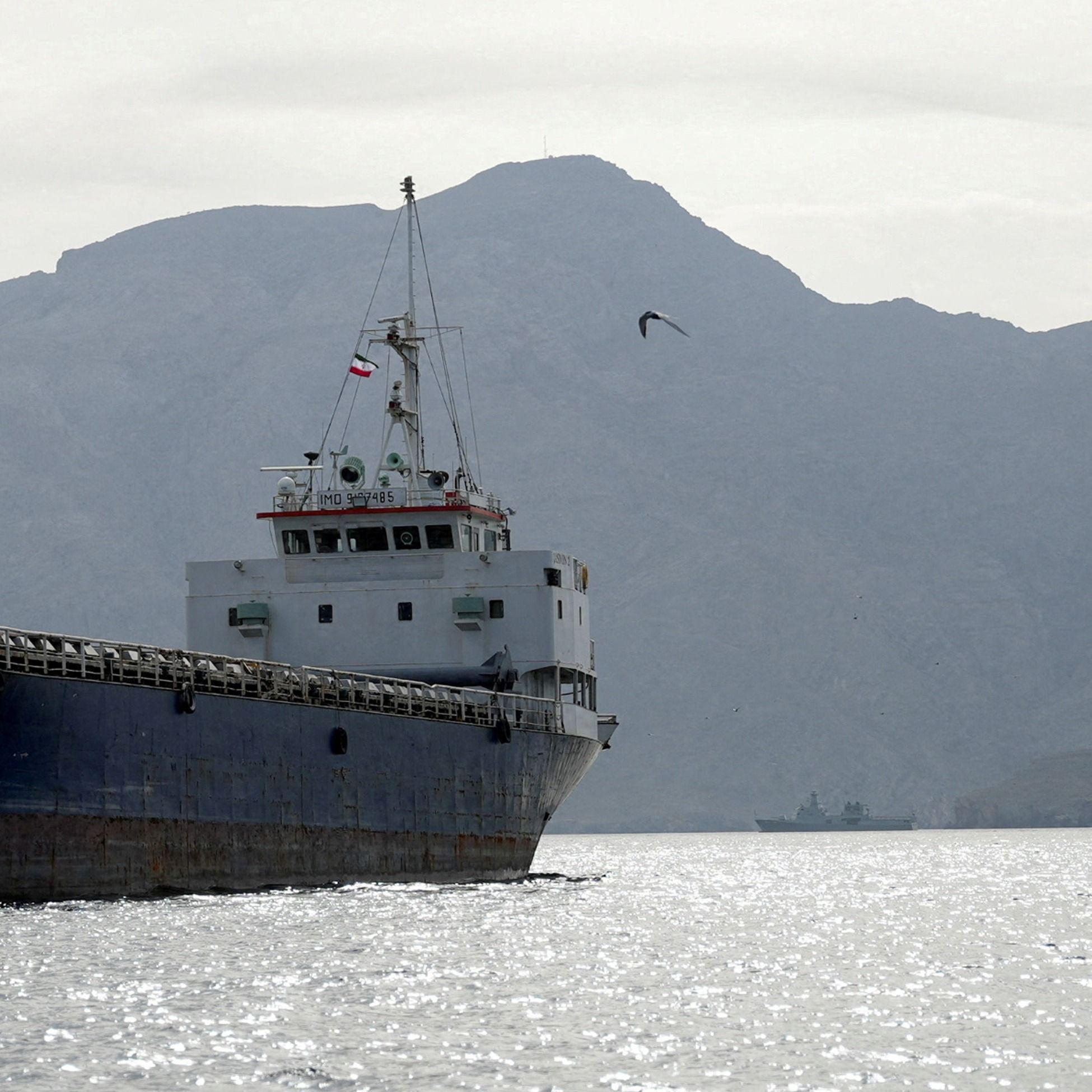
Photo: Reuters
For more information on today’s episode, visit nytimes.com/thedaily. Transcripts of each episode will be made available by the next workday.
Subscribe today at nytimes.com/podcasts or on Apple Podcasts and Spotify. You can also subscribe via your favorite podcast app here https://www.nytimes.com/activate-access/audio?source=podcatcher. For more podcasts and narrated articles, download The New York Times app at nytimes.com/app.
Hosted by Simplecast, an AdsWizz company. See pcm.adswizz.com for information about our collection and use of personal data for advertising.