

🤖 AI Summary
Overview
This episode explores the complex and uncertain impact of artificial intelligence (AI) on the economy and labor market. Ben Casselman, chief economics correspondent for The New York Times, discusses why AI's effects are difficult to measure, compares it to past technological disruptions, and examines potential policy and individual responses to this transformative technology.
Notable Quotes
- If this plays out gradually, it could be good for the economy as a whole. But if it looks more like the China shock, with whole categories of jobs wiped out overnight, the disruption could be devastating.
— Ben Casselman, on the potential trajectories of AI's economic impact.
- Companies are being rewarded by investors for making big claims about AI. If you're a CEO, it's easier to say, 'AI made me more efficient,' than to admit, 'I overhired and need to make cuts.'
— Ben Casselman, on AI as a convenient corporate narrative.
- We don't know what to tell people to major in or whether to go to college. The calculations are changing in ways we don't fully understand.
— Ben Casselman, on the uncertainty AI creates for career planning.
🤖 The Dual Nature of AI: Productivity vs. Job Loss
- Many workers feel conflicted about AI, seeing it as both a tool for increased productivity and a threat to their livelihoods.
- Ben Casselman notes that while AI is being rapidly adopted, its immediate economic effects remain subtle, with no clear evidence of mass job loss yet.
- The J curve
concept explains how new technologies initially disrupt productivity before leading to long-term gains. AI may currently be in the scoop
phase of this curve.
📊 Challenges in Measuring AI's Economic Impact
- Government data systems are outdated and unable to track AI's effects in real time. For example, tech jobs are scattered across multiple categories in labor reports.
- Private sector data from companies like LinkedIn and ADP offers insights but often presents conflicting narratives—some reports show job losses in AI-exposed fields, while others suggest AI adoption leads to job growth.
- Companies may exaggerate AI's role in layoffs to appeal to investors, making it harder to discern AI's true impact.
📜 Lessons from Past Disruptions: The Internet vs. The China Shock
- The 1990s internet revolution caused gradual job shifts, allowing workers time to adapt and pivot to new opportunities.
- In contrast, the China shock
of the 2000s led to rapid, concentrated job losses in industries like manufacturing, devastating entire communities.
- The speed of AI's rollout will determine whether it mirrors the gradual adaptation of the internet era or the abrupt disruption of the China shock.
🏛️ Policy and Individual Responses to AI
- Policymakers are beginning to discuss measures like improving unemployment systems, creating better data tracking tools, and exploring ideas like universal basic income or sovereign wealth funds. However, no comprehensive plans are in place yet.
- For individuals, the lack of clarity about AI's future impact makes it difficult to plan careers or advise younger generations. Casselman emphasizes the need to embrace the uncertainty
for now.
🌍 Broader Implications of AI Disruption
- Rapid AI-driven job losses could lead to social and political consequences, similar to those seen during the China shock, such as increased addiction rates and grievance-filled politics in affected communities.
- The episode underscores the importance of learning from history to mitigate potential economic and societal fallout from AI's rapid adoption.
AI-generated content may not be accurate or complete and should not be relied upon as a sole source of truth.
📋 Episode Description
As artificial intelligence becomes more advanced, people are getting more nervous about how it could change the economy and their jobs.
Ben Casselman, the chief economics correspondent for The New York Times, explains why A.I.’s impact is so hard to pin down and what we can learn from the tech disruptions of the past.
Guest: Ben Casselman, the chief economics correspondent for The New York Times.
Background reading:
- Ben Casselman, the chief economics correspondent for The New York Times.
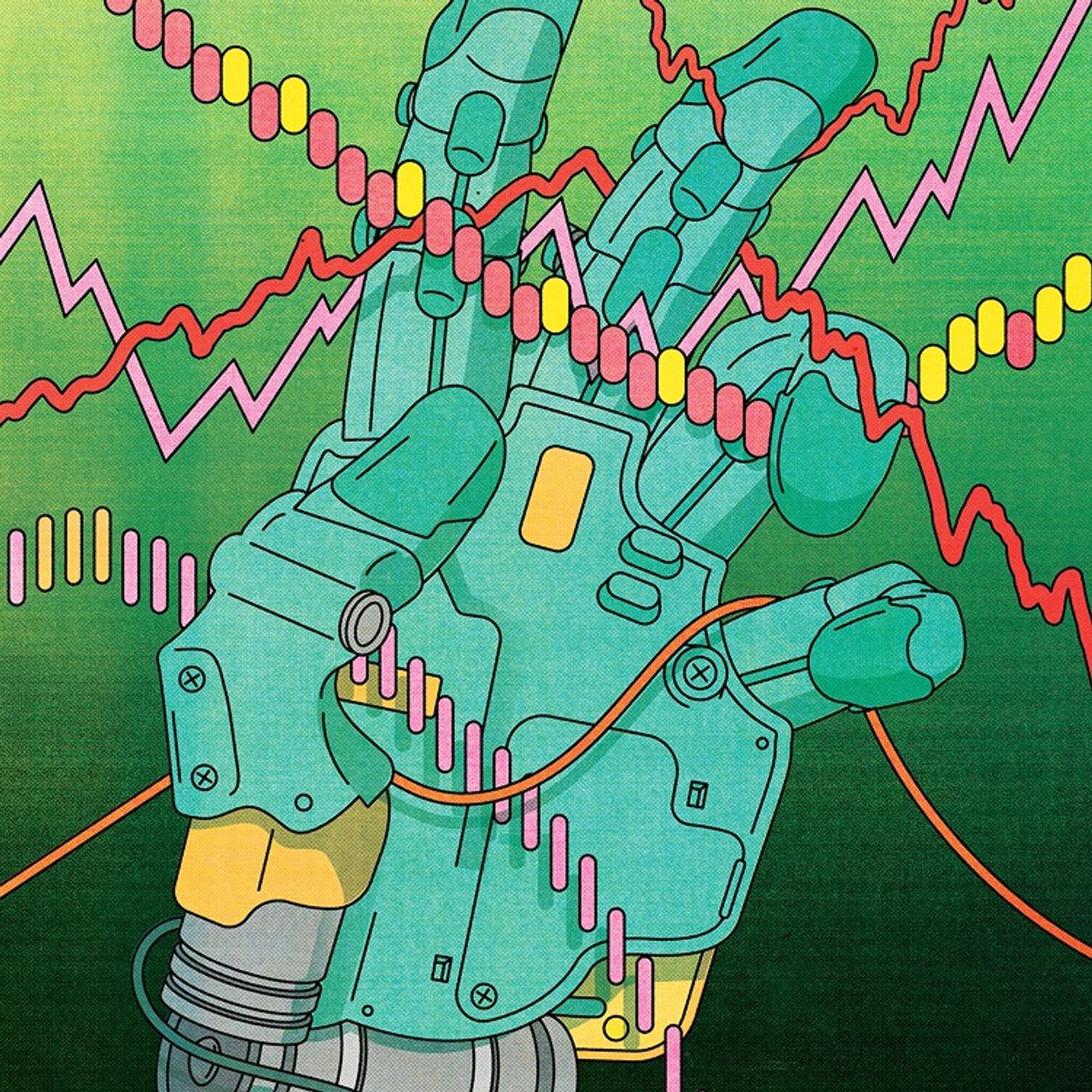
Photo: George Wylesol
For more information on today’s episode, visit nytimes.com/thedaily. Transcripts of each episode will be made available by the next workday.
Subscribe today at nytimes.com/podcasts or on Apple Podcasts and Spotify. You can also subscribe via your favorite podcast app here https://www.nytimes.com/activate-access/audio?source=podcatcher. For more podcasts and narrated articles, download The New York Times app at nytimes.com/app.
Hosted by Simplecast, an AdsWizz company. See pcm.adswizz.com for information about our collection and use of personal data for advertising.