

🤖 AI Summary
Overview
This episode examines the ongoing war in Iran, focusing on the military strategies of the United States and Israel, Iran's asymmetric counterattacks, and the political and economic challenges facing President Trump as he navigates the conflict. Despite significant blows to Iran's military and leadership, the regime remains resilient, leveraging economic warfare and decentralized tactics to maintain its influence.
Notable Quotes
- We are seeing the most powerful and sophisticated military in the world being stymied by this totally decentralized strategy carried out by a seriously weakened country.
– Eric Schmitt, on Iran's asymmetric warfare.
- The options are not good. They basically range from bad to really bad to worse for the president right now.
– Eric Schmitt, on the difficult choices facing President Trump.
- Iran's ability to exercise complete control over this hugely important waterway is wild.
– Natalie Kitroeff, on the Strait of Hormuz crisis.
🛡️ Military Campaigns and Leadership Strikes
- The U.S. military has struck over 7,800 targets in Iran, including missile launchers, drone storage areas, and naval vessels.
- Israel has focused on eliminating key Iranian leaders, including Ali Larejani (security chief) and Gomareza Soleimani (head of the Basij militia).
- Despite these losses, Iran's decentralized mosaic defense
system allows regional commanders to continue operations independently.
⚔️ Iran's Asymmetric Warfare
- Iran has shifted to guerrilla-style tactics, using mines, speedboats, and missiles to disrupt shipping in the Strait of Hormuz.
- Nearly 20 tankers have been attacked, causing global economic shockwaves.
- Iran's ability to hold up international commerce with minimal resources highlights the effectiveness of its strategy despite military setbacks.
🌍 Economic and Political Fallout
- The Strait of Hormuz blockade has severely impacted global trade, with shipping companies hesitant to risk passage.
- President Trump has struggled to rally international allies for support, facing criticism for not consulting them before the war.
- The administration underestimated Iran's rapid escalation of economic warfare, leaving the U.S. playing catch-up.
🔀 Strategic Options for the U.S.
- Potential strategies include tanker escorts through the Strait of Hormuz, seizing Iran's Karj Island (its main oil hub), or targeting Iran's nuclear facilities.
- Each option carries significant risks, including potential escalation, economic fallout, and high casualties.
- A diplomatic off-ramp or declaring victory prematurely are also being considered, though neither guarantees an end to Iran's retaliatory actions.
🧩 The Challenge of Regime Change
- Despite initial goals of regime change, analysts believe this is unlikely. Iran's leadership remains hardened, and popular uprisings have not materialized.
- The conflict has instead strengthened hardliners within the regime, complicating prospects for negotiation or long-term stability.
AI-generated content may not be accurate or complete and should not be relied upon as a sole source of truth.
📋 Episode Description
Nearly three weeks into the war in Iran, the United States and Israel have largely decimated the regime’s missile capacity, taken out key leaders and disrupted its central command.
Yet, the regime in Iran has become more hardened and is wreaking more havoc than ever.
Eric Schmitt, a national security correspondent for The New York Times, discusses the state of the war and President Trump’s options for getting out of the conflict.
Guest: Eric Schmitt, a national security correspondent for The New York Times based in Washington.
Background reading:
- Entering the war’s third week, Mr. Trump is facing stark choices.
- Video: Where Iran is hitting back.
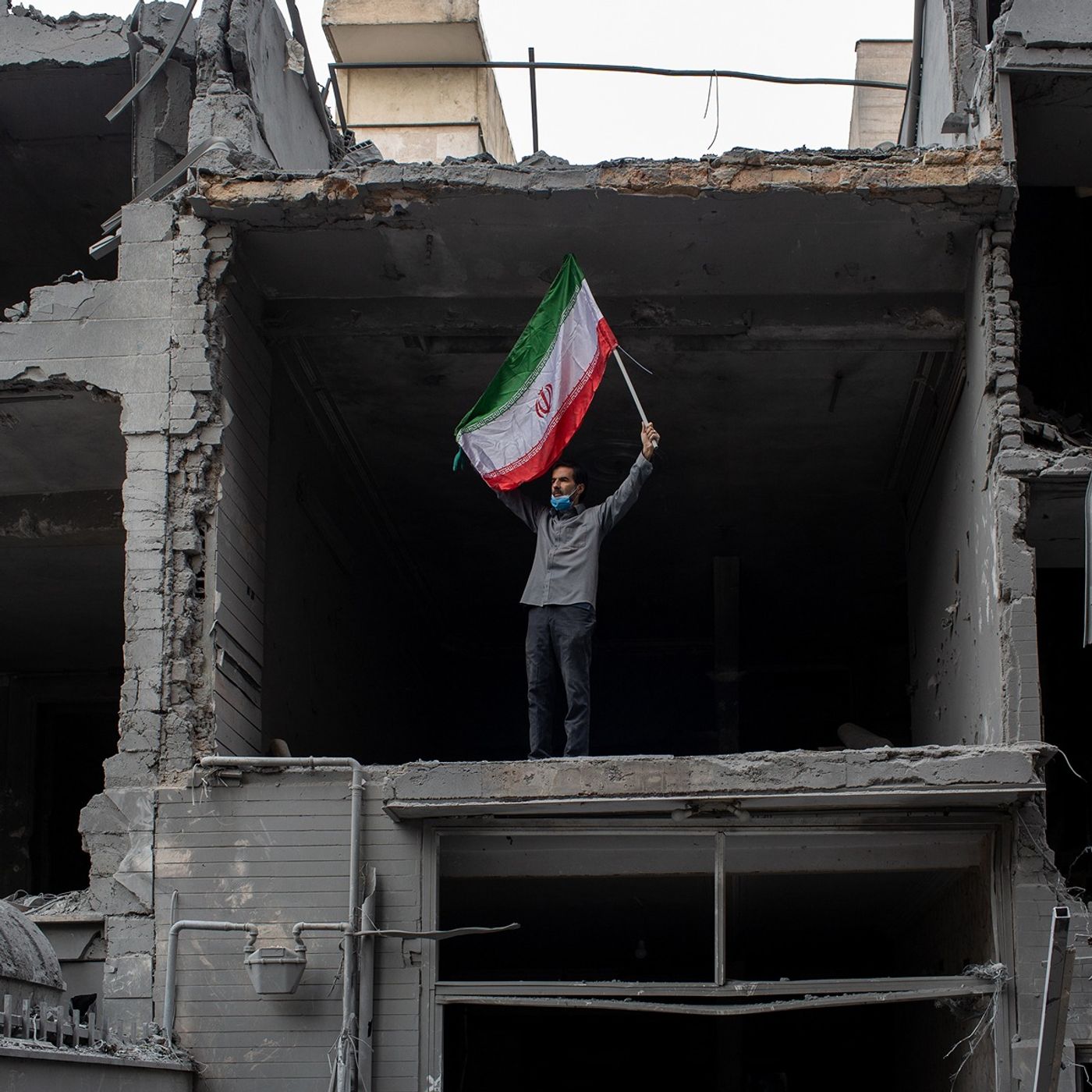
Photo: Arash Khamooshi for The New York Times
For more information on today’s episode, visit nytimes.com/thedaily. Transcripts of each episode will be made available by the next workday.
Subscribe today at nytimes.com/podcasts or on Apple Podcasts and Spotify. You can also subscribe via your favorite podcast app here https://www.nytimes.com/activate-access/audio?source=podcatcher. For more podcasts and narrated articles, download The New York Times app at nytimes.com/app.
Hosted by Simplecast, an AdsWizz company. See pcm.adswizz.com for information about our collection and use of personal data for advertising.