

🤖 AI Summary
Overview
The episode delves into the Trump administration's controversial demolition of the East Wing of the White House to construct a grand presidential ballroom. It explores the historical, ethical, and financial implications of the project, as well as the polarized reactions it has sparked.
Notable Quotes
- The symbol of literally the East Wing being torn down, like rubble, demolition, debris, is, to many Americans on the left, the perfect metaphor for the Trump presidency.
– Luke Broadwater, on the symbolic weight of the demolition.
- He's trying to make the White House as much like Mar-a-Lago as possible.
– Luke Broadwater, on Trump's aesthetic vision for the White House.
- If the East Wing's a bunch of rubble and there's the Trump ballroom standing in its place, that's a permanent reminder of what it was like in Trump's America.
– Luke Broadwater, on the lasting legacy of the project.
🏛️ The Demolition of the East Wing
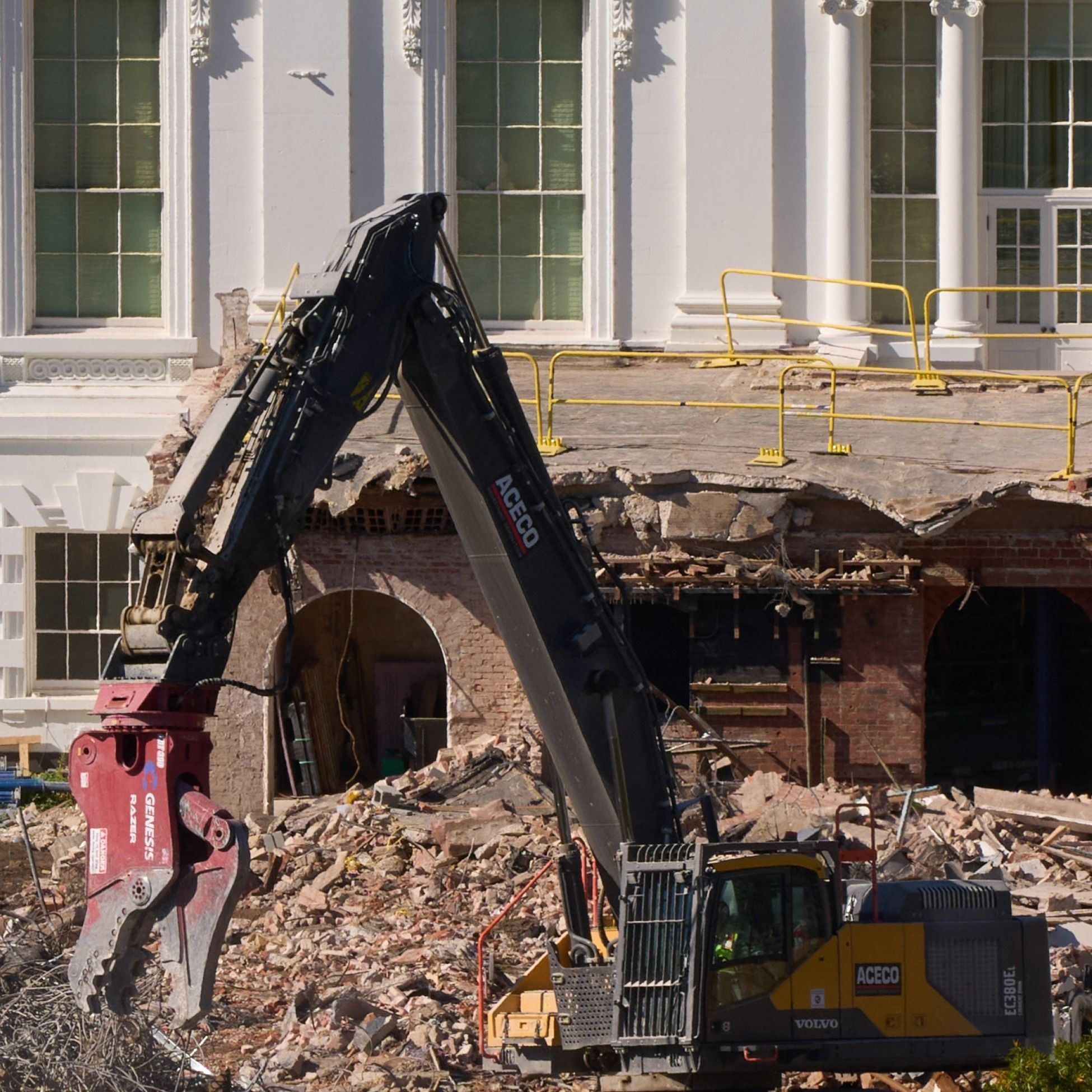
- The East Wing, traditionally home to the First Lady's offices and social functions, was demolished without public notice, sparking outrage among historians and Democrats.
- Critics, including Elizabeth Warren, labeled the demolition illegal, though the White House is exempt from the National Historic Preservation Act.
- The project reflects Trump's desire to leave a bold, permanent mark on the White House, with the ballroom set to quadruple the capacity of the East Room.
🎭 Trump's Vision and Aesthetic
- Trump envisions the White House as a reflection of his personal style, incorporating elements reminiscent of Mar-a-Lago, including gold accents and grandeur.
- The ballroom, twice the size of the White House residence, is designed to host up to 1,000 guests, aligning with Trump's preference for large-scale events.
- Critics argue that the aesthetic is garish and unrepresentative of American values, while supporters see it as ambitious and fitting for Trump's legacy.
💰 Funding and Ethical Concerns
- The $300 million project is funded entirely by private donors, including major corporations like Amazon, Apple, and Lockheed Martin, raising concerns about conflicts of interest.
- Donations were solicited through campaign infrastructure, with funds funneled through a tax-exempt entity, limiting transparency.
- While some applaud the avoidance of taxpayer funding, others worry about the implications of corporate influence on the presidency.
📜 Historical Context and Legacy
- Past White House renovations, such as those under Truman, were publicly debated and funded through Congress, contrasting with the secrecy of this project.
- The ballroom's legacy remains uncertain—future generations may view it as either a symbol of excess or a celebrated addition to the White House.
- The demolition underscores broader concerns about the permanence of Trump's changes to American institutions and their alignment with his vision.
⚖️ Polarized Reactions
- Democrats see the demolition as emblematic of Trump's disregard for history and governance, while Republicans praise his initiative and private fundraising.
- The project has become a political Rorschach test, with reactions reflecting broader opinions on Trump's presidency and leadership style.
- The ballroom serves as a physical and symbolic representation of the Trump era, sparking debates about its impact on the White House's identity.
AI-generated content may not be accurate or complete and should not be relied upon as a sole source of truth.
📋 Episode Description
The Trump administration completed its demolition of the East Wing of the White House on Thursday to make way for a new presidential ballroom.
Luke Broadwater, who covers the White House, explains who is paying for President Trump’s latest construction project and why the demolition is striking a nerve.
Guest: Luke Broadwater, who covers the White House for The New York Times.
Background reading:
- After 123 years, the East Wing is gone.
- See the White House as it stood and what Mr. Trump envisions.
Photo: Jacquelyn Martin/Associated Press
For more information on today’s episode, visit nytimes.com/thedaily. Transcripts of each episode will be made available by the next workday.
Subscribe today at nytimes.com/podcasts or on Apple Podcasts and Spotify. You can also subscribe via your favorite podcast app here https://www.nytimes.com/activate-access/audio?source=podcatcher. For more podcasts and narrated articles, download The New York Times app at nytimes.com/app.