

🤖 AI Summary
Overview
This episode examines the assassination of conservative activist Charlie Kirk, the ongoing manhunt for his killer, and the broader political implications of the event. Investigative reporter Nicholas Bogel-Burroughs discusses the challenges law enforcement faces in identifying the suspect, while Alan Feuer explores the polarized reactions and their potential impact on political discourse and violence in the U.S.
Notable Quotes
- When something this high profile happens, you certainly expect that the person who carried it out is going to be taken into custody very quickly.
— Nicholas Bogel-Burroughs, on the unusual nature of the manhunt.
- The more we permit ourselves to engage in this kind of violent rhetoric, the more we invite violence itself.
— Alan Feuer, on the dangers of incendiary political language.
- This is not identifying a single suspect... This is a wholesale demonization of one's political adversaries.
— Alan Feuer, on the rhetoric following Kirk's assassination.
🕵️♂️ The Chaotic Manhunt
- Police have struggled to identify the shooter, despite surveillance footage showing the suspect’s movements before and after the attack.
- Two individuals were mistakenly detained and later released, leading to public backlash and reputational harm.
- The shooter used a high-powered bolt-action rifle from a rooftop, fled through a wooded area, and left the weapon behind.
- Law enforcement has released grainy surveillance images, seeking public assistance in identifying the suspect.
🎯 Security and Planning Gaps
- The event, held on a college campus with 3,000 attendees, had minimal security: six officers and Kirk’s personal team.
- Unlike high-profile political figures, Kirk’s events lacked the extensive security measures seen at presidential rallies.
- The attack’s execution—a single shot from a concealed position—exploited these vulnerabilities.
💥 Political Reactions and Polarization
- Prominent Democrats, including Barack Obama and Gavin Newsom, swiftly condemned the assassination, emphasizing the need to avoid speculation about motives.
- On the right, reactions ranged from grief to accusations that the radical left
was responsible, despite no evidence of motive.
- Donald Trump and other conservative leaders framed the attack as part of a broader ideological war, further inflaming tensions.
🔥 The Role of Rhetoric in Political Violence
- Experts warn that incendiary rhetoric lowers societal inhibitions against violence, creating an environment where such acts are more likely.
- The right’s response blurred the lines between fringe and mainstream rhetoric, with figures like Stephen Miller labeling the Democratic Party a domestic extremist organization.
- The left, while condemning the violence, faced criticism for fringe voices celebrating Kirk’s death online.
🚨 Implications for Democracy
- The assassination has intensified fears of escalating political violence in the U.S.
- The collapse of boundaries between fringe and establishment rhetoric on the right contrasts with a clearer divide on the left.
- The episode underscores the urgent need to address the cycle of blame and incendiary language to prevent further violence.
AI-generated content may not be accurate or complete and should not be relied upon as a sole source of truth.
📋 Episode Description
We look at the hunt for the killer of the right-wing activist Charlie Kirk and at the political fallout of his assassination.
Nicholas Bogel-Borroughs, an investigative reporter at The New York Times, discusses why the police are struggling to answer basic questions about the shooter. And Alan Feuer, who covers extremism and political violence, discusses how the assassination might become a turning point for the conservative movement.
Guest:
- Nicholas Bogel-Burroughs, an investigative reporter at The New York Times.
- Alan Feuer, a reporter covering extremism and political violence for The New York Times.
Background reading:
- The chaotic hunt for Mr. Kirk’s killer.
- The assassination has raised fears of surging political violence.
For more information on today’s episode, visit nytimes.com/thedaily. Transcripts of each episode will be made available by the next workday.
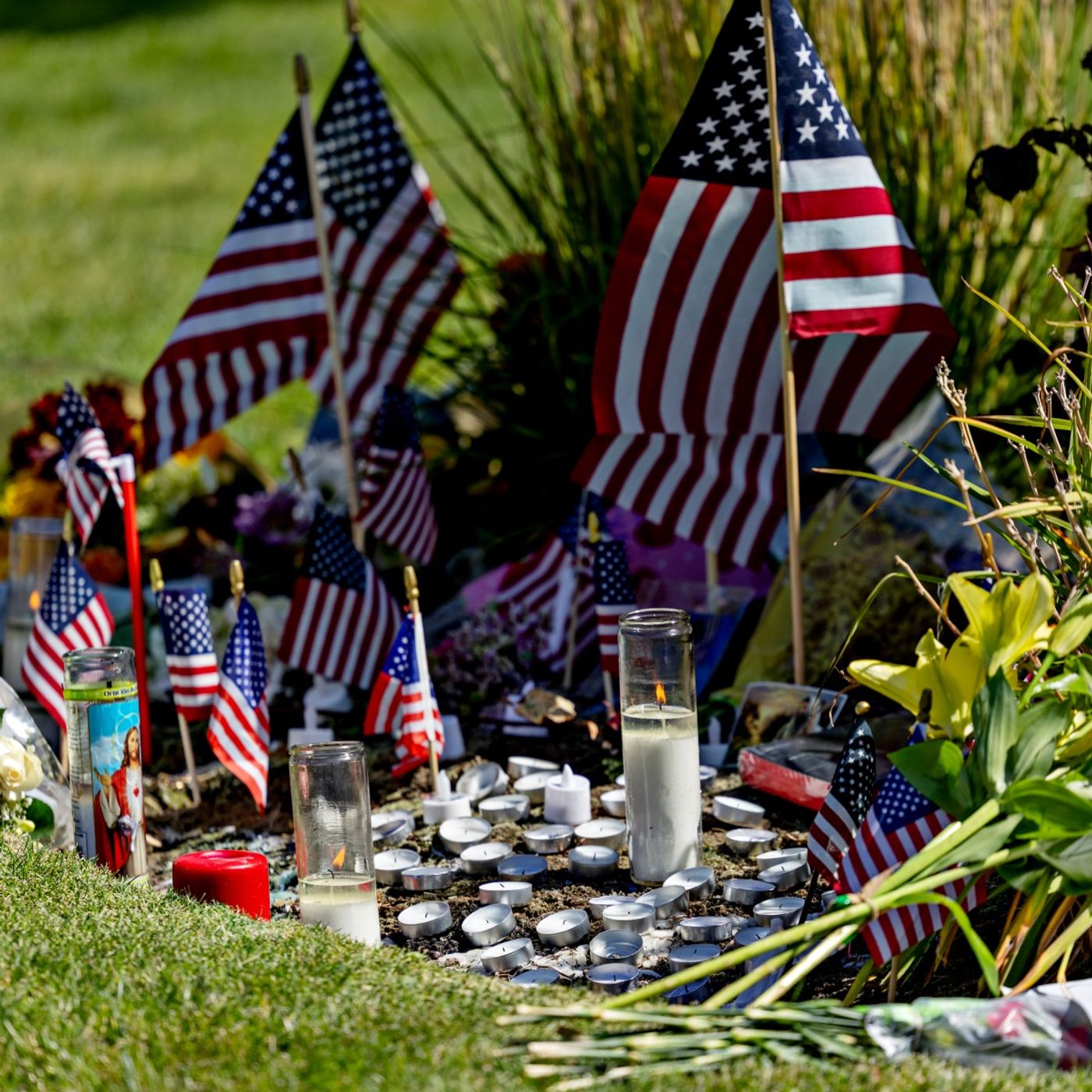
Photo: Kim Raff for The New York Times
Unlock full access to New York Times podcasts and explore everything from politics to pop culture. Subscribe today at nytimes.com/podcasts or on Apple Podcasts and Spotify.