

🤖 AI Summary
Overview
This episode explores the tension between two of President Trump's policy goals: addressing the U.S. housing shortage through a landmark housing bill and cracking down on immigration. It examines how the U.S. housing industry became reliant on immigrant labor, the historical shifts that led to this dependency, and the challenges posed by current immigration policies.
Notable Quotes
- You could end up with a situation where there’s all sorts of builders ready to go, and they don’t have the workers to do the work.
– Ronda Kaysen, on the labor shortage exacerbated by immigration crackdowns.
- I turned around on the roof, and I happened to be the oldest guy and the whitest guy on the roof. I wondered, what happened to all the white guys?
– Matt Moore, reflecting on the demographic shift in the construction workforce.
- If you remove the immigrants from the equation, the Americans will fill the void. But there’s actually evidence that it’s not happening.
– Ronda Kaysen, on the flawed assumption behind deportation policies.
🏗️ The Housing Crisis and Labor Shortages
- The U.S. housing industry faces a shortage of 300,000 workers, a problem compounded by President Trump’s immigration crackdown.
- Construction is the most immigrant-reliant industry in the U.S., with foreign-born workers making up significant portions of the workforce, especially in trades like roofing and drywall.
- The housing bill aims to encourage new construction but does not address the labor force challenges, leaving a critical gap in its implementation.
📜 The Historical Shift in Construction Labor
- In the 1970s, construction jobs were predominantly held by American-born, unionized workers who earned high wages and benefits.
- The decline of unions in the 1980s, driven by corporate lobbying and policy changes, opened the door for non-union labor.
- Simultaneously, waves of immigrants, many undocumented, entered the construction industry, filling roles that became less appealing to American-born workers due to declining wages and benefits.
🌍 Immigration and the Changing Workforce
- Immigrants, like Mariano Martinez, entered construction as non-union jobs proliferated, often earning more than they had in their home countries but without benefits or job security.
- By the 2000s, immigrants made up a significant majority in certain trades, with some sectors like roofing and drywall seeing up to 90% foreign-born workers.
- The lack of union apprenticeship programs further eroded pathways for American-born workers to enter the industry.
📉 The Impact of the Housing Boom and Bust
- The early 2000s housing boom, driven by subprime mortgages, led to a surge in non-union, immigrant labor in Sunbelt states with weak union protections.
- The subsequent housing crash in 2008 devastated the construction industry, leading to mass layoffs and the retirement of many American-born workers.
- The industry has struggled to recover, with fewer young American workers entering the field and a continued reliance on immigrant labor.
🚪 Policy Tensions and Potential Solutions
- The Trump administration’s deportation policies have disrupted construction projects, as deportations of immigrant workers delay timelines and reduce productivity.
- Research shows that deportations not only reduce immigrant employment but also negatively impact American-born workers, as projects stall without key labor.
- Potential solutions include revising deportation policies, creating robust training programs for American workers, and offering competitive wages and benefits to attract a domestic workforce.
- The housing bill’s focus on factory-built housing could reduce labor needs but may further marginalize construction workers.
AI-generated content may not be accurate or complete and should not be relied upon as a sole source of truth.
📋 Episode Description
To address the United States’ acute housing shortage, Congress recently passed a landmark piece of legislation designed to encourage the construction of new homes.
The problem is that President Trump’s crackdown on immigration has taken aim at the work force required to build those homes.
Ronda Kaysen, who covers housing for The New York Times, explains how the U.S. housing industry became so dependent on immigrant labor.
Guest: Ronda Kaysen, a real estate reporter for The New York Times who covers the intersection of housing and society.
Background reading:
- Where did all the American-born roofers go?
- Here’s what is in the housing bill that just became law.
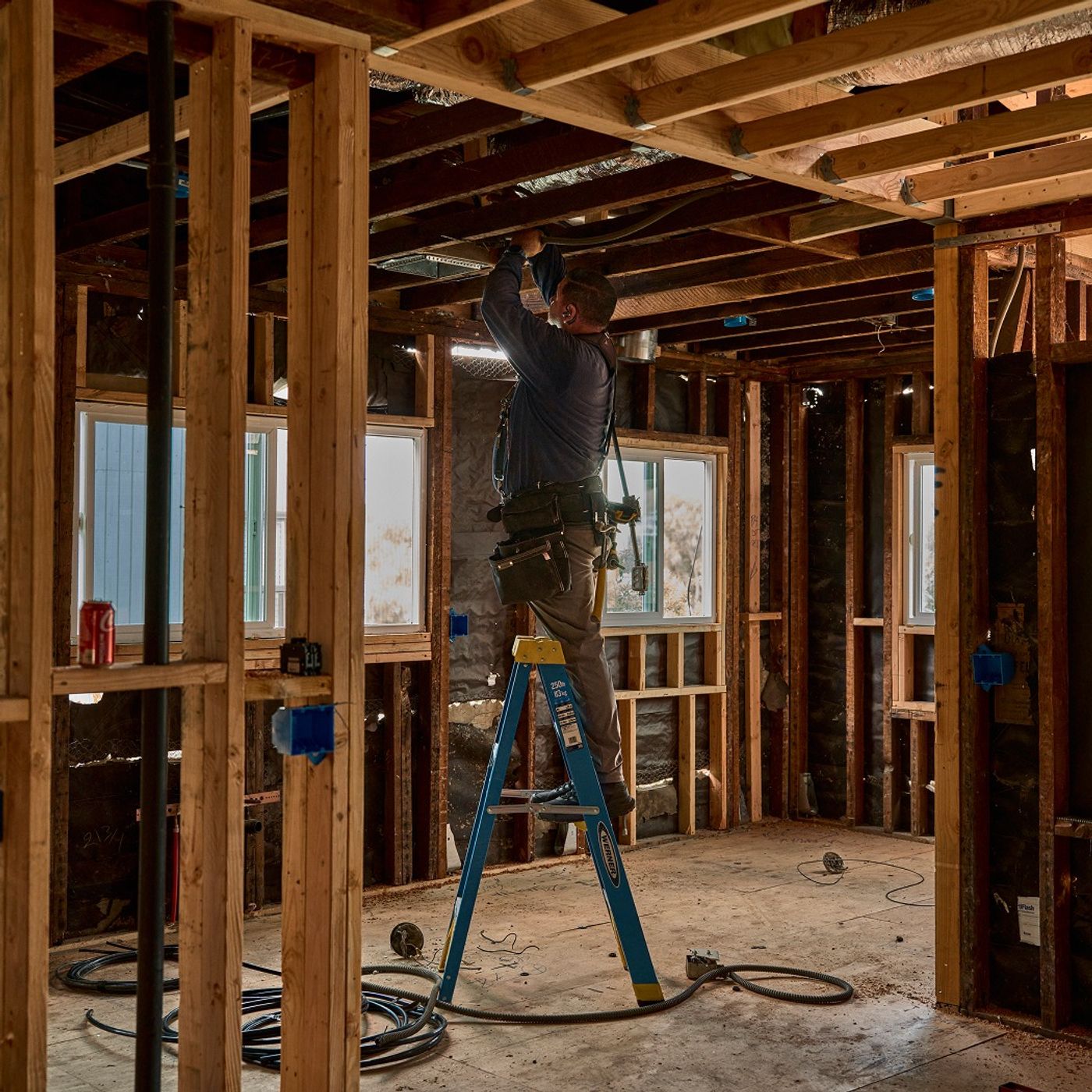
Photo: Philip Cheung for The New York Times
For more information on today’s episode, visit nytimes.com/thedaily. Transcripts of each episode will be made available by the next workday.
Subscribe today at nytimes.com/podcasts or on Apple Podcasts and Spotify. You can also subscribe via your favorite podcast app here https://www.nytimes.com/activate-access/audio?source=podcatcher. For more podcasts and narrated articles, download The New York Times app at nytimes.com/app.
Hosted by Simplecast, an AdsWizz company. See pcm.adswizz.com for information about our collection and use of personal data for advertising.