
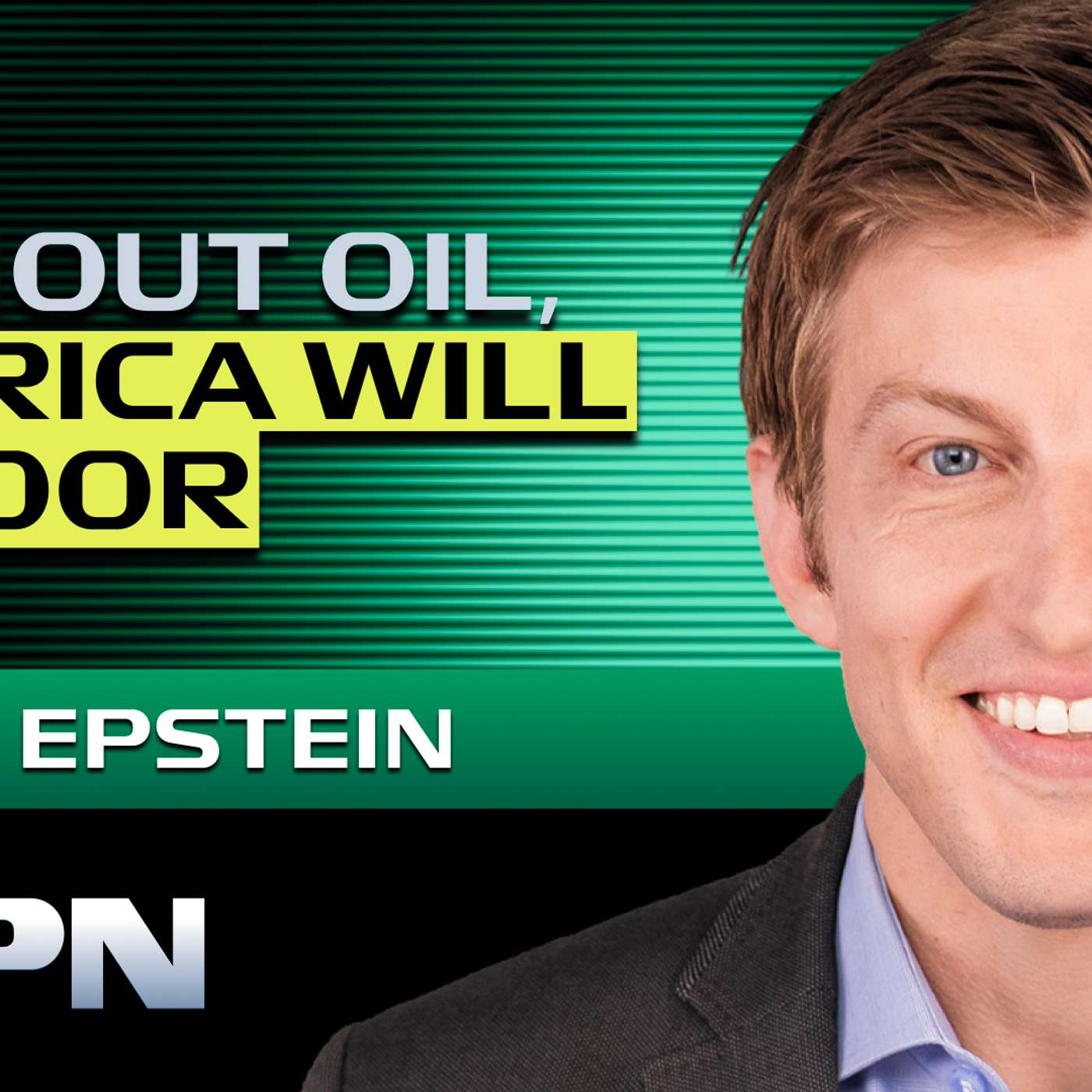
FULL INTERVIEW: Alex Epstein on The Oil Market’s Biggest Geopolitical Threat

🤖 AI Summary
Overview
This episode dives into the geopolitical and economic implications of the Iran conflict, focusing on the critical role of the Strait of Hormuz in global oil markets. Alex Epstein, author of Fossil Future, discusses the vulnerabilities of oil supply chains, the strategic importance of energy policies, and potential solutions to mitigate the crisis.
Notable Quotes
- If you do not get that thing open, then you have dramatically higher oil prices. And oil prices really matter.
– Alex Epstein, on the critical importance of the Strait of Hormuz.
- Canada has no people and infinite resources and is really friendly. Why are we sleeping on this opportunity?
– Alex Epstein, advocating for deeper energy collaboration with Canada.
- Oil is the most valuable material in the world of energy because of its high energy density and portability. There’s nothing like it.
– Alex Epstein, on oil's irreplaceable role in the global economy.
🌍 The Geopolitical Importance of the Strait of Hormuz
- The Strait of Hormuz accounts for 20% of global oil flow, making it a critical chokepoint.
- Iran's control over the strait gives it significant leverage, with threats like mines, missiles, and drones posing risks to oil tankers.
- Epstein emphasizes that reopening the strait is the only viable solution to stabilize oil prices, suggesting military-led convoys and international alliances as potential strategies.
- Collaboration with countries like Japan, South Korea, and possibly China could bolster security in the region.
🛢️ Strategic Petroleum Reserves and Emergency Measures
- The U.S. Strategic Petroleum Reserve (SPR) is underutilized, with current reserves at 400 million barrels, far below its 700-million-barrel capacity.
- Epstein criticizes the Biden administration for depleting the SPR for political purposes rather than refilling it during low-price periods.
- International reserves, such as those managed by the International Energy Agency (IEA), could provide additional emergency capacity, but global coordination is lacking.
- Temporary measures like increasing Saudi spare capacity and leveraging emergency reserves could provide short-term relief but are not sustainable long-term solutions.
🇨🇦 Unlocking Canada’s Energy Potential
- Canada’s vast oil sands represent a significant untapped resource, with reserves far exceeding U.S. levels.
- Epstein highlights the missed opportunity of the canceled Keystone XL pipeline and advocates for increased rail and truck transport to boost oil imports from Canada.
- He argues that deeper U.S.-Canada energy collaboration could provide a stable and friendly alternative to volatile regions like Venezuela.
📜 Policy Reforms: Jones Act and Market Dynamics
- The Jones Act, which restricts domestic maritime transport to U.S.-built and operated ships, is criticized for inefficiency and higher costs.
- Epstein calls for suspending or abolishing the act to enable more efficient oil transportation, particularly to states like California.
- He warns against policies like banning U.S. oil exports or financial market manipulation, which could destabilize global oil markets and discourage production.
🔋 The Unique Value of Oil in the Energy Landscape
- Oil’s unmatched energy density and portability make it indispensable for global trade and mobility.
- Epstein underscores the inelasticity of oil demand, where small supply disruptions can cause significant price spikes.
- While alternative energy sources like nuclear are promising, they lack the portability required for transportation and trade in the near term.
- He stresses the need for stable policies to ensure consistent oil supply while exploring long-term energy innovations.
AI-generated content may not be accurate or complete and should not be relied upon as a sole source of truth.
📋 Episode Description
This is our full interview with Alex Epstein, recorded live on TBPN.
We discuss how the Iran conflict and the threat to the Strait of Hormuz could send shockwaves through global oil markets, unpack why roughly 20% of the world’s oil flows through a single chokepoint with no real replacement routes, and debate what governments can actually do in a crisis from strategic petroleum reserves and Saudi spare capacity to scrapping the Jones Act and deepening energy ties with Canada to stabilize the global economy.
TBPN is a live tech talk show hosted by John Coogan and Jordi Hays, streaming weekdays from 11–2 PT on X and YouTube, with full episodes posted to podcast platforms immediately after.
Described by The New York Times as “Silicon Valley’s newest obsession,” TBPN has recently featured Mark Zuckerberg, Sam Altman, Mark Cuban, and Satya Nadella.
Sign up for TBPN’s daily newsletter at TBPN.com
TBPN.com is made possible by:
Ramp - https://Ramp.com
AppLovin - https://axon.ai
Cisco - https://www.cisco.com
Cognition - https://cognition.ai
Console - https://console.com
CrowdStrike - https://crowdstrike.com
ElevenLabs - https://elevenlabs.io
Figma - https://figma.com
Fin - https://fin.ai
Gemini - https://gemini.google.com
Graphite - https://graphite.com
Gusto - https://gusto.com/tbpn
Kalshi - https://kalshi.com
Labelbox - https://labelbox.com
Lambda - https://lambda.ai
Linear - https://linear.app
MongoDB - https://mongodb.com
NYSE - https://nyse.com
Okta - https://www.okta.com
Phantom - https://phantom.com/cash
Plaid - https://plaid.com
Public - https://public.com
Railway - https://railway.com
Ramp - https://ramp.com
Restream - https://restream.io
Sentry - https://sentry.io
Shopify - https://shopify.com
Turbopuffer - https://turbopuffer.com
Vanta - https://vanta.com
Vibe - https://vibe.co
Follow TBPN:
https://TBPN.com
https://x.com/tbpn
https://open.spotify.com/show/2L6WMqY3GUPCGBD0dX6p00?si=674252d53acf4231
https://podcasts.apple.com/us/podcast/technology-brothers/id1772360235
https://www.youtube.com/@TBPNLive