

🤖 AI Summary
Overview
This episode explores Amazon's ambitious plans to automate its operations, potentially replacing hundreds of thousands of jobs with robots. Drawing from internal strategy documents, the discussion delves into the implications of this shift for the American workforce, the broader economy, and the future of work.
Notable Quotes
- Amazon is planning for a world where only 1/4 of its operations are done by humans.
- Karen Weise, on the scale of Amazon's automation goals.
- Automation is supposed to get rid of the bad and the mundane, but it's unclear how those numbers balance out.
- Karen Weise, on the uncertain impact of automation on job quality and availability.
- Amazon's reason for being isn't to be an employer. It's a customer-centric company, and they see this as a way to grow.
- Karen Weise, on Amazon's business priorities driving automation.
🤖 Amazon's Automation Ambitions
- Karen Weise reveals Amazon's internal strategy documents outlining plans to automate 75% of its operations by 2033, avoiding the need to hire over half a million workers.
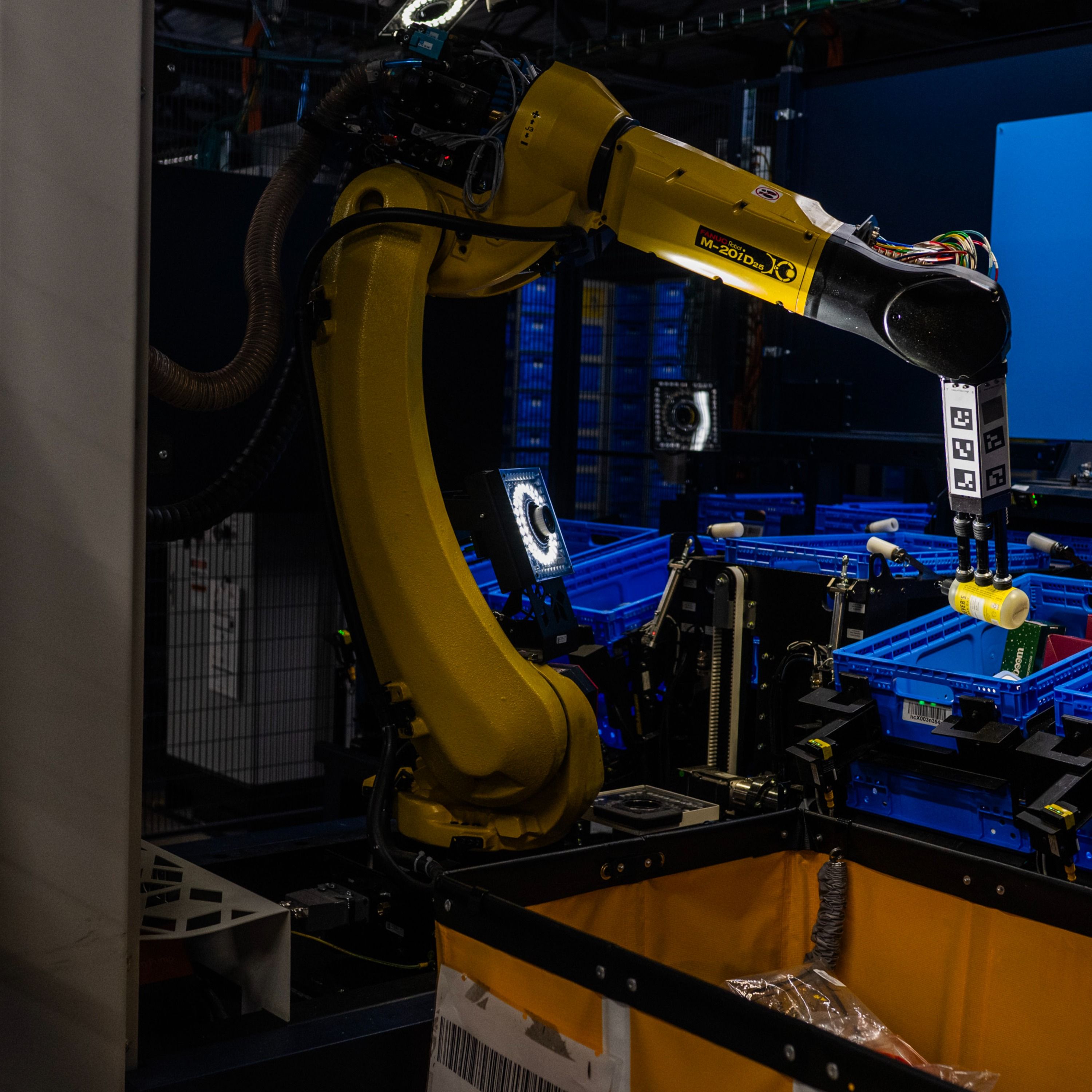
- The company’s most advanced warehouse in Shreveport, Louisiana, serves as a prototype for future facilities, featuring thousands of robots and reimagined workflows.
- Amazon aims to retrofit older warehouses, potentially reducing workforce needs by thousands per facility.
📈 The Business Case for Automation
- Amazon's investment in AI and robotics is driven by the need to cut costs amidst rising labor expenses and inefficiencies.
- Automation is projected to save $0.30 per item, enabling lower prices and reinvestment in growth.
- Competitors like Walmart and UPS are also advancing automation, making it essential for Amazon to stay competitive.
🏗️ The Evolution of Amazon's Workforce
- Amazon's rapid workforce expansion during the pandemic highlighted challenges like high turnover, labor shortages, and scrutiny over working conditions.
- The shift from augmenting workers to replacing them reflects a strategic pivot to address these issues.
- New roles, such as robot technicians, offer higher pay and career paths but are fewer in number compared to traditional warehouse jobs.
🌍 Broader Implications for Society
- Automation risks creating a bifurcated labor market, with fewer low-skill jobs and more high-skill positions requiring specialized training.
- Amazon's outsized influence on the labor market raises concerns about the societal impact of reduced job opportunities.
- The lack of a national strategy to help workers adapt to automation underscores the challenges of transitioning to a more automated economy.
AI-generated content may not be accurate or complete and should not be relied upon as a sole source of truth.
📋 Episode Description
Over the past two decades, no company has done more to shape the American workplace than Amazon. In its ascent to become the nation’s second-largest employer, it has developed an aggressive corporate culture and pioneered using technology to hire, monitor and manage workers.
Now, interviews and a cache of internal strategy documents reveal that Amazon executives believe their company is on the cusp of their next big workplace shift: replacing more than half a million jobs with robots.
Karen Weise takes us inside Amazon’s push toward automation and the implications for the company and potentially for the broader economy.
Guest: Karen Weise, the Beijing bureau chief for The New York Times.
Background reading:
- Amazon plans to replace more than half a million jobs with robots.
- Meet Sparrow, Cardinal and Proteus, the robots powering Amazon’s automation.
Photo: Emily Kask for The New York Times
For more information on today’s episode, visit nytimes.com/thedaily. Transcripts of each episode will be made available by the next workday.
Subscribe today at nytimes.com/podcasts or on Apple Podcasts and Spotify. You can also subscribe via your favorite podcast app here https://www.nytimes.com/activate-access/audio?source=podcatcher. For more podcasts and narrated articles, download The New York Times app at nytimes.com/app.