
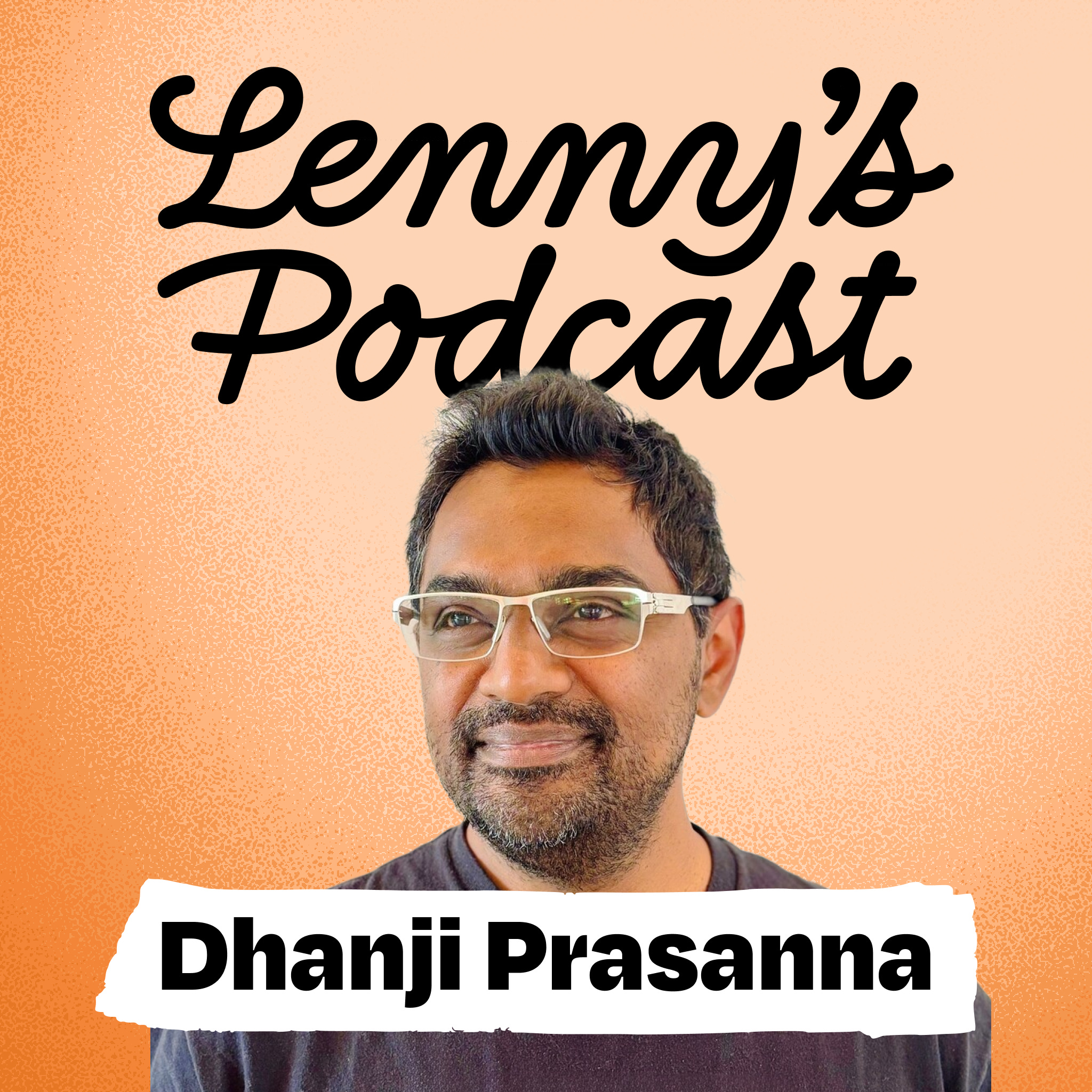
How Block is becoming the most AI-native enterprise in the world | Dhanji R. Prasanna

🤖 AI Summary
Overview
This episode features Dhanji R. Prasanna, CTO of Block, discussing how the company has become one of the most AI-native enterprises in the world. Topics include the transformative impact of AI tools like their open-source agent Goose, the organizational changes that amplified productivity, and lessons learned from both successful and failed product development.
Notable Quotes
- Whenever I hear a stat like this, I think an important element is this is the worst it will ever be. This is now the baseline.
— Lenny Rachitsky, on the potential of AI productivity gains.
- A lot of engineers think that code quality is important to building a successful product. The two have nothing to do with each other.
— Dhanji R. Prasanna, on the overemphasis on code quality in product success.
- If you're not waking up in the morning feeling energized about what you're going to do that day in your professional life, then change something.
— Dhanji R. Prasanna, on finding purpose and fulfillment in work.
🚀 Transforming into an AI-Native Organization
- Dhanji R. Prasanna shared how his AI manifesto
to Jack Dorsey catalyzed Block's shift to becoming an AI-native company.
- The transformation included moving from a General Manager (GM) structure to a functional organizational structure, where engineers and designers report to centralized leadership. This change enabled deeper technological focus and collaboration across teams.
- Block redefined itself as a technology company rather than a financial services company, reigniting its innovation culture through initiatives like company-wide hack weeks and special projects.
🤖 Goose: Block’s Open-Source AI Agent
- Goose is an open-source AI agent developed by Block that automates tasks and integrates with enterprise tools using the Model Context Protocol (MCP).
- Goose has saved employees 8–10 hours per week on average and is used across technical and non-technical teams.
- It can perform tasks like organizing files, writing software, automating UI tests, and even creating marketing reports by integrating with tools like Snowflake, Tableau, and Google Docs.
- Goose is open-source and available for other companies to use and extend.
📈 Measuring AI Productivity Gains
- Block measures AI’s impact by tracking manual hours saved,
with AI tools saving up to 25% of manual work hours across the company.
- Non-technical teams, such as risk management and legal, have seen significant productivity gains by using AI to build their own tools, reducing reliance on engineering teams.
- The company emphasizes that AI is still in its early stages, and its value is expected to grow exponentially over time.
🛠️ Build vs. Buy: The AI Dilemma
- Block encourages teams to question whether building or buying software aligns with the company’s core mission of economic empowerment.
- While AI tools like Goose enable teams to build custom solutions quickly, Dhanji warns against diverting focus from the company’s primary goals.
- He emphasizes the importance of balancing innovation with practicality, ensuring that resources are allocated to initiatives that directly serve customers.
💡 Lessons in Leadership and Innovation
- Dhanji highlighted the importance of starting small with experiments, citing Goose and Cash App as examples of projects that began as small initiatives and grew into major successes.
- He stressed the need to question base assumptions and focus on solving real problems for users rather than getting caught up in technical perfection.
- Reflecting on his career, Dhanji shared that many of his early projects, like Google Wave and Google+, failed because they tried to do too much too soon without meeting real user needs.
AI-generated content may not be accurate or complete and should not be relied upon as a sole source of truth.
📋 Episode Description
Dhanji R. Prasanna is the chief technology officer at Block (formerly Square), where he’s managed more than 4,000 engineers over the past two years. Under his leadership, Block has become one of the most AI-native large companies in the world. Before becoming CTO, Dhanji wrote an “AI manifesto” to CEO Jack Dorsey that sparked a company-wide transformation (and his promotion to CTO).
We discuss:
1. How Block’s internal open-source agent, called Goose, is saving employees 8 to 10 hours weekly
2. How the company measures AI productivity gains across technical and non-technical teams
3. Which teams are benefiting most from AI (it’s not engineering)
4. The boring organizational change that boosted productivity even more than AI tools
5. Why code quality has almost nothing to do with product success
6. How to drive AI adoption throughout an organization (hint: leadership needs to use the tools daily)
7. Lessons from building Google Wave, Google+, and other failed products
—
Brought to you by:
Sinch—Build messaging, email, and calling into your product: https://sinch.com/lenny
Figma Make—A prompt-to-code tool for making ideas real: https://www.figma.com/lenny/
Persona—A global leader in digital identity verification: https://withpersona.com/lenny
—
Where to find Dhanji R. Prasanna:
• LinkedIn: https://www.linkedin.com/in/dhanji/
—
Where to find Lenny:
• Newsletter: https://www.lennysnewsletter.com
• X: https://twitter.com/lennysan
• LinkedIn: https://www.linkedin.com/in/lennyrachitsky/
—
In this episode, we cover:
(00:00) Introduction to Dhanji
(05:26) The AI manifesto: convincing Jack Dorsey
(07:33) Transforming into a more AI-native company
(12:05) How engineering teams work differently today
(15:24) Goose: Block’s open-source AI agent
(20:18) Measuring AI productivity gains across teams
(21:38) What Goose is and how it works
(32:15) The future of AI in engineering and productivity
(37:42) The importance of human taste
(40:10) Building vs. buying software
(44:08) How AI is changing hiring and team stru