

🤖 AI Summary
Overview
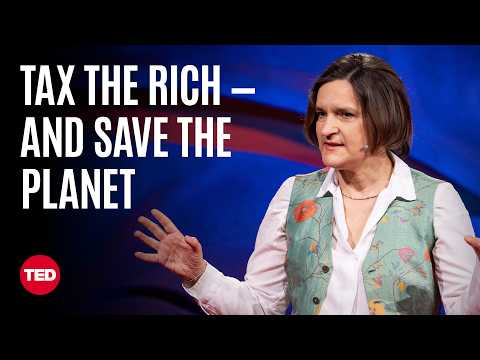
Nobel Prize-winning economist Esther Duflo presents a compelling case for addressing the climate crisis through wealth redistribution. She highlights the devastating human cost of rising temperatures in low-income countries, quantifies the economic damages caused by emissions from wealthy nations, and proposes actionable solutions, including taxing the ultra-rich and multinational corporations to fund climate justice initiatives.
Notable Quotes
- Every ton of carbon that we emit... contributes to the warming of the Earth and therefore, kills people.
– Esther Duflo, on the deadly impact of emissions.
- A tax on the wealth of the 3,000 richest people in the world of about three percent a year would raise 400 billion dollars.
– Esther Duflo, advocating for taxing billionaires to fund climate solutions.
- Finding ways to reliably collect money to pay for our moral debt to the world's poorest citizens would do a lot to repair the trust between the West and the rest.
– Esther Duflo, on the importance of global equity in climate action.
🌡️ The Deadly Cost of Rising Temperatures
- Rising temperatures disproportionately affect low- and middle-income countries, where lack of infrastructure like air conditioning exacerbates the impact.
- By 2100, an estimated six million additional deaths will occur annually due to heat, primarily in poorer nations.
- The economic cost of these deaths, calculated using a statistical value of life, is staggering, with OECD countries alone inflicting $1.7 trillion in damages annually on poorer nations.
💸 The Case for Taxing the Wealthy
- Duflo argues that the richest individuals and multinational corporations do not pay their fair share in taxes, often using legal loopholes to minimize contributions.
- A 3% annual wealth tax on the 3,000 richest people could generate $400 billion, while increasing the global minimum corporate tax rate from 15% to 21% could raise an additional $300 billion.
- These funds could be redirected to address climate damages and support vulnerable populations.
📱 Direct Cash Transfers as a Solution
- Direct cash transfers to individuals in affected regions are proposed as an efficient and effective way to use climate funds.
- Evidence from randomized controlled trials shows that recipients use the money wisely, improving resilience and productivity.
- Examples include Zambian households stabilizing consumption during droughts and Kenyan families investing in solar panels and better housing.
🌍 A New Grand Bargain for Climate Justice
- Duflo calls for a global agreement where wealthy nations compensate poorer countries for climate damages in exchange for commitments to climate action, such as carbon pricing mechanisms.
- Trust between developed and developing nations is essential, as the future of climate mitigation depends on the actions of countries currently on the path to industrialization.
- This approach aims to ensure fairness while addressing the urgent need for global cooperation in combating climate change.
AI-generated content may not be accurate or complete and should not be relied upon as a sole source of truth.
📋 Video Description
Nobel Prize-winning economist Esther Duflo brings her data-driven precision to the climate crisis — and the numbers are damning. While world leaders haggle over finances at endless summits, rising temperatures will kill millions in the poorest countries by the end of this century. She calculates the staggering cost of wealthy nations pumping greenhouse gases into the atmosphere, proving that getting billionaires to pay their fair share in taxes is the best way to cover these damages. (Recorded at TED Countdown Summit 2025 on June 18, 2025)
Join us in person at a TED conference: https://tedtalks.social/events
Become a TED Member to support our mission: https://ted.com/membership
Subscribe to a TED newsletter: https://ted.com/newsletters
Follow TED!
X: https://www.twitter.com/TEDTalks
Instagram: https://www.instagram.com/ted
Facebook: https://facebook.com/TED
LinkedIn: https://www.linkedin.com/company/ted-conferences
TikTok: https://www.tiktok.com/@tedtoks
The TED Talks channel features talks, performances and original series from the world's leading thinkers and doers. Subscribe to our channel for videos on Technology, Entertainment and Design — plus science, business, global issues, the arts and more. Visit https://TED.com to get our entire library of TED Talks, transcripts, translations, personalized talk recommendations and more.
Watch more: https://go.ted.com/estherduflo
https://youtu.be/OtSwoGuz8sk
TED's videos may be used for non-commercial purposes under a Creative Commons License, Attribution–Non Commercial–No Derivatives (or the CC BY – NC – ND 4.0 International) and in accordance with our TED Talks Usage Policy: https://www.ted.com/about/our-organization/our-policies-terms/ted-talks-usage-policy. For more information on using TED for commercial purposes (e.g. employee learning, in a film or online course), please submit a Media Request at https://media-requests.ted.com
#TED #TEDTalks #ClimateChange