

🤖 AI Summary
Overview
This episode explores the rise of the Democratic Socialists of America (DSA) as a significant force in U.S. politics, their recent electoral successes, and the internal and external challenges they face. It delves into the history of socialism in America, the DSA's relationship with the Democratic Party, and the ideological and strategic tensions within the organization as it seeks to define its future.
Notable Quotes
- Are we on the same team? Do we share the same goals?
— Charlie Homans, on the existential questions between the DSA and the Democratic Party.
- If these ideas are important to you, why wouldn't you just run on the ideas and shut up about the socialism part?
— Charlie Homans, on the challenges of the socialist label in U.S. elections.
- The other scenario is that this functionally destroys the Democratic Party for years and its ability to win an election.
— Charlie Homans, on the risks of a DSA presidential candidate.
🗳️ The Rise of the DSA in U.S. Politics
- The DSA has achieved significant electoral victories, with candidates winning primaries across the country, including in traditionally Democratic strongholds and swing states.
- Membership surged after Bernie Sanders’ 2016 presidential campaign, growing from 6,000 to 30,000 in 2017, with a dramatic shift toward younger demographics.
- High-profile wins, such as Alexandria Ocasio-Cortez’s upset victory in 2018 and Zoran Mamdani’s election as New York City mayor in 2025, have cemented the DSA’s influence.
📜 Historical Context of American Socialism
- The episode traces socialism’s roots in the U.S., from Eugene V. Debs and the Socialist Party of America in the early 1900s to the New Deal policies of FDR, which co-opted many socialist ideas.
- The DSA, founded in the 1980s by Michael Harrington, initially functioned more as an intellectual society than a political force, until its resurgence post-2016.
- The tension between influencing policy through existing parties versus pursuing systemic change has been a recurring theme in American socialism.
⚖️ Internal Divisions and Strategic Tensions
- The DSA is a decentralized organization with factions divided over strategy: one group supports working within the Democratic Party, while another prioritizes grassroots activism and labor organizing.
- AOC’s compromises in Congress have made her a polarizing figure within the DSA, highlighting debates over candidate discipline
and adherence to the organization’s platform.
- The DSA’s platform includes both mainstream progressive policies (e.g., Medicare for All, Green New Deal) and more radical proposals (e.g., abolishing the Senate, prisons, and police).
🤝 The DSA and the Democratic Party
- The DSA’s success in ousting establishment Democrats has sparked debate within the Democratic Party about whether to embrace or resist the movement.
- Critics argue the DSA’s focus on safe blue districts does little to help Democrats win swing districts or congressional majorities.
- Supporters, like Gavin Newsom, see the DSA as energizing younger voters and revitalizing the party’s base.
🌟 The Future of the DSA and Its National Impact
- The DSA’s long-term influence may hinge on producing a viable presidential candidate who can normalize socialism in mainstream politics.
- Historical parallels are drawn to the Tea Party and MAGA movements, which reshaped the Republican Party, though the DSA lacks a unifying national leader akin to Donald Trump.
- A successful DSA presidential campaign could either mainstream socialist ideas or alienate voters, potentially damaging the Democratic Party’s electoral prospects.
AI-generated content may not be accurate or complete and should not be relied upon as a sole source of truth.
📋 Episode Description
This summer, the Democratic Socialists of America have mounted their biggest and most successful attempt yet to redefine the Democratic Party. They have defeated its candidates in primary after primary from coast to coast.
As its electoral success grows, the organization is confronting big, unresolved questions about what it stands for and what level of compromise is required to become a lasting political force.
Charles Homans, who talked to more than 30 D.S.A. candidates, organizers, members and volunteers across the countries, discusses the rise and limitations of the D.S.A.
Guest: Charles Homans writes about national politics for The New York Times and The Times Magazine.
Background reading:
- Moderates see socialists as a threat to the Democratic Party. Socialists agree.
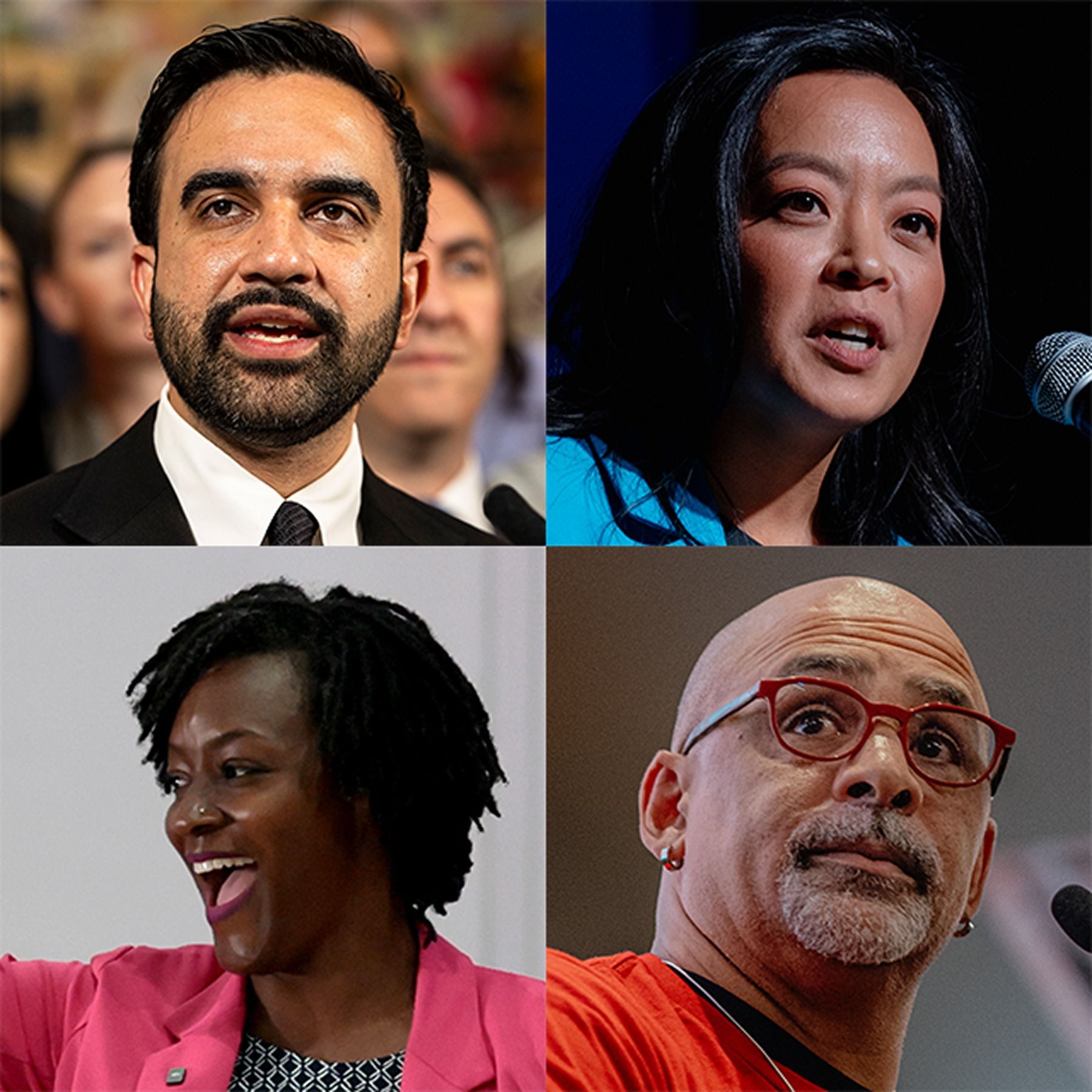
Photo: Dave Sanders and Jamie Kelter Davis for The New York Times; Joe Raedle/Getty Images
For more information on today’s episode, visit nytimes.com/thedaily. Transcripts of each episode will be made available by the next workday.
Subscribe today at nytimes.com/podcasts or on Apple Podcasts and Spotify. You can also subscribe via your favorite podcast app here https://www.nytimes.com/activate-access/audio?source=podcatcher. For more podcasts and narrated articles, download The New York Times app at nytimes.com/app.
Hosted by Simplecast, an AdsWizz company. See pcm.adswizz.com for information about our collection and use of personal data for advertising.