

🤖 AI Summary
Overview
This episode explores the Trump administration's shift in strategy toward Venezuela, moving from military actions targeting drug trafficking to economic measures aimed at crippling the country's oil industry. The discussion delves into the motivations behind these actions, their impact on Venezuela's economy and people, and the broader geopolitical implications.
Notable Quotes
- The U.S. is going to keep blowing up boats until Maduro cries uncle.
– Anatoly Kurmanaev, on the explicit goals of the Trump administration.
- Daddy, I heard vodka is getting more expensive. Does that mean you're going to drink less? No, sweetie, it means you're going to eat less.
– Anatoly Kurmanaev, using a Russian anecdote to illustrate the impact of economic pressure on ordinary people.
- Control of the world's largest oil reserves would allow the United States to dominate the Americas and expel adversaries like China and Russia.
– Anatoly Kurmanaev, on the geopolitical stakes of U.S. actions in Venezuela.
🛢️ Shift from Military to Economic Pressure
- The Trump administration transitioned from targeting drug boats to seizing Venezuelan oil tankers, aiming to cut off the country's primary revenue source.
- This strategy represents the most significant economic pressure on a Latin American state in decades, with the explicit goal of forcing regime change by ousting President Nicolás Maduro.
- Initial tanker seizures were seen as symbolic, but the campaign quickly escalated, targeting multiple vessels and disrupting Venezuela's oil exports.
⚖️ Sanctions and Their Enforcement
- Pre-existing sanctions on Venezuela's oil industry, initiated during Trump's first term, made it illegal for U.S. companies to work with Venezuela's state oil company.
- Venezuela increasingly relied on a dark fleet
of tankers to export oil, primarily to China, which provided the U.S. with justification to enforce sanctions more aggressively.
- Concerns about global oil market volatility previously deterred such enforcement, but muted price impacts have emboldened the administration to expand its actions.
🇻🇪 Impact on Venezuela and Its People
- The campaign has caused Venezuelan oil exports to plummet, exacerbating the country's economic struggles and creating uncertainty for its citizens.
- While many Venezuelans oppose Maduro and support efforts to remove him, there is fear that prolonged economic pressure could worsen living conditions without achieving political change.
- The Maduro administration is scrambling to respond, considering measures like armed escorts for tankers, but faces significant logistical and political challenges.
🌍 Geopolitical Implications
- The U.S. aims to control Venezuela's vast oil reserves, which would strengthen its influence in the Americas and counter adversaries like China and Russia.
- Despite verbal condemnations, neither China nor Russia has taken significant action to support Venezuela, reflecting their focus on other priorities and tacit acceptance of U.S. dominance in the region.
- The Trump administration's actions align with its broader strategy to establish the U.S. as the predominant power in the Western Hemisphere.
🤝 Potential for Diplomacy
- Despite the aggressive tactics, there are signs of a potential diplomatic resolution. Past negotiations hinted at a deal where Venezuela would redirect oil exports to the U.S. in exchange for economic relief.
- Such an agreement could secure U.S. access to Venezuelan oil while ensuring the survival of Maduro's political movement, offering a possible off-ramp from the current escalation.
- However, the contradictions in U.S. policy—simultaneously pressuring Maduro while allowing Chevron to operate in Venezuela—complicate the situation.
AI-generated content may not be accurate or complete and should not be relied upon as a sole source of truth.
📋 Episode Description
In it escalating campaign against Venezuela, the Trump administration has gone from shooting drug boats to trying to seize oil tankers in the Caribbean.
Anatoly Kurmanaev, a foreign correspondent for The New York Times who has spent years covering Venezuela, explains why President Trump is shifting his strategy, and what that might tell us about his true endgame.
Guest: Anatoly Kurmanaev, a reporter for The New York Times covering Russia and its transformation following the invasion of Ukraine.
Background reading: Venezuela’s oil exports have plummeted after the United States took action against three tankers carrying crude.
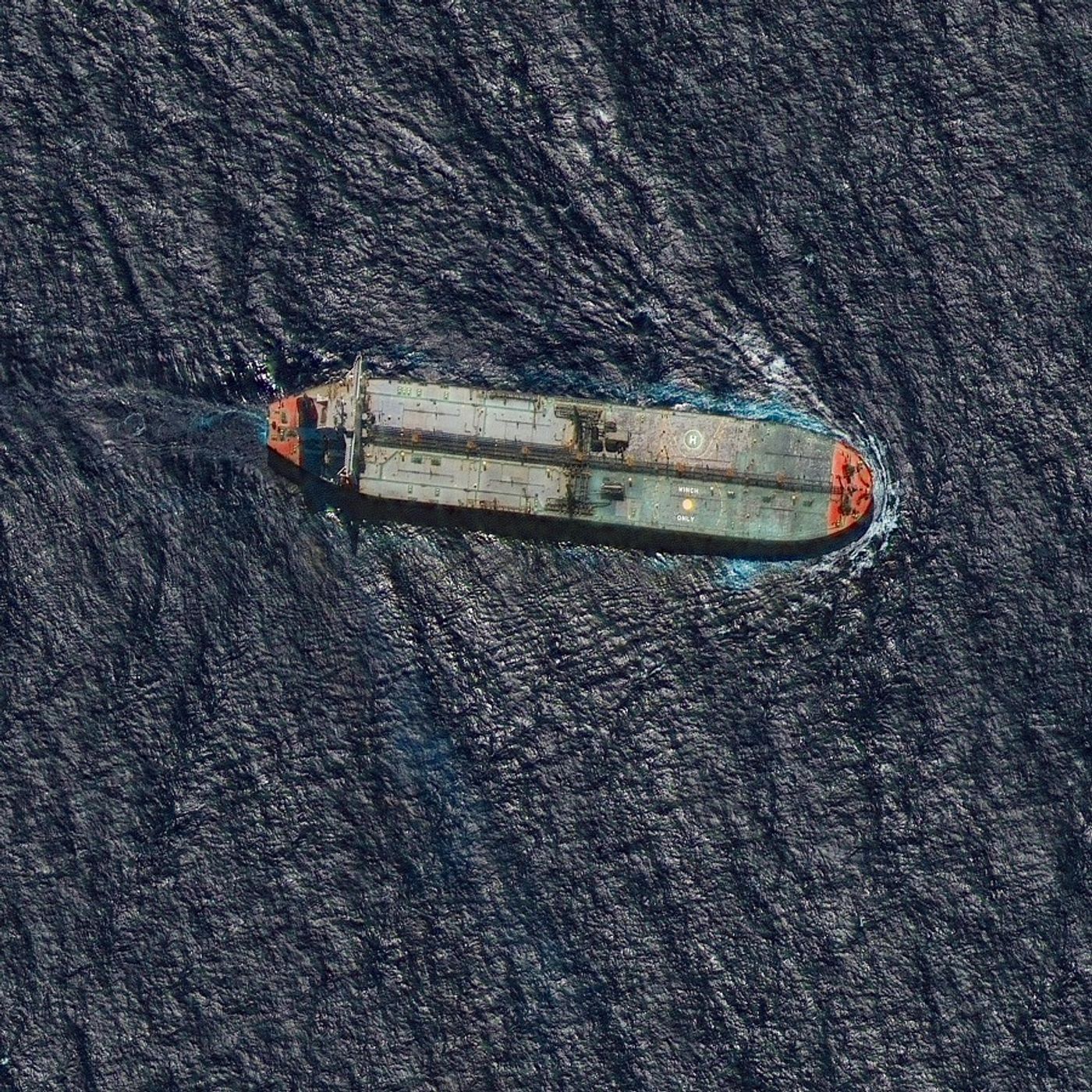
Photo: Satellite image ©2025 Vantor, via Associated Press
For more information on today’s episode, visit nytimes.com/thedaily. Transcripts of each episode will be made available by the next workday.
Subscribe today at nytimes.com/podcasts or on Apple Podcasts and Spotify. You can also subscribe via your favorite podcast app here https://www.nytimes.com/activate-access/audio?source=podcatcher. For more podcasts and narrated articles, download The New York Times app at nytimes.com/app.