

🤖 AI Summary
Overview
This episode delves into the Supreme Court's increasing reliance on the shadow docket,
a process for expedited rulings that often lack detailed explanations. Adam Liptak, a Supreme Court correspondent, explains how this practice has grown, particularly during the Trump administration, and its implications for the judicial system, lower courts, and the public.
Notable Quotes
- The Supreme Court isn’t giving us opinions. It’s giving us signals.
– Adam Liptak, on the lack of clarity in shadow docket rulings.
- You can call these interim orders, but they have real-world immediate consequences that can’t necessarily be undone.
– Adam Liptak, on the tangible impact of these decisions.
- This is a different version of the American justice system than the one we’ve been used to.
– Adam Liptak, on the shift in the court’s approach.
🕶️ The Shadow Docket: What It Is and How It Works
- The shadow docket refers to a fast-track process where the Supreme Court issues rulings without oral arguments or detailed opinions.
- These decisions are often terse, sometimes just a few paragraphs or even a single sentence, and lack transparency.
- The practice has surged, particularly during the Trump administration, which utilized it to advance its agenda rapidly.
- Examples include rulings on immigration enforcement, NIH grants, and transgender military service, often with significant real-world consequences.
⚖️ Partisanship and the Shadow Docket
- Shadow docket rulings show a stark contrast to the court’s regular merits docket,
where justices often find consensus.
- Under the shadow docket, justices vote more predictably along ideological lines. For instance, Justice Alito supported Trump 95% of the time, while liberal justices like Sotomayor showed similar loyalty to Biden.
- This partisanship raises concerns about the court’s impartiality and its role in the broader judicial system.
🔍 Confusion in Lower Courts
- The lack of reasoning in shadow docket rulings leaves lower courts struggling to interpret precedent.
- Judges are often unsure how to apply these decisions, leading to inconsistent rulings and, in some cases, public apologies for perceived missteps.
- A recent example involved immigration enforcement in Los Angeles, where the Supreme Court’s decision provided no guidance, leaving other courts to guess its implications.
🌊 Real-World Consequences of Speedy Decisions
- Shadow docket rulings, though labeled interim,
have immediate and sometimes irreversible impacts.
- For example, deportations or firings approved temporarily may not be undone even if later deemed unlawful.
- These decisions affect thousands of individuals, from immigrants to federal workers, creating uncertainty and disruption.
🐢 A Shift in the Supreme Court’s Identity
- Historically, the Supreme Court has prided itself on slow, deliberate decision-making, symbolized by tortoise sculptures on its grounds.
- The rise of the shadow docket represents a departure from this tradition, prioritizing speed over thoroughness.
- This shift challenges the court’s legitimacy, which relies on reasoned, transparent rulings rather than opaque, expedited orders.
AI-generated content may not be accurate or complete and should not be relied upon as a sole source of truth.
📋 Episode Description
The Supreme Court has cleared the way for President Trump to remake American government, siding with the president again and again. But many of those rulings have lacked something fundamental: an explanation for why the most important judges in the country came to their decision.
Adam Liptak, who covers the Supreme Court for The Times, explains the justices’ increased use of the so-called shadow docket, and why it has sown confusion — and in some cases frustration — in courts around the country.
Guest: Adam Liptak covers the Supreme Court and writes Sidebar, a column on legal developments, for The New York Times.
Background reading:
- The Supreme Court keeps ruling in Mr. Trump’s favor, but doesn’t say why.
For more information on today’s episode, visit nytimes.com/thedaily. Transcripts of each episode will be made available by the next workday.
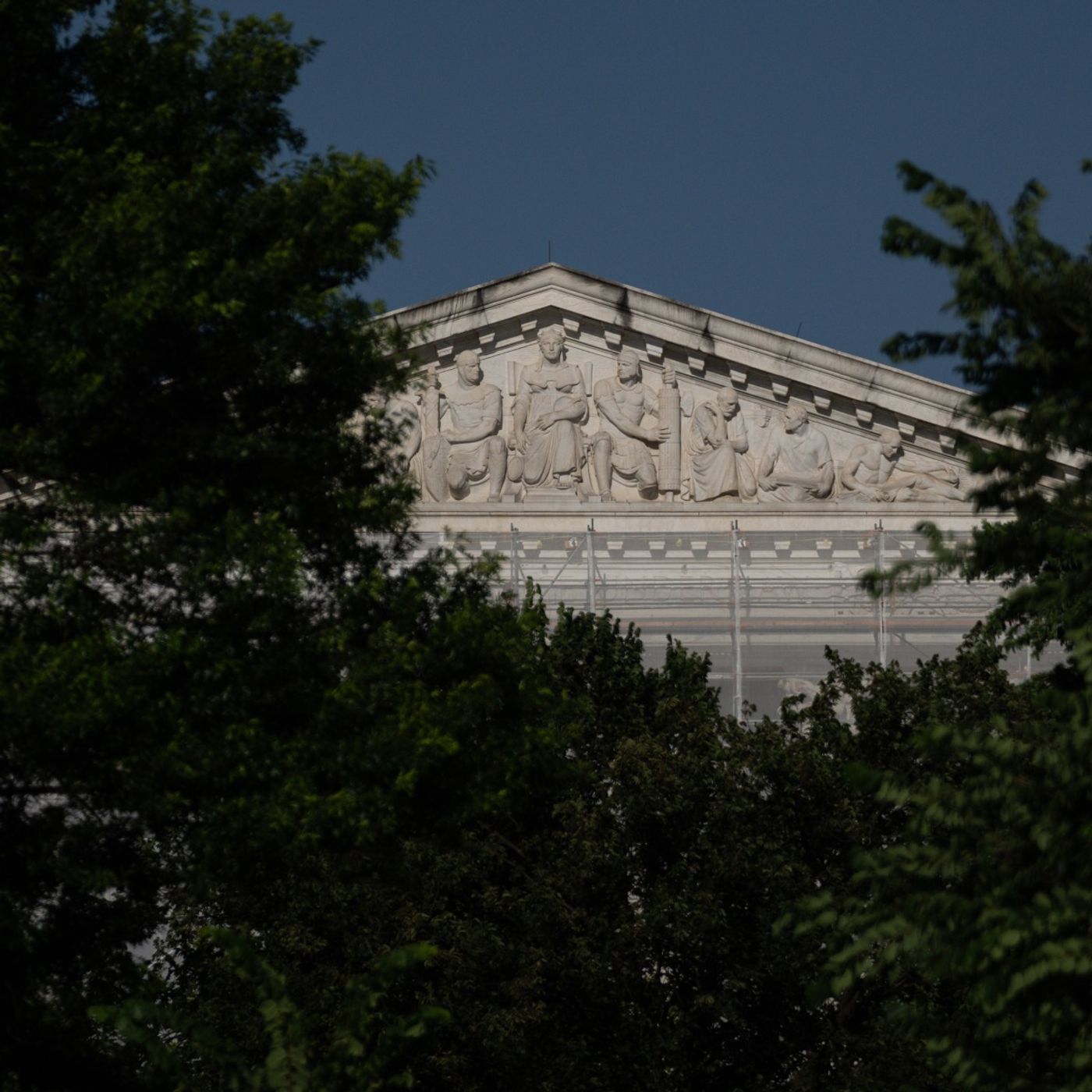
Photo: Tierney L. Cross/The New York Times
Unlock full access to New York Times podcasts and explore everything from politics to pop culture. Subscribe today at nytimes.com/podcasts or on Apple Podcasts and Spotify.