

🤖 AI Summary
Overview
This episode delves into the role of Russell T. Vought, the White House budget director, during the ongoing government shutdown. It explores his ideological commitment to shrinking the federal government, his rise to prominence in the Trump administration, and his controversial strategies to centralize executive power and dismantle federal agencies.
Notable Quotes
- Yeah, I called for trauma within the bureaucracies. The bureaucracies hate the American people.
– Russell Vought, on his approach to federal agencies.
- Congress gets to set the ceiling, but you weren’t ever meant to be forced to spend it.
– Russell Vought, on his interpretation of presidential spending power.
- If we don’t execute, we may never have this chance again.
– Russell Vought, on the urgency of his mission to reshape government.
🪓 The Rise of Russell Vought
- Natalie Kitroeff and Coral Davenport discuss how Vought, once an obscure bureaucrat, became a central figure in Washington during the shutdown.
- Vought’s ideological roots stem from his conservative upbringing and early career under fiscal hawks like Senator Phil Graham.
- Known for his meticulous planning and work ethic, Vought has spent years crafting a vision of a smaller federal government.
📉 Shrinking the Federal Government
- Vought’s philosophy centers on reducing government spending, cutting federal jobs, and dismantling agencies he views as woke and weaponized.
- His strategies include leveraging executive power to block congressional spending and using legal challenges to reshape the boundaries of presidential authority.
- He has a long-term goal of starving
agencies to prevent their revival under future administrations.
⚖️ The Legal Battle Over Impoundment
- Vought champions the revival of impoundment,
a controversial practice allowing presidents to refuse to spend congressionally approved funds.
- He aims to challenge the 1974 Impoundment Control Act, which limits this power, by engineering Supreme Court cases.
- Confident in the current conservative-leaning Supreme Court, Vought sees this as a pathway to permanently expand executive authority.
💥 Tensions with Elon Musk and Internal Dynamics
- Vought clashed with Elon Musk, a major Trump donor, over differing approaches to government reform.
- While Vought favored a disciplined, legalistic strategy, Musk’s chaotic move fast and break things
approach created friction and unintended legal challenges.
- Musk’s departure allowed Vought to consolidate influence and implement his methodical plans.
🏛️ The Vision for Radical Constitutionalism
- Vought envisions a government where independent agencies are either eliminated or fully controlled by the White House.
- His ultimate goal is to centralize power in the executive branch, reducing Congress’s role in governance.
- Critics warn that this could destabilize the balance of power among the three branches of government, with significant economic and political fallout.
AI-generated content may not be accurate or complete and should not be relied upon as a sole source of truth.
📋 Episode Description
During the continuing government shutdown, President Trump has posted memes depicting Russel T. Vought, the White House budget director, as the grim reaper.
Coral Davenport, a Washington correspondent for The Times, explains how Mr. Vought, a once obscure official, has become one of the most influential figures in Washington.
Guest: Coral Davenport, a Washington correspondent for The New York Times, focusing on the Trump administration’s dismantling of federal rules.
Background reading:
- Mr. Vought has exerted his influence over nearly every corner of President Trump’s Washington with his command of the levers of the federal budget.
- Both parties are resigned to deadlock as the government shutdown takes hold.
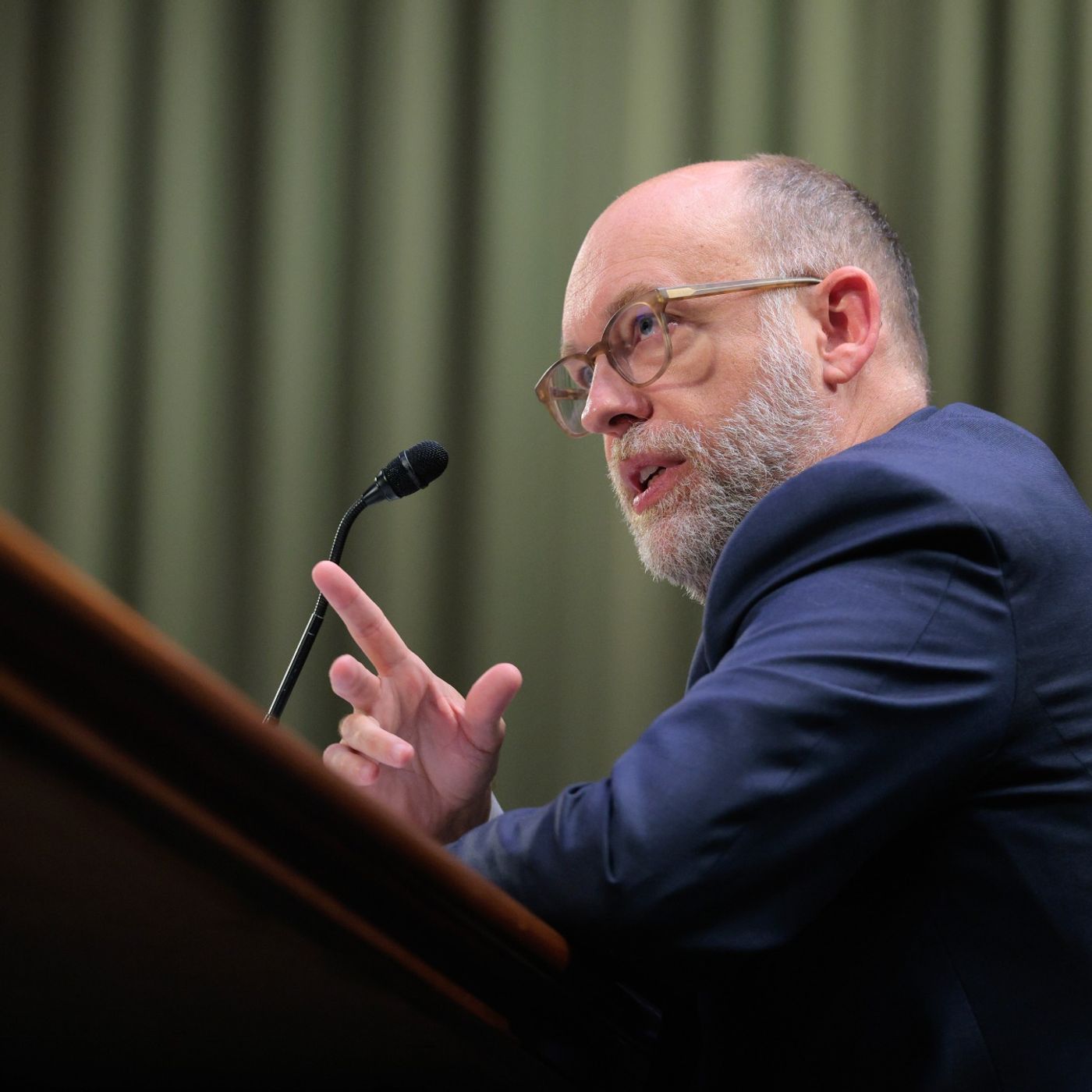
Photo: Chip Somodevilla/Getty Images
For more information on today’s episode, visit nytimes.com/thedaily. Transcripts of each episode will be made available by the next workday.
Subscribe today at nytimes.com/podcasts or on Apple Podcasts and Spotify. You can also subscribe via your favorite podcast app here https://www.nytimes.com/activate-access/audio?source=podcatcher. For more podcasts and narrated articles, download The New York Times app at nytimes.com/app.