
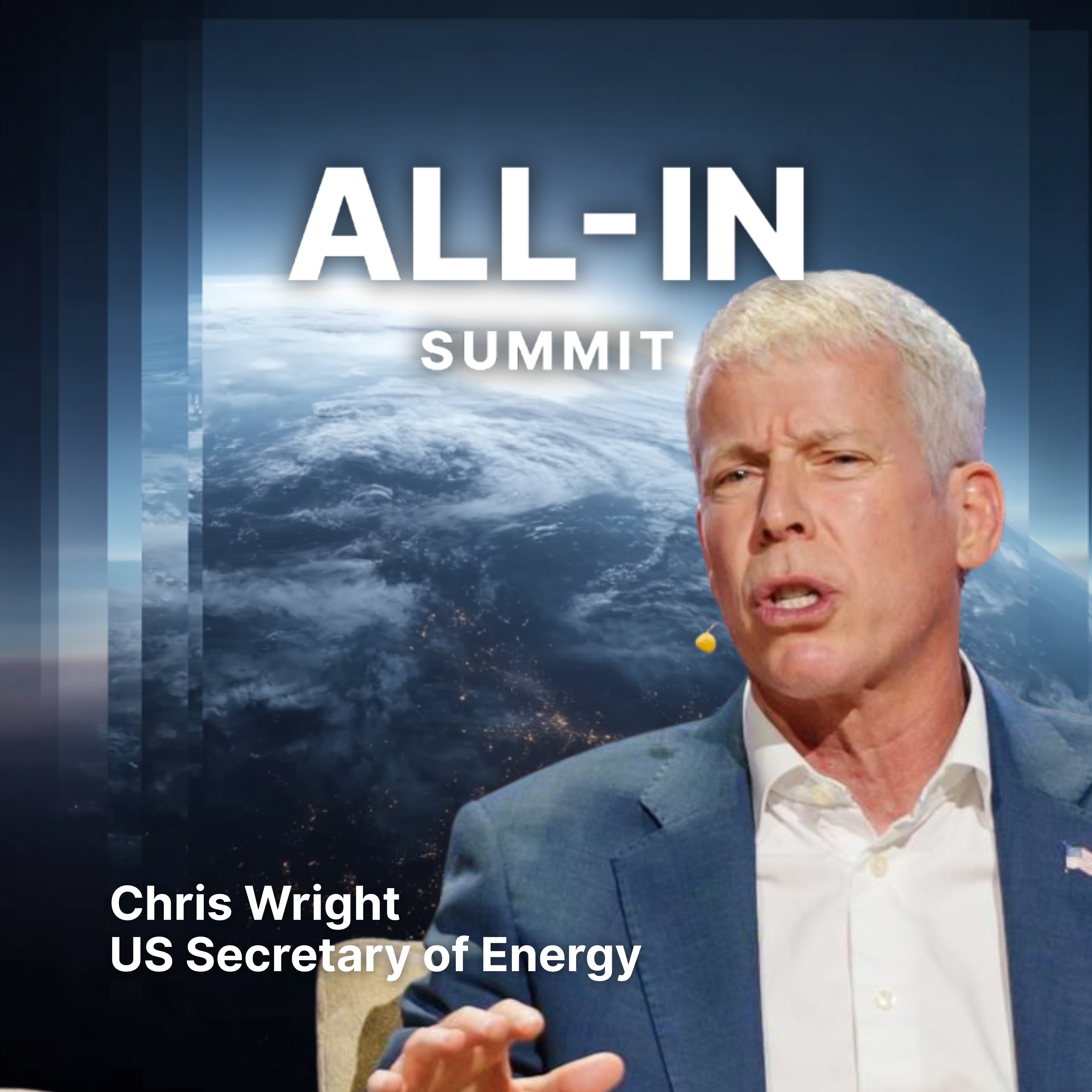
Energy Secretary Chris Wright on the Future of American Energy | All-In Summit 2025

🤖 AI Summary
Overview
This episode features U.S. Secretary of Energy Chris Wright discussing the future of American energy, the challenges of scaling nuclear power, the role of hydrocarbons, and the limitations of renewable energy sources like solar and wind. The conversation also delves into China's energy strategy, the economics of energy production, and the importance of balancing innovation with practicality.
Notable Quotes
- Nuclear is the safest form of energy production we've ever seen, but it's been a victim of fear in our world.
– Chris Wright, on the challenges of scaling nuclear energy.
- Energy is not a climate change issue; energy is a national security issue.
– Chamath Palihapitiya, reframing the energy debate.
- Wrap the planet in solar panels, and you still only get 20% of global energy. Where’s the other 80% going to come from?
– Chris Wright, on the limitations of solar energy.
🌍 The State of Global Energy
- Chris Wright highlighted that hydrocarbons (oil, gas, and coal) still account for 85% of global energy, the same percentage as in 1973, despite decades of renewable energy advocacy.
- Natural gas is the fastest-growing energy source due to its cost-effectiveness and infrastructure compatibility.
- Traditional biomass, like wood burning, remains a significant energy source for billions, causing health and environmental issues.
⚛️ The Nuclear Energy Debate
- Nuclear energy offers unmatched energy density and safety, yet public fear and bureaucratic hurdles have stifled its growth in the U.S.
- Chris Wright criticized the over-engineering and permitting delays that inflate costs and timelines for nuclear projects.
- China’s pragmatic approach to nuclear development—focused on human safety rather than appeasing environmental groups—has allowed them to build reactors faster and cheaper.
🌞 Renewables vs. Hydrocarbons
- Chris Wright argued that wind and solar are unreliable and heavily subsidized, making them parasitic
on traditional energy grids.
- He predicted solar would never exceed 10% of global energy due to its inherent limitations.
- Chamath Palihapitiya emphasized the potential of distributed energy systems, like home solar and batteries, to reduce reliance on centralized utilities.
💡 Energy Economics and Policy
- Rising electricity prices in the U.S. are attributed to the complexity of integrating intermittent renewables into the grid and the costs of new transmission infrastructure.
- Chris Wright advocated for deregulating backup generators and optimizing existing assets to meet peak demand more efficiently.
- He criticized the prioritization of climate change over human-centric energy policies, arguing for a balanced, data-driven approach.
🔬 The Role of National Labs and AI Energy Needs
- The Department of Energy’s 17 national labs are vital for scientific innovation, from fundamental research to industrial applications.
- Chris Wright defended funding for these labs, emphasizing their role in breakthroughs like MRI technology.
- Addressing the energy demands of AI data centers, he proposed leveraging natural gas and regulatory adjustments to optimize existing infrastructure.
AI-generated content may not be accurate or complete and should not be relied upon as a sole source of truth.
📋 Episode Description
(0:00) Introducing Secretary Wright
(1:09) Nuclear, China’s approach
(4:02) Increasing energy output, how the climate change complex slowed us down, problems with solar and wind
(11:32) Debating renewables vs nat gas and coal
(18:40) Chamath’s energy framework
(21:42) Addressing challenges: budget cuts to research labs, residential energy cost increases due to datacenter demand, speeding up nuclear development
Thanks to our partners for making this happen!
Solana: https://solana.com/
OKX: https://www.okx.com/
Google Cloud: https://cloud.google.com/
IREN: https://iren.com/
Oracle: https://www.oracle.com/
Circle: https://www.circle.com/
BVNK: https://www.bvnk.com/
Follow Secretary Wright:
Follow the besties:
Follow on X:
Follow on Instagram:
https://www.instagram.com/theallinpod
Follow on TikTok:
https://www.tiktok.com/@theallinpod
Follow on LinkedIn:
https://www.linkedin.com/company/allinpod
Intro Music Credit:
Intro Video Credit: