

🤖 AI Summary
Overview
This episode explores the philosophy and practice of hunting through the lens of Steven Rinella, a renowned hunter, conservationist, and author. The conversation delves into the ethics of hunting, its connection to environmentalism, and the visceral experience of consuming food you’ve hunted yourself. The episode culminates in a duck hunting expedition and a meal prepared from the day’s catch.
Notable Quotes
- To abhor hunting is to hate the place from which you came, which is akin to hating yourself in some distant, abstract way.
– Steven Rinella, on the deep historical and evolutionary roots of hunting.
- Death is you not killing.
– Steven Rinella, on the primal relationship between life, death, and sustenance.
- There’s a tremendous beauty in wildlife, living in wild places. When you’re eating a thing that lived that life, it’s just better.
– Steven Rinella, on the virtue of consuming wild game.
🦆 The Philosophy of Hunting
- Steven Rinella argues that hunting is deeply tied to humanity’s history and identity, describing it as a way to connect with nature and understand the cycles of life and death.
- He contrasts the life of wild animals with those raised in industrial farming, emphasizing the beauty and dignity of a wild animal’s existence.
- Rinella introduces the concept of the hunter conservationist,
inspired by Aldo Leopold’s writings, which advocate for sustainable interaction with nature.
📚 From Childhood Obsession to Advocacy
- Rinella’s passion for hunting began in rural Michigan, influenced by his father’s post-WWII embrace of the outdoors.
- As a teenager, he misunderstood environmentalism as a threat to hunting but later reconciled the two through education and exposure to conservation literature like The Sand County Almanac.
- His writings, including the book Meat Eater, aim to bridge the cultural gap between hunters and non-hunters, emphasizing the ethical and ecological dimensions of hunting.
🎯 The Duck Hunting Experience
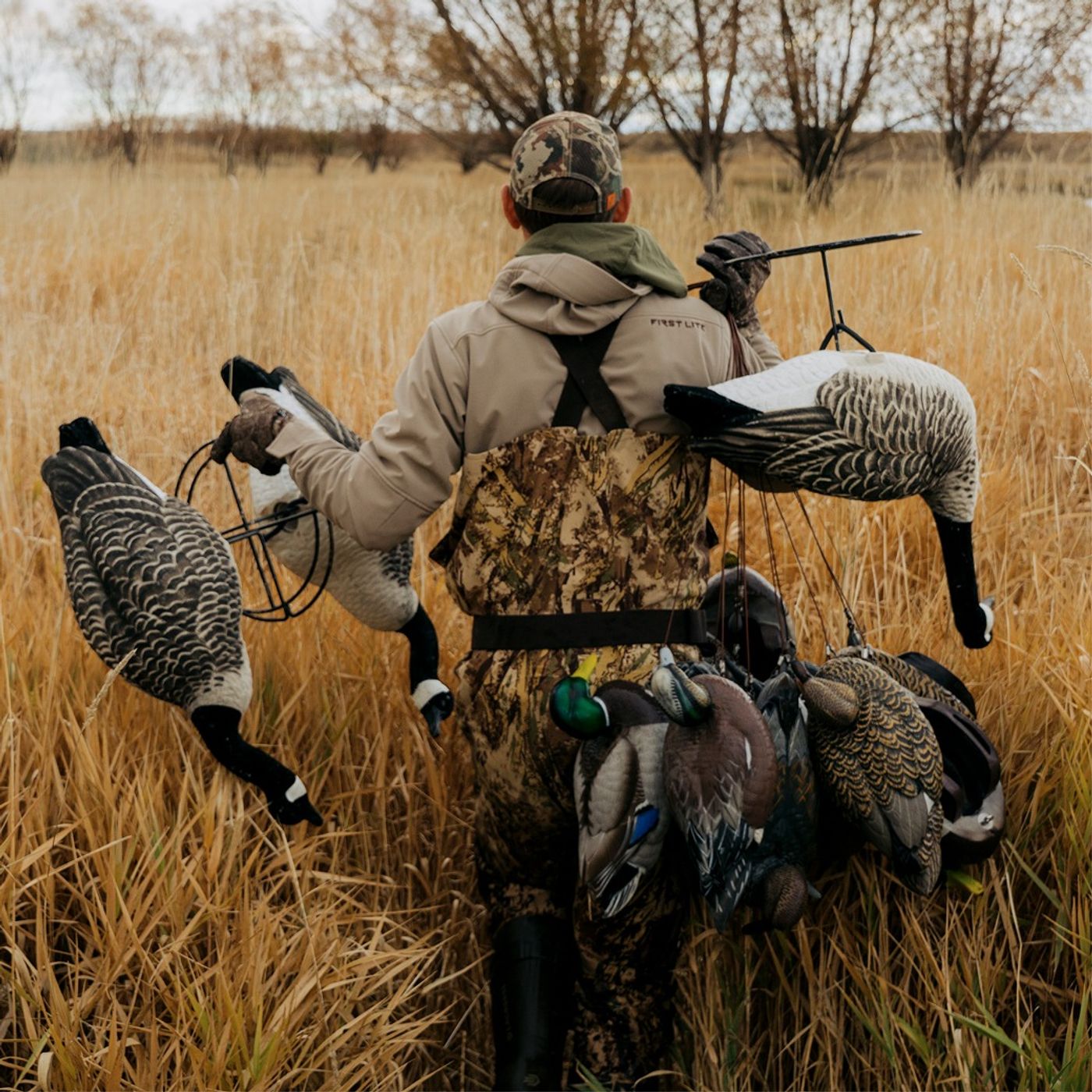
- The episode follows a duck hunting trip in Montana, where Rinella and his team demonstrate the preparation, strategy, and skill involved in the hunt.
- The use of decoys, duck calls, and a camouflaged blind highlights the intricate methods hunters employ to attract and harvest game.
- Michael Barbaro reflects on the emotional complexity of holding a freshly killed duck, describing a profound sense of connection to the animal and the natural world.
🍴 Eating What You Kill
- The hunting trip concludes with a meal prepared from the day’s catch, alongside other wild game like black bear and Canadian goose.
- Rinella emphasizes the satisfaction of consuming food that you’ve personally hunted, butchered, and cooked, describing it as a deeply personal and meaningful experience.
- The meal underscores the ethos of hunting as a way to honor the animal and its environment by ensuring nothing goes to waste.
🌿 Hunting and Conservation
- Rinella highlights the critical role hunters play in funding conservation efforts through hunting licenses and wildlife management programs.
- He contrasts the preservationist mindset of figures like John Muir with the conservationist approach of Theodore Roosevelt and Aldo Leopold, which integrates human activity into the stewardship of natural ecosystems.
- The episode challenges listeners to reconsider their relationship with food, nature, and the ethical implications of modern consumption.
AI-generated content may not be accurate or complete and should not be relied upon as a sole source of truth.
📋 Episode Description
Here at “The Daily,” we take our annual Thanksgiving episode very seriously.
A few years ago, we rang up an expert from the Butterball Turkey Talk-Line, who told us that yes, in a pinch, you can cook a turkey in the microwave. Last year, we invited ourselves over to Ina Garten’s house to learn the timeless art of holiday entertaining (Ina’s tip: flowers that match your napkins complete a table.).
This year, determined to outdo ourselves, we traveled to Montana to hunt our very own food. Our guest, Steven Rinella — perhaps the country’s most famous hunter — is an avid conservationist and a lifelong believer in eating what you kill.
What first drew us to Rinella was the provocative argument he put forth in his best-selling book, “Meat Eater.”
“To abhor hunting,” he wrote, “is to hate the place from which you came, which is akin to hating yourself in some distant, abstract way.”
So, a few weeks ago, we spoke with Rinella at his podcast studio in Bozeman, Mont, about the forces that turned him into what he describes as an “environmentalist with a gun”. The next morning, we hunted ducks with him, and then, inspired by Rinella, we ate what we had killed.
Photo: Will Warasila for The New York Times
Audio Produced by Tina Antolini. Edited by Wendy Dorr. Engineered by Efim Shapiro and Alyssa Moxley. Fact-checking by Susan Lee. Original music by Daniel Powell and Marion Lozano.
Subscribe today at nytimes.com/podcasts or on Apple Podcasts and Spotify. You can also subscribe via your favorite podcast app here https://www.nytimes.com/activate-access/audio?source=podcatcher. For more podcasts and narrated articles, download The New York Times app at nytimes.com/app.