

🤖 AI Summary
Overview
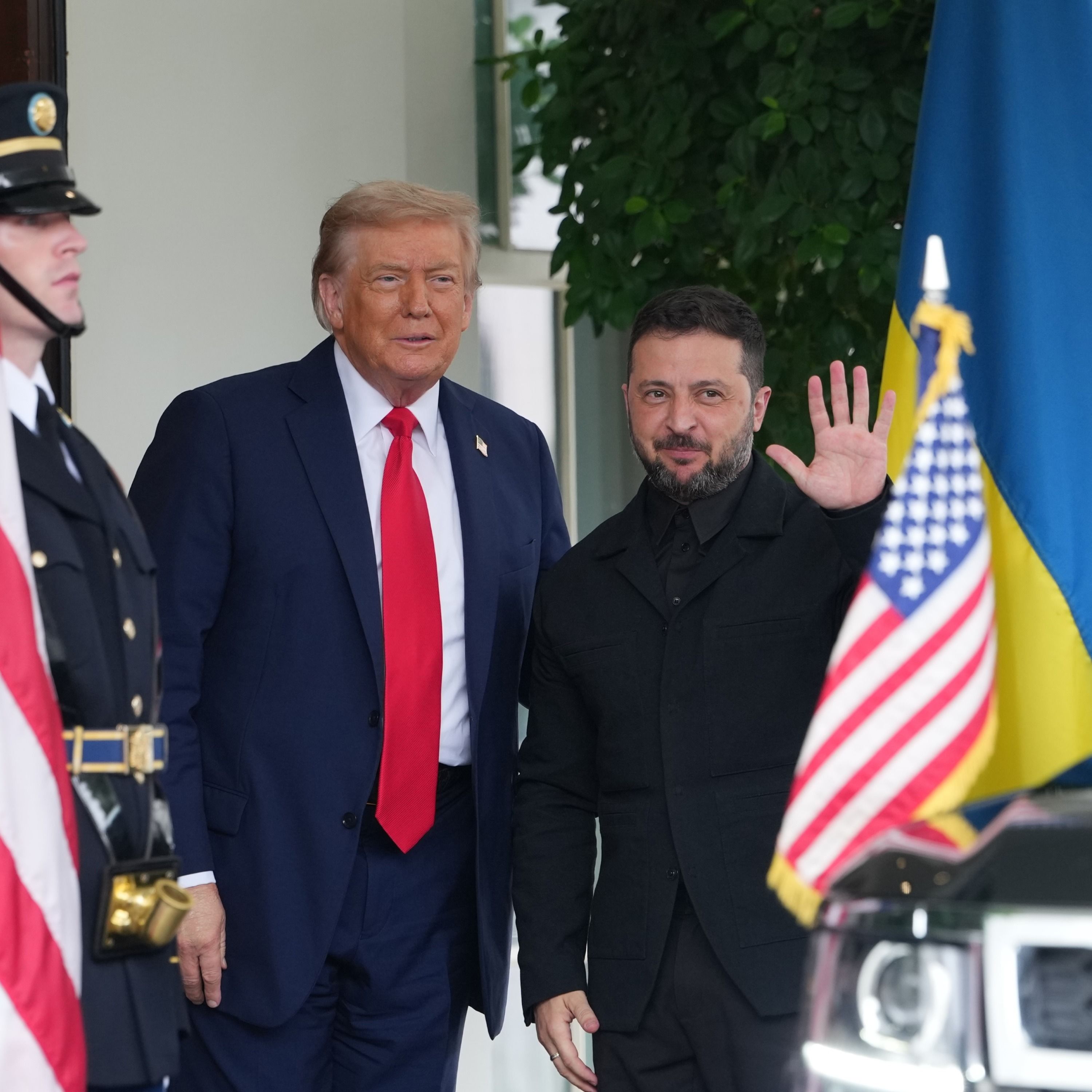
This episode delves into Ukrainian President Volodymyr Zelenskyy's high-stakes meeting with President Trump at the White House, accompanied by a coalition of European leaders. The discussion explores Zelenskyy's strategic shift in approach, the dynamics of U.S.-Ukraine relations, and the broader geopolitical implications of the ongoing war with Russia.
Notable Quotes
- The West wants to give us just enough to survive. They don’t want to give us just enough to win.
- Michael Schwirtz, on Ukraine's frustration with Western support.
- This meeting seemed like it was set up to allow Zelensky to state his peace.
- Michael Schwirtz, contrasting the tone of this meeting with the previous disastrous encounter.
- Theater is what President Trump likes, and theater is what President Trump understands.
- Michael Schwirtz, on Trump's approach to diplomacy.
🇺🇦 Zelenskyy's Strategic Shift
- Zelenskyy adopted a more deferential and diplomatic tone compared to his previous Oval Office meeting, which had devolved into a shouting match.
- European leaders joined him in Washington to provide visible support and avoid a repeat of February’s disastrous encounter.
- Zelenskyy’s attire—a black field suit—was seen as a subtle concession, addressing past criticisms of his informal dress.
🤝 U.S.-Ukraine Relations and Trump's Role
- Trump’s stance on Ukraine has been inconsistent, initially supporting a ceasefire but later aligning with Putin’s demands for territorial concessions.
- Zelenskyy leveraged recent Russian strikes on Ukrainian cities to highlight the urgency of a ceasefire and gain Trump’s sympathy.
- Trump expressed openness to providing security guarantees for Ukraine, a notable shift from his earlier reluctance.
🌍 European Unity and Strategic Calculations
- The presence of key European leaders, including the British Prime Minister and NATO Secretary General, underscored the war’s broader implications for European security.
- European leaders flattered Trump extensively, recognizing the U.S.’s pivotal role in shaping the conflict’s outcome.
- Germany’s Chancellor Friedrich Merz pushed back on Trump, emphasizing that a ceasefire must precede further negotiations.
⚔️ The Ceasefire and Security Guarantees Debate
- Zelenskyy’s primary demand remains a ceasefire, arguing that negotiations cannot occur under active bombardment.
- Security guarantees for Ukraine, potentially involving U.S. or NATO troops, remain contentious, with Russia categorically rejecting such measures.
- Trump’s ambiguous comments about U.S. troop involvement marked a potential policy shift but left room for interpretation.
🎭 Diplomacy or Theater?
- The meeting was heavy on symbolism and public displays of unity but light on concrete resolutions.
- Zelenskyy and European leaders used the platform to manage Trump’s unpredictable diplomacy, while Putin’s willingness to engage remains uncertain.
- The episode highlights the performative nature of international diplomacy, with substantive progress on ending the war still elusive.
AI-generated content may not be accurate or complete and should not be relied upon as a sole source of truth.
📋 Episode Description
European leaders raced to Washington to show their support for President Volodymyr Zelensky of Ukraine as he met with President Trump on Monday.
It was their first face-to-face meeting at the White House since their disastrous blowup in the Oval Office in February.
Michael Schwirtz, who covers global intelligence, explains how and why Mr. Zelensky’s approach has changed.
Guest: Michael Schwirtz, the global intelligence correspondent for The New York Times.
Background reading:
- Can Mr. Zelensky trust Mr. Trump? Ukraine’s fate may depend on the answer.
- Mr. Zelensky and other European leaders have learned a thing or two about negotiating with Mr. Trump.
For more information on today’s episode, visit nytimes.com/thedaily. Transcripts of each episode will be made available by the next workday.
Photo: Doug Mills/The New York Times
Unlock full access to New York Times podcasts and explore everything from politics to pop culture. Subscribe today at nytimes.com/podcasts or on Apple Podcasts and Spotify.