

🤖 AI Summary
Overview
This episode explores the deep divisions within Iran following a tentative peace agreement with the United States. It examines the ideological battle between hardliners demanding revenge and pragmatists seeking diplomacy, the public's reaction to these tensions, and the broader implications for Iran's leadership and future.
Notable Quotes
- Trump cannot scare us with death.
– Abdi Latif Dahir, quoting an Iranian mourner on their defiance and calls for revenge.
- Iran's government and leadership is at war with itself.
– Farnaz Fassihi, on the internal fractures within Iran's ruling factions.
- If the pragmatists win, it will basically be the end of the Islamic Republic as we've known it.
– Farnaz Fassihi, on the stakes of the ideological divide.
🕊️ The Fragile Peace Agreement
- The U.S. and Iran signed a tentative peace deal, but tensions remain high, with hardliners opposing the agreement.
- Public mourning ceremonies for the late Ayatollah Khamenei became a platform for anti-American sentiment and calls for revenge.
- Many mourners expressed anger at Iranian officials who participated in peace talks, with chants of Death to the compromise
and physical confrontations with leaders like President Pezishkian.
🔥 Calls for Revenge and Public Sentiment
- The funeral for Ayatollah Khamenei was a highly choreographed event showcasing public grief and defiance.
- Hardliners dominated the ceremonies, demanding retaliation against the U.S. and Israel. The word revenge
was omnipresent on banners, flags, and clothing.
- Despite the ceasefire, many Iranians at the funeral rejected diplomacy, emphasizing a desire for vengeance over peace.
⚔️ Internal Divisions in Iran's Leadership
- Iran's leadership is split between ultra-hardliners, led by figures like Saeed Jalili, and pragmatists advocating for diplomacy to rebuild the economy and reduce sanctions.
- The hardliners, though a minority (10-20% of the population), are vocal and loyal, forming the ideological backbone of the regime.
- Pragmatists, including senior Revolutionary Guard generals, argue for leveraging the war's outcomes into diplomatic gains.
🌀 The Role of the Supreme Leader
- The new Supreme Leader, Mojtaba Khamenei, remains in hiding and has not publicly taken a side, creating a power vacuum.
- Both factions claim his support, but his absence has allowed divisions to deepen.
- Mojtaba's lack of authority compared to his father has weakened the regime's ability to unify and control its direction.
📉 The Silent Majority and Economic Struggles
- Most Iranians (70-80%) oppose the war and the regime's hardline policies, focusing instead on economic survival amid 400% inflation and collapsing infrastructure.
- A digital petition called for hardline politicians to experience the war's consequences firsthand, reflecting public frustration with their decisions.
- The majority feels trapped between the regime's internal conflicts and external pressures from the U.S. and Israel.
AI-generated content may not be accurate or complete and should not be relied upon as a sole source of truth.
📋 Episode Description
Fractures in Tehran are pitting a faction favoring negotiation with Washington against hard-liners who oppose making a deal with the United States.
Guest:
- Abdi Latif Dahir, a Middle East correspondent for The New York Times, covering Lebanon and Syria.
- Farnaz Fassihi, the United Nations bureau chief for The New York Times. She also covers Iran and how countries around the world deal with conflicts in the Middle East.
Background reading:
- What a journey through wartime Iran revealed.
- Divisions festered within Iran over talks with the United States.
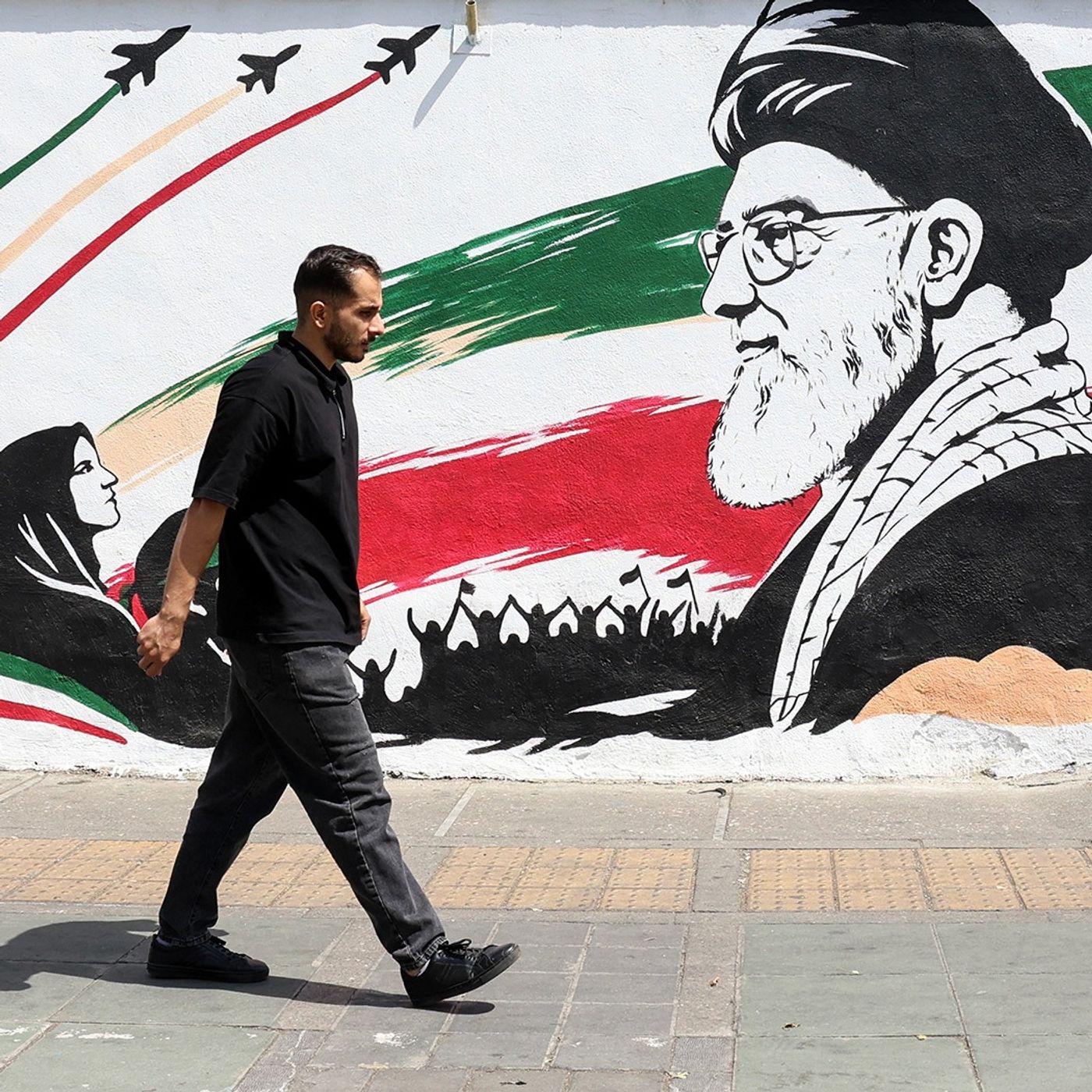
Photo: Agence France-Presse — Getty Images
For more information on today’s episode, visit nytimes.com/thedaily. Transcripts of each episode will be made available by the next workday.
Subscribe today at nytimes.com/podcasts or on Apple Podcasts and Spotify. You can also subscribe via your favorite podcast app here https://www.nytimes.com/activate-access/audio?source=podcatcher. For more podcasts and narrated articles, download The New York Times app at nytimes.com/app.
Hosted by Simplecast, an AdsWizz company. See pcm.adswizz.com for information about our collection and use of personal data for advertising.