

🤖 AI Summary
Overview
This episode examines the U.S. military's responsibility for a devastating airstrike on an elementary school in Iran, which killed at least 175 people, most of them children. Journalists Malachy Browne and Julian E. Barnes detail the investigative process, the intelligence failures that led to the tragedy, and the broader implications for modern warfare.
Notable Quotes
- This war is still going to be remembered, defined by this mistake as well. It's too big an error. It's too big a tragedy.
– Julian E. Barnes, on the lasting impact of the strike.
- The system of checks broke down. We do not fully know how and when, but the bottom line is 10-year-old data was used, and it resulted in a catastrophe.
– Julian E. Barnes, on the intelligence failure.
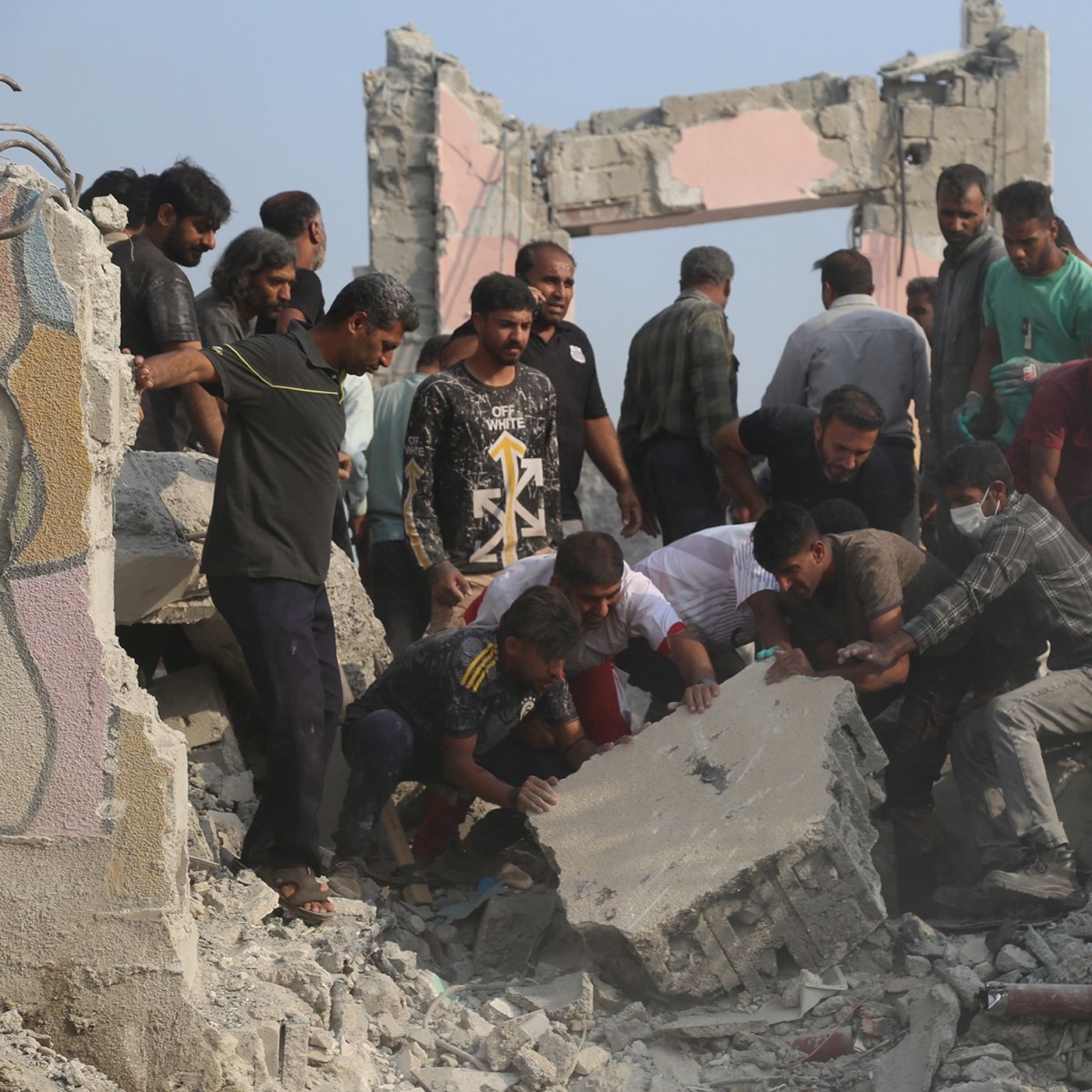
- Around the school, amid the rubble, you could see school books, small backpacks, and bright shoes of children who attended the school.
– Malachy Browne, describing the aftermath of the strike.
🛰️ Investigative Process and Evidence Gathering
- Malachy Browne and the Visual Investigations team used satellite imagery, video evidence, and expert analysis to confirm the school’s location and its civilian nature.
- The school, once part of a military base, had been repurposed a decade ago, with visible signs like playgrounds and pastel-colored walls.
- A critical video showed a Tomahawk missile striking the nearby military base, confirming U.S. involvement since only the U.S. possesses such missiles in this conflict.
📉 Intelligence Failures and Outdated Data
- The U.S. military relied on 10-year-old intelligence that misidentified the school as a military target.
- Verification processes, including satellite imagery and AI checks, failed to catch the outdated data.
- Julian E. Barnes highlighted systemic issues in modern warfare, where speed and lethality are prioritized over thorough verification.
⚖️ Accountability and Political Responses
- President Trump initially deflected responsibility, suggesting Iran might have used a U.S. missile, despite evidence to the contrary.
- Preliminary findings from the U.S. military investigation confirmed American culpability, but the administration’s ethos of minimizing civilian casualty rules may have contributed to the error.
- Historically, compensation and apologies have been offered in similar incidents, but this administration’s reluctance to apologize raises questions about accountability.
🎯 Broader Implications of Modern Warfare
- The reliance on remote warfare, such as missile strikes and drones, increases the risk of civilian casualties due to the lack of on-the-ground intelligence.
- Julian E. Barnes compared this tragedy to past military errors, emphasizing how such incidents often define public memory of wars.
- The episode underscores the ethical and operational challenges of conducting warfare from a distance, where human and machine errors can lead to catastrophic outcomes.
AI-generated content may not be accurate or complete and should not be relied upon as a sole source of truth.
📋 Episode Description
A continuing military investigation has determined that the United States is responsible for a strike that hit an elementary school in Iran, according to U.S. officials and others familiar with the preliminary findings. Iranian officials have said the death toll was at least 175 people, most of them children.
Malachy Browne and Julian E. Barnes, who have been covering the strike, discuss what probably led to one of the most devastating military errors in decades.
Guest:
- Malachy Browne, the enterprise director of the Visual Investigations team at The New York Times.
- Julian E. Barnes, a reporter covering the U.S. intelligence agencies and international security matters for The New York Times.
Background reading:
- A preliminary inquiry said that the United States was at fault in a strike that hit a school in Iran.
- A New York Times visual investigation suggested that the strike appeared to have been part of an attack on an adjacent naval base.
Photo: In a photograph made available by an Iranian semiofficial news agency, rescue workers and residents searched through rubble in Minab, Iran, after a strike heavily damaged a school. Mehr News Agency, via Associated Press
For more information on today’s episode, visit nytimes.com/thedaily. Transcripts of each episode will be made available by the next workday.
Subscribe today at nytimes.com/podcasts or on Apple Podcasts and Spotify. You can also subscribe via your favorite podcast app here https://www.nytimes.com/activate-access/audio?source=podcatcher. For more podcasts and narrated articles, download The New York Times app at nytimes.com/app.
Hosted by Simplecast, an AdsWizz company. See pcm.adswizz.com for information about our collection and use of personal data for advertising.