

🤖 AI Summary
Overview
This episode explores the harrowing journeys of Gazans attempting to return home after a ceasefire agreement between Israel and Hamas. Through interviews with three individuals — a photojournalist, a former restaurant worker, and a grieving father — the episode paints a vivid picture of the devastation, loss, and resilience experienced by those affected by the war.
Notable Quotes
- To lose a home, I don't have words for the kind of agony that it feels, and I don't wish it on anybody to know that kind of pain. It's like the small country in your big country is gone.
- Nidal Kuhail, reflecting on the emotional significance of his destroyed home.
- Just imagine carrying your children in bags from one place to the next. Like if I was traveling to another continent by foot, it would have been easier.
- Hussein Khaled Auda, on the heartbreaking journey to bury his children.
- The children were jumping, laughing, blowing bubbles, and chanting, 'We don't want to die anymore.' It was a moment of joy amidst unimaginable pain.
- Saher Alghorra, describing the bittersweet celebration of the ceasefire.
🛤️ The Journey Home
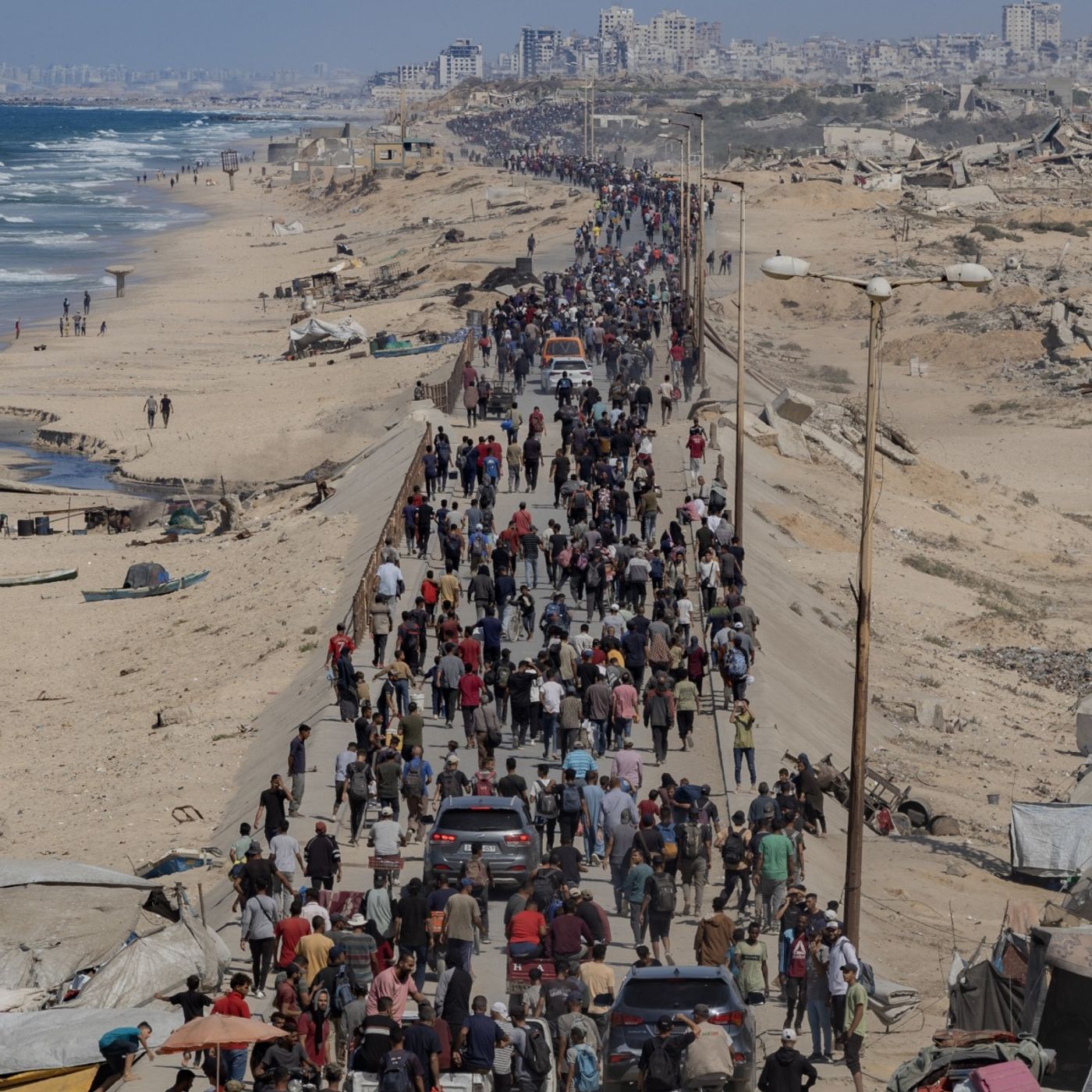
- Thousands of displaced Gazans traveled north along El Rashid Street, a coastal road reopened after the ceasefire.
- Saher Alghorra, a photojournalist, documented the scenes of people walking, carrying belongings, and navigating rubble-strewn roads.
- Many returned to find their homes reduced to rubble, with some setting up tents amidst the debris.
🏠 The Loss of Home
- Nidal Kuhail shared memories of his modest family home, built by his father, describing its warmth and spiritual comfort.
- He expressed the profound pain of losing a home, likening it to losing a small country within a big country.
- Despite the destruction, Nidal hoped to rebuild, even if only a roof remained.
📸 Shifting Perspectives in Photography
- Saher Alghorra noted a change in how Gazans interacted with him as a photojournalist. While displaced individuals often resented being photographed, those returning home welcomed it, wearing their best clothes to mark the occasion.
- He captured moments of joy, particularly among children, who celebrated the ceasefire with chants and bubbles, contrasting with the images of suffering he had previously documented.
💔 A Father's Grief and Resilience
- Hussein Khaled Auda recounted the loss of his four children in airstrikes, his wife's severe injuries, and the destruction of his home and gym.
- He undertook a painful journey to recover and bury his children's remains, describing the emotional toll of carrying their bodies.
- Hussein rejected rebuilding his home, stating, This place took too much from me,
and expressed his focus on his wife's recovery and their future.
📊 The Scale of Devastation
- The UN estimates that 90% of Gazans have been displaced, with nearly 80% of buildings damaged or destroyed.
- Approximately 68,000 Palestinians have been killed, including 18,000 children, with thousands still missing under the rubble.
- The episode highlights the immense human cost of the war and the long road to recovery for Gaza's residents.
AI-generated content may not be accurate or complete and should not be relied upon as a sole source of truth.
📋 Episode Description
Earlier this month, after Israel and Hamas reached a cease-fire agreement, the Israeli military said it would withdraw from parts of Gaza — allowing some Palestinians displaced to the south to try to return home to the north.
Rachelle Bonja, a producer of “The Daily,” recently spoke by phone with three Gazans who were making or contemplating the journey home. One of them, Saher Alghorra, is a photojournalist who often works with The Times; another is Nidal Kuhail, a former restaurant worker whom The Times has spoken to over the course of the war.
The third is Hussein Khaled Auda, a former bodybuilder who ran a small gym in Jabalia. Mr. Auda’s story is about his family. His four young children were killed in airstrikes during the war, and his wife was seriously injured. He has been traveling back home in large part to find and bury the remains of two of his children, who had been in the rubble of his house after one of the airstrikes. We interviewed his wife, Rawa, and other relatives, and reviewed death certificates and video footage to help understand what happened to his family.
In our reporting, The Times also learned that a cousin of Mr. Auda’s was a senior leader of Hamas in Gaza who was killed during the war last year. The Times asked Mr. Auda if he himself had any ties to Hamas. He said he was not a member of Hamas and not political, and had dozens of cousins. He said he had seen the one affiliated with Hamas just a couple of times in his life.
Like other news organizations, The Times has not yet been able to send its own staff journalists into Gaza unescorted. This episode, like many other Times pieces for more than two years, seeks to help our audience understand the experiences of Gazans during a devastating war.
Guest:
- Rachelle Bonja, a New York Times audio producer for “The Daily.”
- Saher Alghorra, a photojournalist for The New York Times.
Background reading:
- “Everything Is Gone”: Gazans return home to find devastation and little hope.
- Who were the 2,000 Palestinians freed by Israel?
Photo: Saher Alghorra for The New York Times
For more information on today’s episode, visit nytimes.com/thedaily. Transcripts of each episode will be made available by the next workday.
Subscribe today at nytimes.com/podcasts or on Apple Podcasts and Spotify. You can also subscribe via your favorite podcast app here