

🤖 AI Summary
Overview
This episode explores the complex relationship between writer Tom Junod and his father, Lou Junod, as detailed in Tom's memoir, In the Days of My Youth I Was Told What It Means to Be a Man. Through vivid anecdotes, the conversation delves into Lou's larger-than-life persona, his philosophies on masculinity, his secrets, and the profound impact he had on Tom's life and identity.
Notable Quotes
- He might not have been a good man, but he was an elemental one. I feel his presence when I eat, when I drink, when I make love, when I breathe. Anger never had a chance.
— Tom Junod, on reconciling his feelings about his father.
- Tell a smart woman she's beautiful, and tell a beautiful woman she's smart.
— Tom Junod, quoting his father's philosophy on seduction.
- Can we all just agree that this was a man?
— A woman at Lou Junod's funeral, encapsulating his magnetic and enigmatic presence.
🕶️ The Charismatic Enigma of Lou Junod
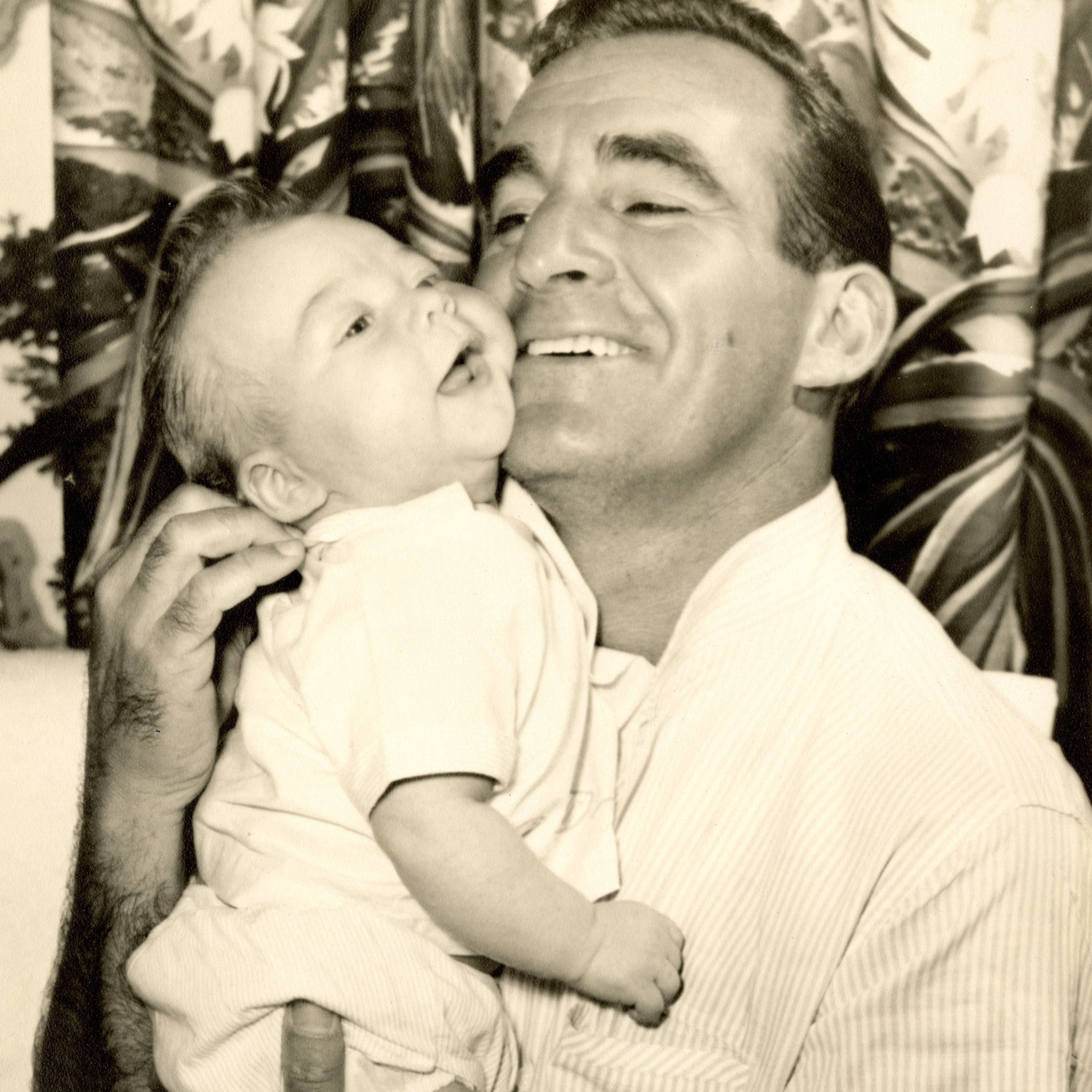
- Lou Junod was a man of striking appearance and charm, often compared to movie stars like Cary Grant and Frank Sinatra. His green eyes, dark skin, and impeccable style made him unforgettable.
- He lived by a strict code of masculinity, emphasizing firm handshakes, eye contact, and sartorial elegance. His philosophies extended to relationships, with advice like complimenting women in ways that defied their expectations.
- Despite his charisma, Lou's life was marked by contradictions: a handbag salesman with the aura of a celebrity, a devoted family man who was also a notorious philanderer.
🎭 The Performance of Masculinity
- Lou modeled his identity on the movie stars of the 1930s and 1940s, adopting their mannerisms, speech, and style. He even practiced singing in his basement, embodying the crooner persona.
- His masculinity was performative, blending charm, seduction, and a relentless pursuit of admiration. This extended to his professional life, where his allure helped him succeed as a handbag salesman.
- Lou's hyper-masculine ideals often clashed with his role as a father, creating a dynamic where he was both loving and intimidating.
🔍 Discovering Family Secrets
- Tom's understanding of his father deepened through moments of discovery, such as finding explicit materials in Lou's briefcase at age 16. These revelations shifted Tom's perception of his father from a charming rogue to a more morally ambiguous figure.
- After Lou's death, Tom uncovered more secrets, including a long-term affair and the possibility of a half-sibling. These discoveries led Tom to investigate his father's hidden life, ultimately finding and connecting with his half-sister, Lizanne.
💔 Love, Loss, and Reconciliation
- Lou's life was marked by a tragic love affair with a woman named Peggy Monahan, who he described as the love of his life. Her death profoundly affected him, adding a layer of vulnerability to his otherwise confident persona.
- Tom's journey to uncover his father's secrets was driven by a desire to reconcile the man he knew with the man he discovered. This process helped him come to terms with his father's flaws and complexities.
- Despite a lifetime of betrayals, Tom reflects on his father with love and gratitude, acknowledging the ways Lou shaped his identity and passions.
📖 Writing as a Tribute and Reckoning
- Tom's 1996 GQ article, My Father's Fashion Tips, was both a gift to immortalize Lou and a means to confront him about his life. The piece celebrated Lou's philosophies on style and masculinity while omitting his darker secrets.
- Writing his memoir allowed Tom to explore his ambivalent feelings toward his father, ultimately leading to a deeper understanding of their relationship and his own identity.
AI-generated content may not be accurate or complete and should not be relied upon as a sole source of truth.
📋 Episode Description
The writer Tom Junod has spent a career crafting profiles for men’s magazines like GQ and Esquire, often of famously complicated men like Norman Mailer, Kevin Spacey and Tony Curtis.
But another man loomed behind Junod’s interest in these figures, informing his own sense of masculinity and manhood: his father, Lou.
Lou Junod was handsome, charismatic — a man who seemed like a celebrity, even though he wasn’t famous. He was also mysterious, a keeper of secrets that have continued to reverberate through his son’s life.
On today’s episode, Michael Barbaro talks with Junod about his new book, “In the Days of My Youth I Was Told What It Means to Be a Man,” which is part memoir and part detective story, as well as a powerful meditation on fatherhood.
On Today’s Episode:
Tom Junod is the author of “In the Days of My Youth I Was Told What It Means to Be a Man.”
Background Reading:
Tom Junod Would Like to Tell You About His Father
Art: Lou Junod with baby Tom in 1958.
Subscribe today at nytimes.com/podcasts or on Apple Podcasts and Spotify. You can also subscribe via your favorite podcast app here https://www.nytimes.com/activate-access/audio?source=podcatcher. For more podcasts and narrated articles, download The New York Times app at nytimes.com/app.
Hosted by Simplecast, an AdsWizz company. See pcm.adswizz.com for information about our collection and use of personal data for advertising.