

🤖 AI Summary
Overview
This episode explores the enduring resonance of Homer’s Odyssey as Christopher Nolan’s cinematic adaptation approaches its release. Natalie Kitroeff speaks with Emily Wilson, the first woman to translate the Odyssey into English, and Madeline Miller, author of Circe and Song of Achilles, about the epic’s complexity, its characters, and its relevance in today’s world.
Notable Quotes
- You can't hurt Homer. Homer's invulnerable.
– Madeline Miller, on the resilience of the Odyssey to reinterpretation.
- Odysseus is complicated because he's multiple in ways that no other Homeric hero is.
– Emily Wilson, on the layered nature of the epic’s protagonist.
- The poor and strangers are blessed by Zeus.
– Emily Wilson, on the Odyssey’s enduring lesson about the importance of hospitality.
📜 The Timeless Appeal of the *Odyssey*
- Emily Wilson and Madeline Miller discuss how the Odyssey resonates across millennia, offering a rich tapestry of emotions—grief, rage, joy—and universal themes like resilience and identity.
- Both emphasize the epic’s psychological depth, with Wilson highlighting its multivocal storytelling and Miller noting its ability to reflect timeless human struggles.
- The Odyssey’s adaptability is a key strength, with its characters and themes reinterpreted to suit different eras and audiences.
🎭 Odysseus: A Complicated Hero
- Wilson describes Odysseus as a “code-switching” hero, capable of self-reinvention and thriving in diverse, perilous environments. His duality—both a devoted family man and a ruthless, cunning warrior—makes him uniquely complex.
- Miller explores Odysseus’s psychological scars, likening his experiences to PTSD, and contrasts his portrayal in the Odyssey with other ancient texts where he appears more villainous.
- Both agree that Odysseus’s moral ambiguity and adaptability make him a fascinating, if not always likable, character.
👑 Penelope and the Women of the *Odyssey*
- Penelope, Odysseus’s wife, is portrayed as his intellectual equal. Miller highlights her cunning, particularly in her final test of Odysseus with their immovable bed.
- Both guests note that while Penelope is brilliant, her inner life remains somewhat enigmatic in the text, leaving room for interpretation.
- Miller and Wilson lament the limited exploration of other female characters, like Circe and Calypso, in the original epic and hope for richer portrayals in adaptations.
🎥 Adapting the Odyssey: Challenges and Opportunities
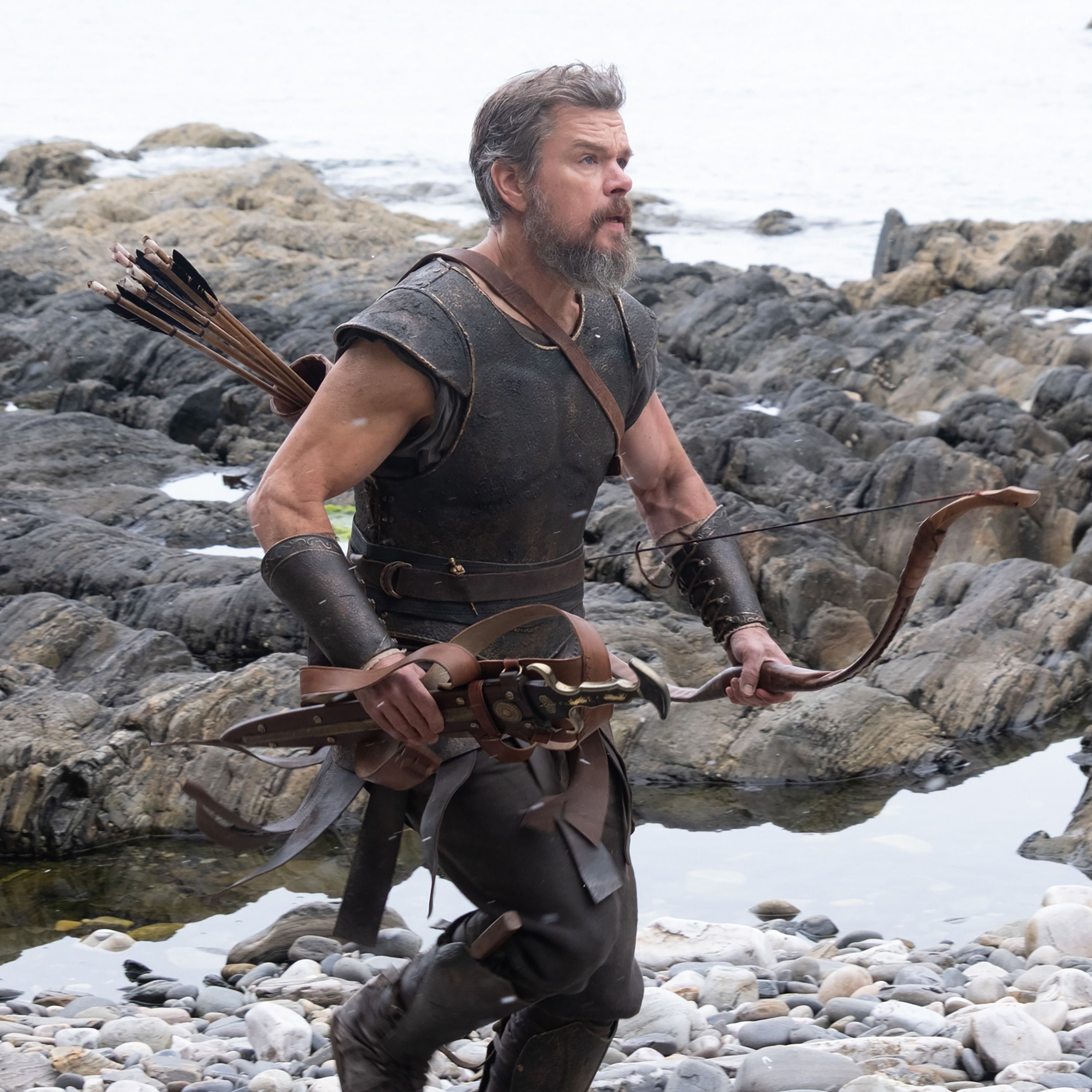
- The guests discuss Christopher Nolan’s upcoming film, expressing excitement about its potential to introduce the Odyssey to new audiences.
- Wilson raises concerns about whether the film will fully explore the epic’s social dynamics, particularly the roles of enslaved characters like Eumaeus and Eurycleia.
- Both emphasize that adaptation is part of the Odyssey’s tradition, with Miller noting that the poem itself emerged from oral storytelling and constant reinvention.
🏛️ The Odyssey’s Enduring Lessons
- Hospitality, or xenia, is a central theme. Wilson underscores the poem’s message about welcoming strangers and respecting the vulnerable, a lesson with profound modern relevance.
- Miller reflects on the epic’s generosity, where even minor characters are richly drawn, offering endless opportunities for reinterpretation and connection.
- Both hope the film will inspire audiences to engage with the original text and its timeless exploration of humanity.
AI-generated content may not be accurate or complete and should not be relied upon as a sole source of truth.
📋 Episode Description
This Friday, “The Odyssey,” directed by Christopher Nolan, hits theaters. Even before the movie’s release, though, it’s proving to be a cultural event. Spirited discussions of Nolan’s cinematic interpretation of the epic poem already abound online, and they are likely to intensify after the public sees the film.
Why does a 12,000-line poem that is nearly 3,000 years old still feel resonant today? In this episode of “The Sunday Daily,” Natalie Kitroeff talks about the “Odyssey” with two writers who have produced some critically acclaimed and widely read modern interpretations of Greek classics: Emily Wilson, the first woman to translate the “Odyssey” from ancient Greek, and Madeline Miller, the author of the best-selling novels “Circe” and “Song of Achilles.”
On Today’s Episode:
Emily Wilson, a professor, classist, author and translator of the “Odyssey”
Madeline Miller, the author of “Circe,” “Song of Achilles” and other books
Background Reading:
We’ll Help You Find Your Next Great Book. (Spoiler: It’s the ‘Odyssey.’)
The First Woman to Translate the ‘Odyssey’ Into English
Book Review: Turning Circe Into a Good Witch
Photo: Melinda Sue Gordon/Universal Pictures
Subscribe today at nytimes.com/podcasts or on Apple Podcasts and Spotify. You can also subscribe via your favorite podcast app here https://www.nytimes.com/activate-access/audio?source=podcatcher. For more podcasts and narrated articles, download The New York Times app at nytimes.com/app.
Hosted by Simplecast, an AdsWizz company. See pcm.adswizz.com for information about our collection and use of personal data for advertising.