

🤖 AI Summary
Overview
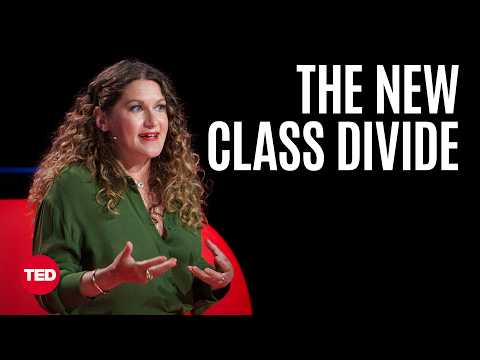
Xochitl Gonzalez explores how wealth inequality is not just an economic issue but a civic one, posing a significant threat to democracy. Drawing from personal experiences and research into the psychology of social class, she examines how socioeconomic status shapes identity, behavior, and political engagement, ultimately influencing the health of democratic systems.
Notable Quotes
- Economic inequality is like the heart disease of democracy — so often ignored until it’s too late.
– Xochitl Gonzalez
- It’s easy to judge people for voting based on the price of eggs when you are certain where your next meal is coming from.
– Xochitl Gonzalez
- Despite our nation’s reputation as a land of opportunity, less than 10% of people who start at the bottom of the economic ladder ever make it to the top.
– Xochitl Gonzalez
🪙 The Emotional Toll of Financial Scarcity
- Gonzalez recounts a personal story of financial panic when her bank account was unexpectedly empty, triggering memories of growing up in scarcity.
- She highlights how financial anxiety is linked to health issues like hypertension and depression, yet remains a taboo topic in American culture.
- The physiological stress of financial insecurity, she argues, is deeply ingrained and shapes behavior long after someone achieves financial stability.
📊 Social Class and Identity Formation
- Research shows that social class of origin influences identity as much as race, gender, or sexuality. Children as young as seven can accurately identify social class from photos.
- Gonzalez contrasts the worldviews of children raised in scarcity versus those raised with resources:
- Children in scarcity prioritize group security and conformity.
- Children with resources focus on individual agency and self-expression.
- These differing upbringings create distinct class cultures
that shape political and social perspectives.
🏛️ Wealth Inequality and Democracy
- Gonzalez warns that extreme wealth inequality, where the top 1% controls as much wealth as the bottom 90%, erodes the middle class and threatens democracy.
- She describes a class apartheid
where the wealthy donor class, disconnected from financial precarity, dominates political influence.
- Lower-income individuals, often excluded from political participation, are more likely to support authoritarian leaders who promise quick fixes to economic struggles.
🌍 The Global Link Between Inequality and Authoritarianism
- Gonzalez draws parallels between economic inequality and the rise of authoritarian leaders worldwide, from Hungary to the Philippines.
- She explains how financial precarity fosters divisions, racism, and xenophobia, which are exploited by strongman leaders.
- Billionaires, like the robber barons
of the Gilded Age, also benefit from autocratic systems, using wealth to secure monopolies and political influence.
💡 Bridging the Divide
- Gonzalez calls for empathy across socioeconomic lines, urging people to engage with those outside their own class.
- She emphasizes the need to support policies and candidates that strengthen the working and middle classes.
- Cultivating compassion, she argues, is essential to addressing wealth inequality and preserving democracy.
AI-generated content may not be accurate or complete and should not be relied upon as a sole source of truth.
📋 Video Description
Wealth inequality gets talked about as an economic problem. Writer Xochitl Gonzalez makes the case that it's a civic one, too — a slow, quiet threat to democracy. Drawing on her research into the psychology of social class, she shows how growing up with (or without) money changes how we experience politics, community and society. (Recorded at TED Democracy Philadelphia on June 13, 2026)
Join us in person at a TED conference: https://tedtalks.social/events
Become a TED Member to support our mission: https://ted.com/membership
Subscribe to a TED newsletter: https://ted.com/newsletters
Follow TED!
Instagram: https://www.instagram.com/ted
LinkedIn: https://www.linkedin.com/company/ted-conferences
TikTok: https://www.tiktok.com/@tedtoks
Facebook: https://facebook.com/TED
X: https://www.twitter.com/TEDTalks
The TED Talks channel features the best talks and performances from the TED Conference, where the world's leading thinkers and doers give the talk of their lives in 18 minutes (or less) — plus originals, podcasts and exclusive content. Look for videos on Technology, Entertainment and Design as well as science, business, global issues, the arts and more. Visit https://TED.com for our entire library, transcripts, translations and personalized recommendations.
Watch more: https://go.ted.com/xochitlgonzalez
https://youtu.be/PpEUTpzWt2M
TED videos may be used for non-commercial purposes under a Creative Commons License, Attribution–Non Commercial–No Derivatives (or the CC BY – NC – ND 4.0 International) and in accordance with the TED Talks Usage Policy: https://www.ted.com/about/our-organization/our-policies-terms/ted-talks-usage-policy. For more information on using TED for commercial purposes (e.g. employee learning, in a film or online course), submit a request at https://media-requests.ted.com
#TED #TEDTalks #Psychology