

🤖 AI Summary
Overview
This episode explores the alarming rise of political violence in the United States, featuring insights from Robert Pape, a leading expert on political violence. The discussion delves into the societal, demographic, and economic factors fueling this trend, the role of rhetoric from leaders and social media, and potential solutions to address the crisis.
Notable Quotes
- Tens of millions of Americans on both sides of the aisle see political violence as acceptable. This changes everything.
– Robert Pape, on the normalization of violence in American society.
- We like our monsters to be villains far away from us. But the reality is, they might live in the suburb next to you.
– Robert Pape, on the shifting profile of those committing political violence.
- The future of political violence is a choice. We, the 75% who abhor it, need to step up and demand change.
– Robert Pape, on the role of the majority in combating violence.
🧨 The Era of Violent Populism
- Robert Pape describes the current period as an era of violent populism,
marked by widespread societal acceptance of political violence.
- Surveys reveal that 14-21% of Americans now support political violence, with half of these individuals endorsing assassination as a legitimate tactic.
- Unlike past eras of political violence, today's violence is bipartisan, with significant support from both the left and the right.
- Historical parallels include the 1920s Ku Klux Klan resurgence and the political assassinations of the 1960s, but the current era is unique in its simultaneous polarization across the political spectrum.
📊 Demographic and Economic Drivers
- The U.S. is undergoing a historic demographic shift, transitioning from a white-majority democracy to a white-minority democracy, which has become a lightning rod issue
for political violence.
- Economic inequality, with wealth increasingly concentrated in the top 1%, exacerbates feelings of disenfranchisement across both political parties.
- These structural changes create existential fears of political exclusion, driving individuals to view violence as a last resort to protect their perceived interests.
🗣️ The Role of Rhetoric and Social Media
- Political leaders' rhetoric, such as calls to punch back harder,
normalizes violence and emboldens volatile individuals.
- Social media amplifies these messages, creating echo chambers where acts of violence are celebrated and potential attackers gain confidence from perceived social approval.
- However, Pape emphasizes that social media is an accelerant, not the root cause, of political violence.
👔 The Changing Profile of Perpetrators
- The profile of those committing political violence has shifted from fringe militia members to middle-class and upper-middle-class individuals, including professionals like doctors and business owners.
- This insurrectionist in a business suit
phenomenon reflects broader societal fears of losing status and power, rather than desperation from economic marginalization.
- Misunderstanding this new profile risks misdirecting efforts to prevent violence.
🛑 Solutions and the Role of Leadership
- Pape advocates for addressing the root causes of political violence, including slowing demographic change to allow institutions to adapt and reversing wealth concentration trends.
- In the short term, he calls for bipartisan leadership to jointly condemn political violence, citing past instances where such rhetoric reduced public support for violence.
- He urges the 75% of Americans who oppose political violence to actively voice their concerns to political leaders, emphasizing that change is possible if the majority demands it.
AI-generated content may not be accurate or complete and should not be relied upon as a sole source of truth.
📋 Episode Description
In the midst of a cascade of violent acts against political figures in the United States, a few questions keep coming up — how did we get here, and how much worse could it really get?
Robert Pape, a professor at the University of Chicago and one of the country’s leading voices on political violence, discusses why violence is on the rise and what it would take to stop it.
Guest: Robert Pape, a professor of political science at the University of Chicago.
Background reading:
- Is the United States in a politically violent age? This is what the data and history say.
- Here’s how to understand claims about U.S. political violence and threats to presidents.
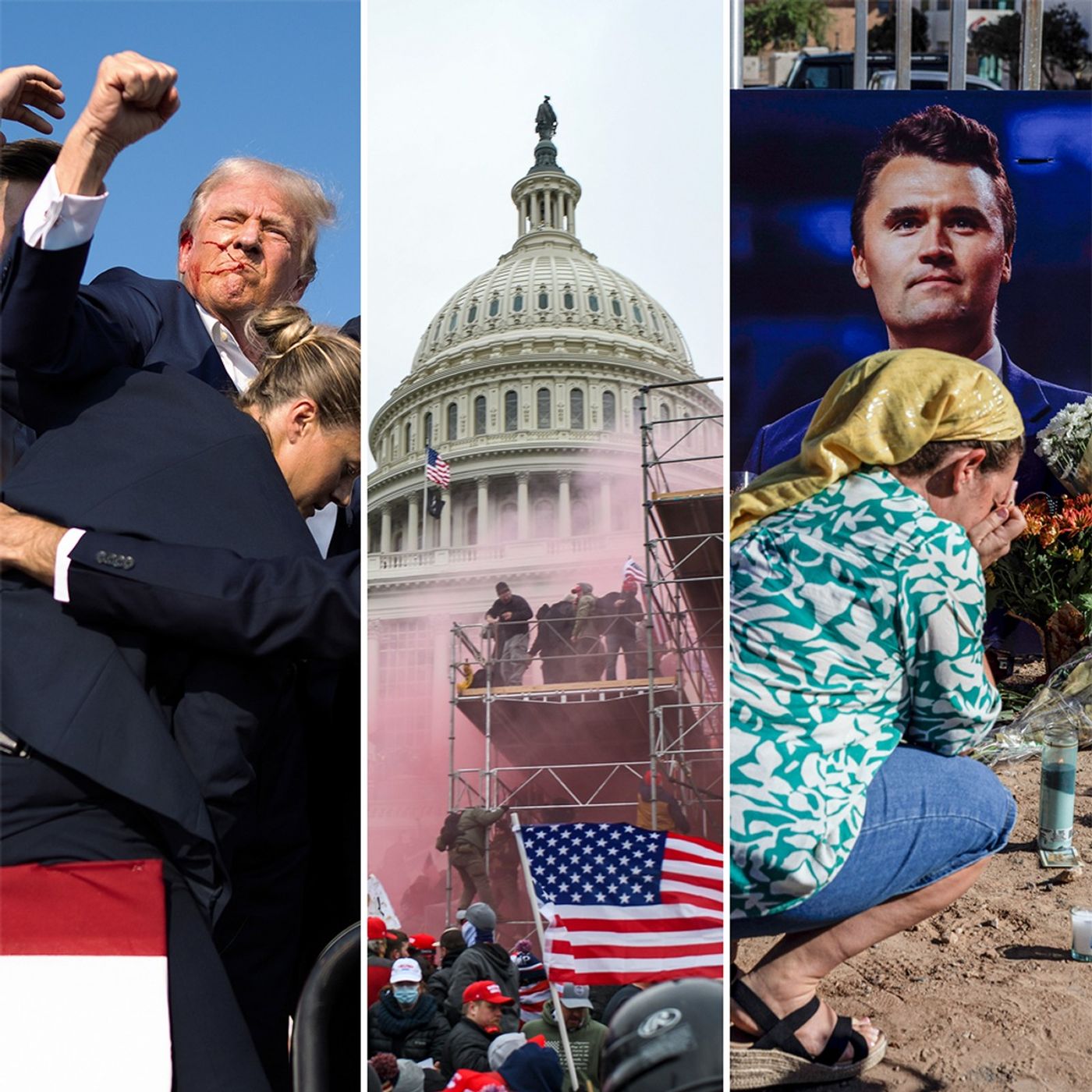
Photo: Doug Mills/The New York Times, Kenny Holston for The New York Times and Adriana Zehbrauskas for The New York Times
For more information on today’s episode, visit nytimes.com/thedaily. Transcripts of each episode will be made available by the next workday.
Subscribe today at nytimes.com/podcasts or on Apple Podcasts and Spotify. You can also subscribe via your favorite podcast app here https://www.nytimes.com/activate-access/audio?source=podcatcher. For more podcasts and narrated articles, download The New York Times app at nytimes.com/app.
Hosted by Simplecast, an AdsWizz company. See pcm.adswizz.com for information about our collection and use of personal data for advertising.