

🤖 AI Summary
Overview
This episode delves into the landmark antitrust ruling against Google, exploring its implications for the tech industry, the government's efforts to regulate monopolies, and the evolving competition in artificial intelligence. The discussion highlights the legal arguments, the judge's remedies, and the broader impact on consumers and innovation.
Notable Quotes
- The rise of these AI products proves that the market is working, that you do not need to make some radical intervention.
- David McCabe, on Google's defense during the trial.
- A court needs to apply remedies like this with humility, and that's what I've done.
- Judge Amit Mehta, on his measured approach to the ruling.
- Has the judge changed the rules of the game enough to give one of the rookie players enough space on the field to compete with Google?
- David McCabe, on the broader implications of the ruling.
🧑⚖️ The Antitrust Case Against Google
- The government accused Google of illegally maintaining its monopoly in search by paying billions to companies like Apple and Samsung to make Google the default search engine.
- This pernicious flywheel
effect entrenched Google's dominance, making it harder for competitors to challenge its position.
- Google argued that its success stemmed from superior products, not anti-competitive practices.
📉 The Judge's Remedies and Their Limitations
- Judge Amit Mehta ruled that Google must stop exclusive deals for default search engine placement but allowed non-exclusive agreements, leaving ambiguity about implementation.
- Google must share parts of its search index with competitors but retains key proprietary data, preserving its secret sauce.
- The harshest penalties, like breaking up Google or spinning off Chrome, were rejected as overreach.
🤖 The Role of AI in Shaping the Ruling
- The AI boom, sparked by tools like ChatGPT, reshaped the case. Google argued that AI competition proved the market was dynamic and did not require drastic intervention.
- The government countered that Google's dominance in search could extend to AI, creating a new monopoly.
- The judge acknowledged the uncertainty of the AI landscape, opting for a cautious approach to remedies.
📊 Consumer Impact and Industry Implications
- Immediate effects on consumers are unclear, as remedies focus on industry dynamics rather than direct user experience.
- The ruling may open space for competitors, potentially leading to more innovative products in the future.
- Historical parallels with the Microsoft antitrust case suggest that scrutiny alone could alter Google's behavior and the tech landscape.
🏢 Government Struggles to Regulate Big Tech
- The case highlights the challenges of regulating fast-evolving industries like tech and AI.
- Despite the monumental effort, the ruling is seen as modest compared to the rapid pace of technological change.
- The decision sets new rules for tech giants but leaves open questions about their effectiveness in fostering competition.
AI-generated content may not be accurate or complete and should not be relied upon as a sole source of truth.
📋 Episode Description
For decades, the government has struggled with how to police monopolies in the tech industry.
This week, a landmark ruling in a case against Google became the most aggressive attempt in the modern era to level the playing field.
David McCabe, who covers tech policy for The Times, explains who won, who lost and what it all means for the race to dominate artificial intelligence.
Guest: David McCabe, a New York Times reporter who covers the complex legal and policy issues created by the digital economy and new technologies.
Background reading:
- Google avoided the harshest penalties in a federal judge’s monopoly ruling.
For more information on today’s episode, visit nytimes.com/thedaily. Transcripts of each episode will be made available by the next workday.
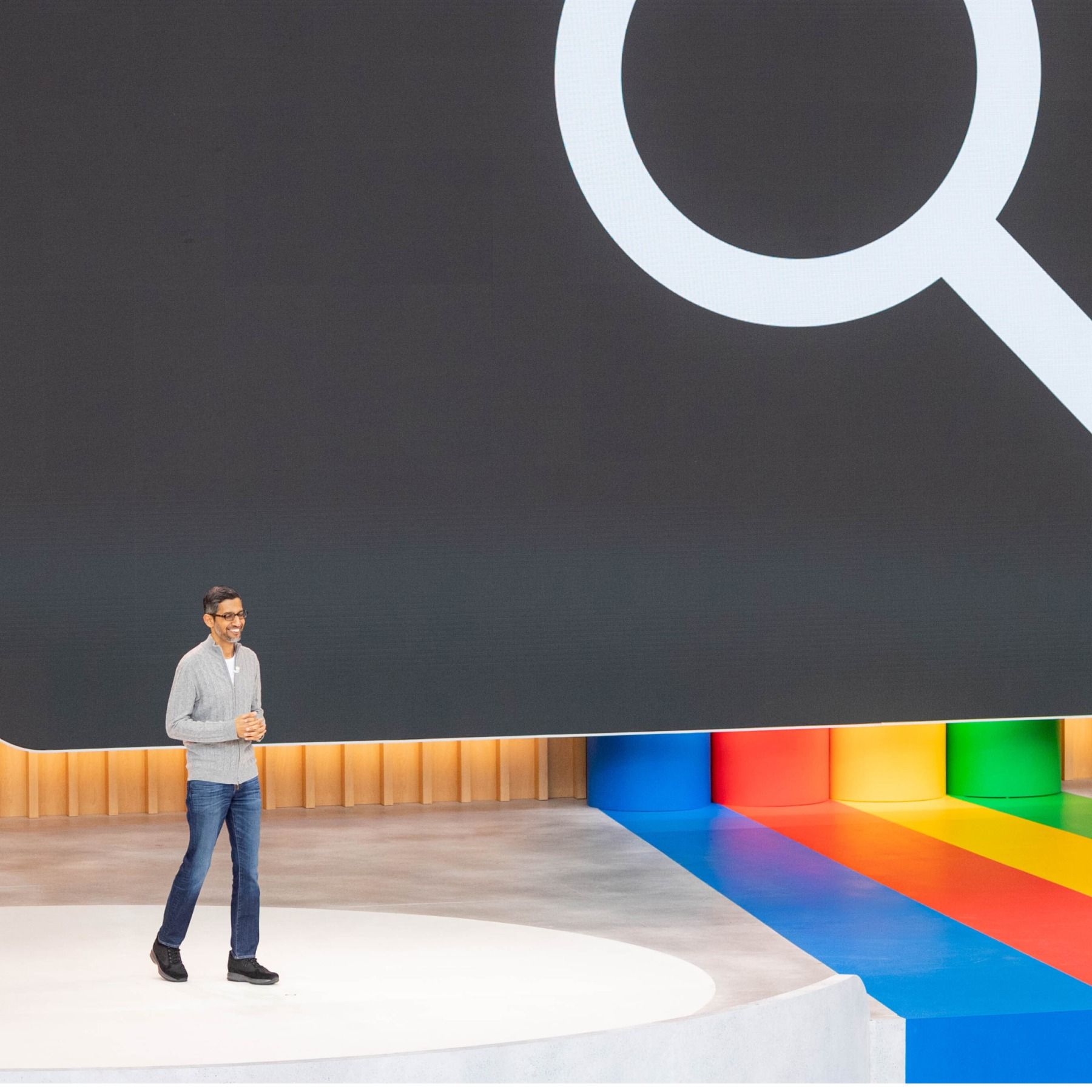
Photo: Jason Henry for The New York Times
Unlock full access to New York Times podcasts and explore everything from politics to pop culture. Subscribe today at nytimes.com/podcasts or on Apple Podcasts and Spotify.