

🤖 AI Summary
Overview
This episode explores the evolving relationship between humans and AI in workflows, focusing on the AI sandwich
metaphor, where humans frame and polish tasks while AI handles the execution. Kieran Klaassen, GM of Quora and creator of the compound engineering framework, shares insights on optimizing human-AI collaboration, the limits of automation, and the importance of finding joy in creative work.
Notable Quotes
- If you ship something or do something, if you want it to be your own, you cannot fully automate everything. It’s like art.
– Kieran Klaassen, on the irreplaceable human touch in creative processes.
- Humans are the bread in the sandwich, and the AI is in the middle.
– Dan Shipper, on the balance of human and AI roles in workflows.
- The final thing that's not automatable is art made by humans who feel something. And I think that's beautiful.
– Dan Shipper, on the enduring value of human creativity.
🍞 The AI Sandwich: Humans at the Start and End
- Kieran Klaassen introduces the AI sandwich
metaphor: humans frame the problem (the bread) and refine outputs, while AI handles the execution (the filling).
- The compound engineering framework emphasizes four steps: planning, work, review, and compounding knowledge. Humans are critical in the planning and review phases.
- Automation excels in rote tasks, but human judgment is essential for ideation, brainstorming, and ensuring outputs feel polished and meaningful.
🛠️ The Evolution of Compound Engineering
- Kieran explains how the compound engineering plugin optimizes workflows by leveraging AI for execution while capturing learnings to improve future iterations.
- The work
phase is largely solved, with AI capable of following detailed plans and performing deep, sustained tasks.
- New steps like brainstorm
and ideate
were added to address the need for human creativity and problem framing before planning begins.
🎨 Automation vs. Art: The Human Touch
- Full automation is a moving target,
but certain aspects of work—like creating art or making nuanced decisions—remain uniquely human.
- Kieran draws parallels to music composition, where the creative spark and live performance cannot be replicated by AI.
- Humans excel at shifting problem frames, a skill that AI struggles to replicate due to limited contextual understanding and rare data feedback loops.
🌟 Finding Joy in an AI-Driven World
- Both Kieran and Dan emphasize the importance of leaning into tasks that bring personal joy, whether it’s crafting beautiful code, design, or writing.
- As AI takes over rote tasks, humans can focus on the creative and fulfilling aspects of work, redefining their roles as product-focused creators or managers.
- Kieran encourages listeners to identify what excites them and use AI as a tool to amplify that joy.
🚀 The Future of AI and Human Collaboration
- While AI will improve, Dan argues that it’s far from achieving true AGI capable of running autonomously 24/7.
- Language models lack the ability to change frames or deeply personalize outputs, reinforcing the need for human oversight.
- The ultimate value lies in collaboration: humans setting the frame and refining outputs, with AI as a powerful assistant in between.
AI-generated content may not be accurate or complete and should not be relied upon as a sole source of truth.
📋 Episode Description
Most frameworks for working with AI agents assume humans should stay in the loop at every phase. That’s the wrong approach, says Cora general manager Kieran Klaassen.
Kieran is the creator of Every's AI-native engineering methodology, compound engineering. His four-step framework—plan, work, review, compound—rebuilds how engineers work with agents. The insight, worked out with collaborator Trevin Chow, is about when to be in the loop and when to step away and let the model handle it. "LLMs are very good at just following steps, doing deep work, working for hours—days even now," Kieran says. "That thing is kind of solved."
Kieran and Trevin describe an AI workflow as a sandwich. Agents are the workhorse filling, and humans are the bread, responsible for framing the problem at the start and reviewing the outputs at the end.
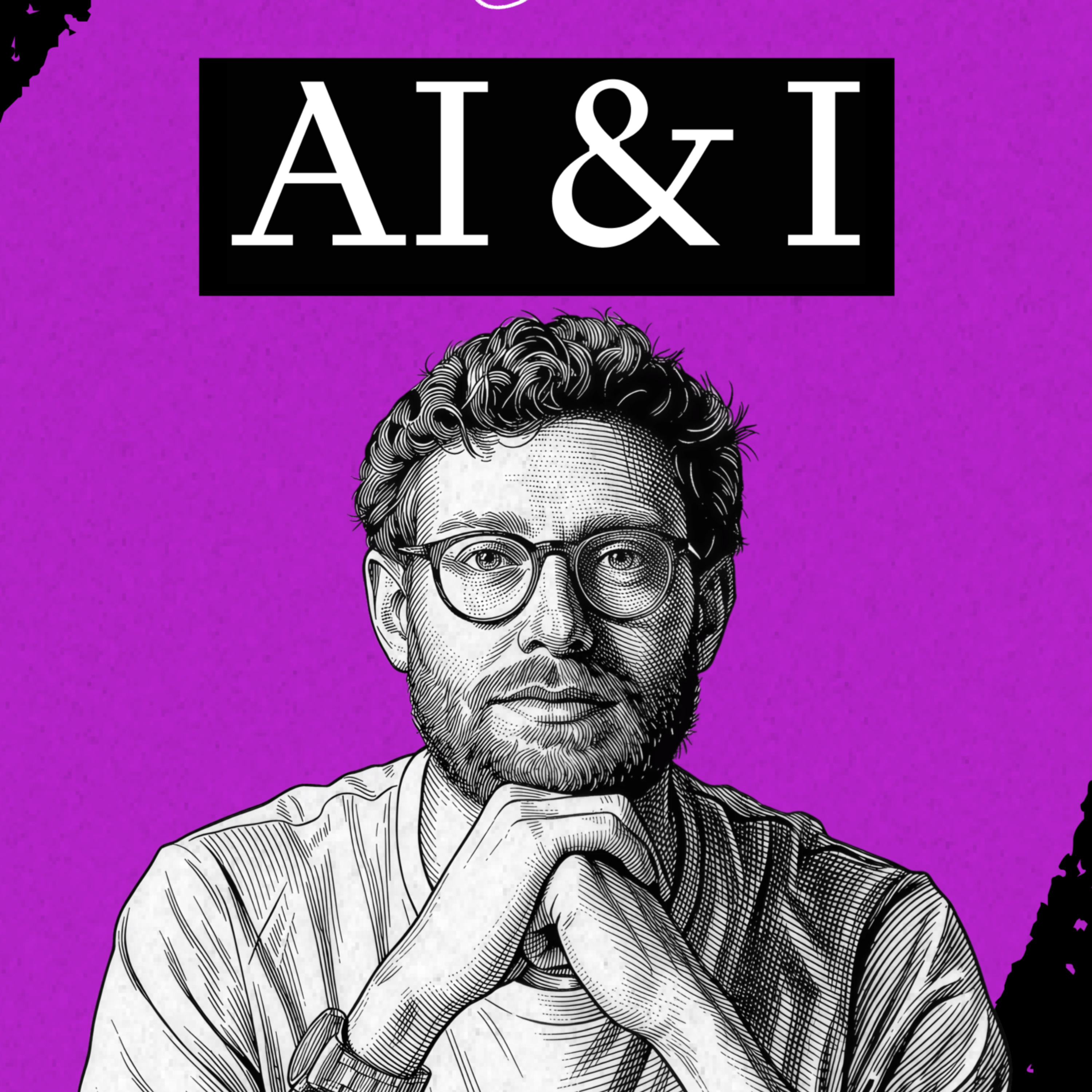
Every CEO Dan Shipper talked with Kieran for AI & I about why setting the frame of a problem is still hard for agents, why simulated personas won't replace human judgment, Dan's bar for AGI—an agent worth running 24/7 with no off switch—and what Kieran's background as a classical composer taught him about performance, polish, and finding the parts of work that bring you joy.
If you found this episode interesting, please like, subscribe, comment, and share!
Head to http://granola.ai/every and get 3 months free with the code EVERY
To hear more from Dan Shipper:
- Subscribe to Every: https://every.to/subscribe
- Follow him on X: https://twitter.com/danshipper
- Compound engineering plugin: https://github.com/EveryInc/compound-engineering-plugin
- Compound engineering guide: https://every.to/source-code/compound-engineering-the-definitive-guide
- Compound engineering camp: https://every.to/source-code/compound-engineering-camp-every-step-from-scratch
Discover more resources in the episode
Timestamps:
00:00:00 – Introduction and the AI sandwich metaphor
00:02:33 – What compound engineering is and how it’s evolved
00:04:27 – The "work" phase of agentic coding is essentially solved
00:06:27 – Why humans belong at the beginning and the end of an AI workflow
00:11:06 – Dan's argument for why agents can't change frames—and how this will keep us employed
00:16:51 – Full automation is a moving target
00:23:21 – Musical composition as a model for human-AI collaboration
00:26:39 – Find your place in an AI-accelerated world by leaning into what brings you joy