

🤖 AI Summary
Overview
This episode delves into the recently announced framework agreement between the United States and Iran, brokered by President Trump. The discussion explores the details of the deal, its implications for the Middle East, and the political dynamics surrounding it, including tensions with Israel and the broader geopolitical landscape.
Notable Quotes
- If Iran had a nuclear weapon, Israel wouldn’t be around for two hours.
– President Trump, on his rationale for pushing the deal.
- This isn’t a peace deal... it’s more like a table of contents for what needs to be negotiated next.
– David Sanger, on the limitations of the agreement.
- Did we need to have these three months of violence and incredible disruption? Or was there another way to get to where we find ourselves today?
– David Sanger, questioning the necessity of the war.
🛑 The Framework Agreement with Iran
- The deal includes reopening the Strait of Hormuz, lifting the blockade on Iranian ports, and a 60-day ceasefire.
- Iran has agreed to suspend tolls in the Strait for 60 days, though the U.S. claims this will be permanent.
- The agreement is a preliminary memorandum of understanding, not a formal peace deal or nuclear accord.
- President Trump emphasized that the deal is a step toward remaking the Middle East and ensuring regional safety from an Iranian nuclear threat.
📞 Trump’s Call to David Sanger
- Despite past tensions, Trump personally called David Sanger to highlight the deal’s significance.
- Trump compared the agreement favorably to Obama’s 2015 nuclear deal, claiming it achieves more despite ongoing criticism.
- The president framed the deal as a major geopolitical win, though many provisions remain unnegotiated.
🇮🇱 U.S.-Israel Tensions
- Prime Minister Netanyahu opposed the deal, particularly provisions limiting Israel’s ability to attack Hezbollah or Iran.
- Trump and Netanyahu had heated exchanges, with Trump accusing Netanyahu of jeopardizing Israel’s long-term security.
- Israel’s refusal to be bound by the agreement underscores a growing rift between the two allies.
⚖️ The Durability and Implications of the Deal
- The memorandum lacks enforceability and is seen as a starting point for future negotiations.
- Critics argue the deal largely restores the pre-war status quo, raising questions about the war’s necessity.
- Trump’s focus on monitoring Iran’s nuclear material rather than immediate removal suggests a shift in urgency.
🌍 Geopolitical Dynamics
- Trump praised Russia and China for staying out of the conflict but criticized European nations for their delayed involvement.
- The deal reflects Trump’s transactional approach, including a controversial proposal for the U.S. to claim 20% of regional revenues in exchange for Gulf patrols.
- The agreement’s success hinges on future negotiations, with Iran potentially stalling until the next U.S. administration.
AI-generated content may not be accurate or complete and should not be relied upon as a sole source of truth.
📋 Episode Description
After days of promising that a cease-fire was near, President Trump announced late Sunday that he had reached a deal with Iran.
Today, David Sanger, who spoke to the president, explains what is and is not included in the framework agreement, and how much closer it gets both sides to ending the war for good.
Guest: David E. Sanger, the White House and national security correspondent for The New York Times.
Background reading:
- Mr. Trump says the Strait of Hormuz will be “permanently toll-free” under the agreement with Iran.
- Washington and Tehran reach a framework for peace.
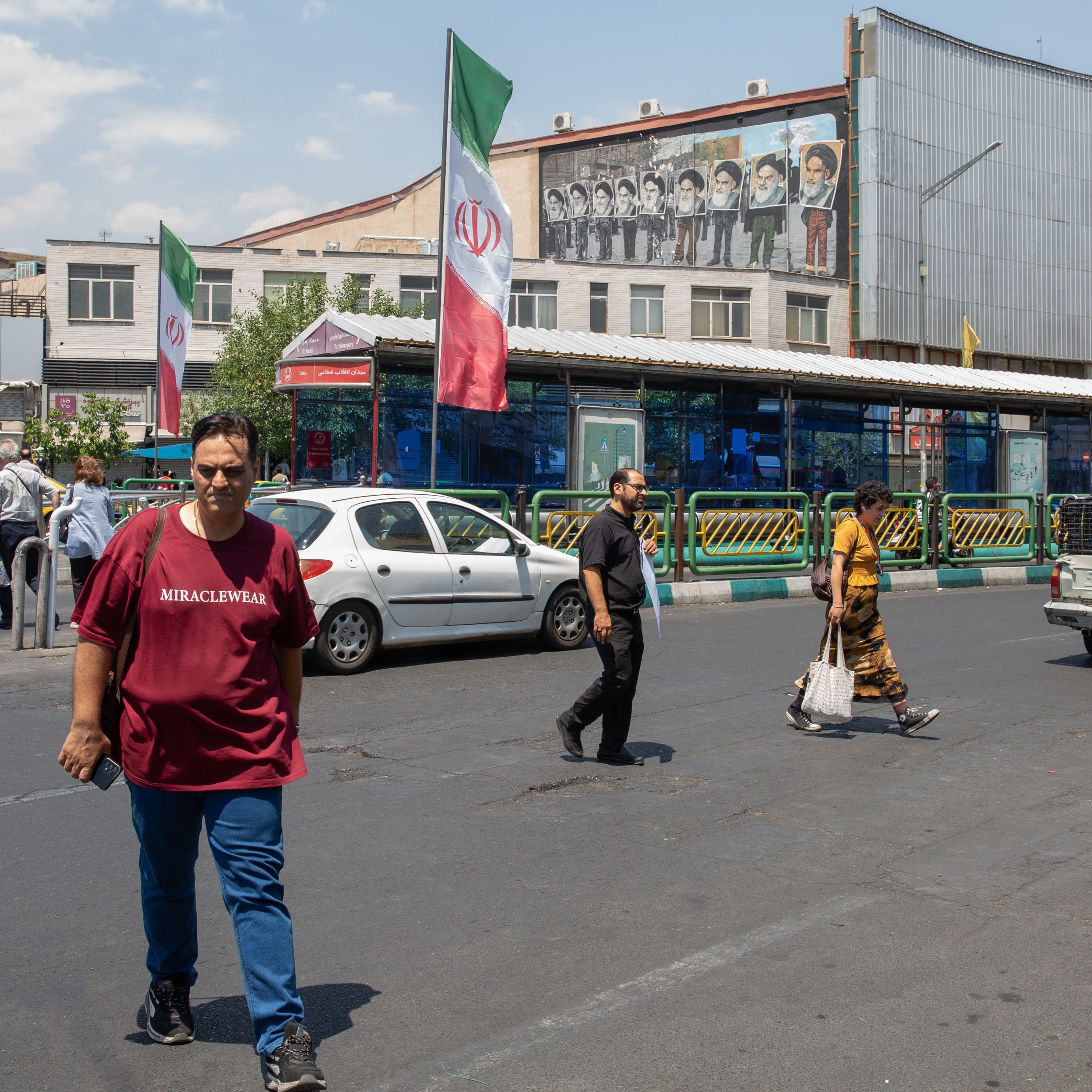
Photo: Arash Khamooshi/Polaris for The New York Times
For more information on today’s episode, visit nytimes.com/thedaily. Transcripts of each episode will be made available by the next workday.
Subscribe today at nytimes.com/podcasts or on Apple Podcasts and Spotify. You can also subscribe via your favorite podcast app here https://www.nytimes.com/activate-access/audio?source=podcatcher. For more podcasts and narrated articles, download The New York Times app at nytimes.com/app.
Hosted by Simplecast, an AdsWizz company. See pcm.adswizz.com for information about our collection and use of personal data for advertising.