

🤖 AI Summary
Overview
This episode explores the escalating crisis in France, where student protests over deteriorating public school conditions have highlighted deeper financial and political challenges. The discussion examines the strain on France's generous welfare state, the political fallout for President Emmanuel Macron, and the potential implications for the European Union as France faces mounting debt and economic instability.
Notable Quotes
- France has been living beyond its means for something like 20 years now.
— Mark Landler, on the root of France's financial crisis.
- What sets these protests apart is that they are about young people. They're about the future. And yet the future of these young people could be much darker because of the hole that France has put itself in.
— Mark Landler, on the significance of the student-led demonstrations.
- France is too big to fail, but it might also be too big to save.
— Mark Landler, on the potential consequences of France's financial troubles for the European Union.
📚 Student Protests and the State of Public Schools
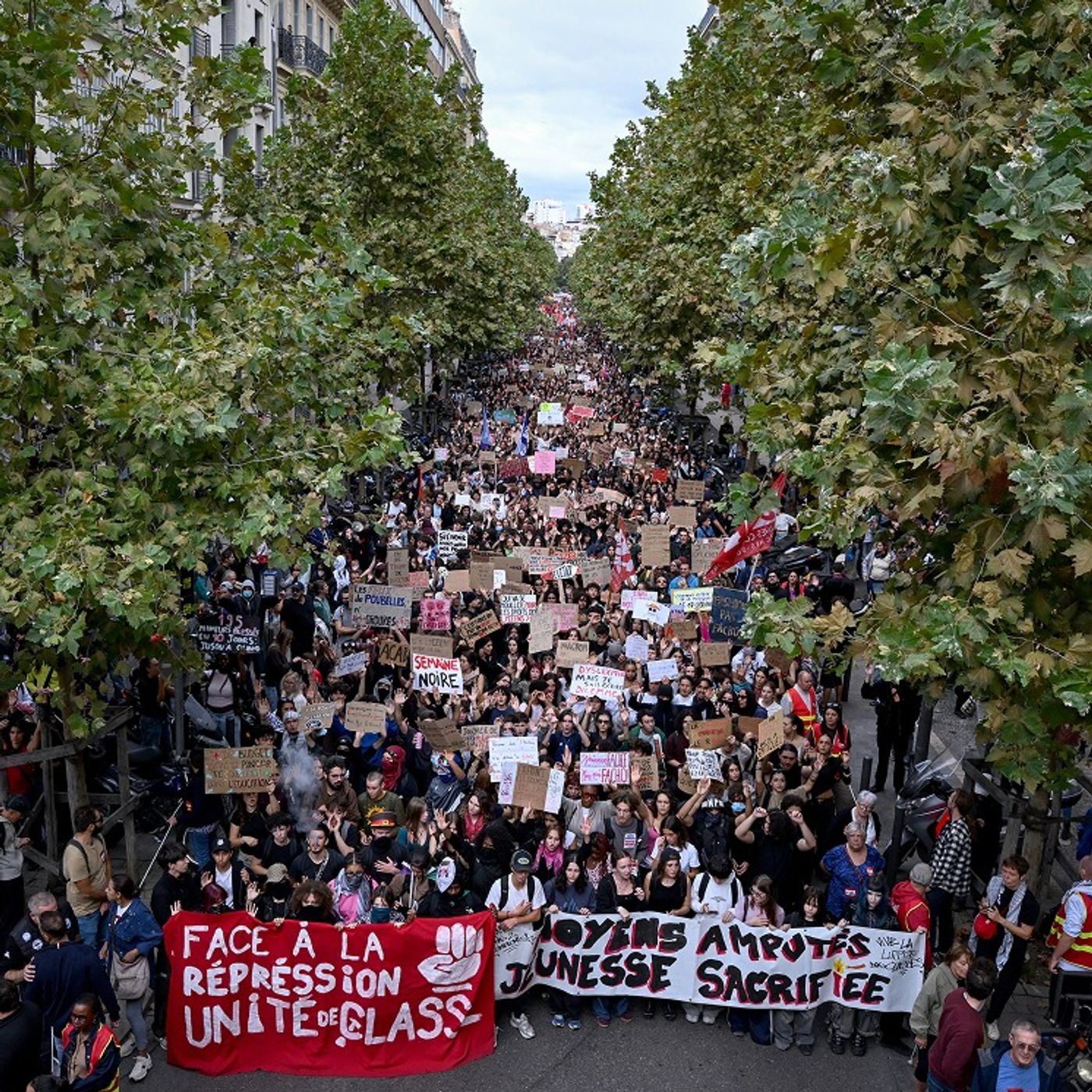
- Thousands of high school students, aged 14 to 17, are protesting poor conditions in public schools, including a lack of basic resources like chairs, tables, and teachers.
- The protests have grown to include over 250,000 participants, with more than 6,000 arrests and hundreds of injuries.
- The demonstrations are part of a broader wave of unrest in France, including strikes by port workers and public sector employees.
💰 The Cost of France's Welfare State
- France's generous welfare system includes free healthcare, education, family allowances, and extensive paid leave. However, the pension system, with one of the lowest retirement ages in Europe (just over 62), is a major financial burden.
- The country has been running budget deficits exceeding 5% of GDP, with public debt now larger than its entire economy.
- France's financial instability threatens the European Union, as its economic health is critical to the bloc's stability.
📉 Macron's Unfulfilled Economic Promises
- President Emmanuel Macron came into office in 2017 promising economic reform and fiscal responsibility. However, his efforts to raise the retirement age and cut taxes for the wealthy sparked widespread protests and earned him the label president for the rich.
- External crises, including the COVID-19 pandemic and the war in Ukraine, further strained France's finances.
- Macron's inability to implement meaningful reforms has left the country in a worse financial state as he nears the end of his presidency.
⚖️ Political Polarization and Economic Populism
- Far-right candidate Marine Le Pen is gaining traction ahead of the next presidential election. Despite her populist stance, she supports maintaining France's generous welfare benefits, including lowering the retirement age back to 62.
- On the far left, Jean-Luc Mélenchon has embraced the student protests and proposed canceling a significant portion of France's debt, a move deemed unrealistic and potentially destabilizing.
- Both candidates' platforms highlight the lack of political will to address France's fiscal challenges head-on.
🇪🇺 Implications for the European Union
- France's financial troubles could lead to a crisis akin to the Greek debt crisis but on a much larger scale, given France's central role in the EU as its second-largest economy.
- A potential bailout for France would strain other EU countries, many of which are already grappling with their own economic issues.
- The prospect of a far-right, anti-EU president like Marine Le Pen further complicates the situation, as her policies could undermine European unity and cooperation.
AI-generated content may not be accurate or complete and should not be relied upon as a sole source of truth.
📋 Episode Description
For weeks, thousands of high school students in France have been out in the streets protesting the conditions of public schools. They want better funding, something that won’t be easy with the current state of French finances.
Mark Landler, the Paris bureau chief, explains why after years of overspending, France is in crisis, and is driving toward a fiscal cliff.
Guest: Mark Landler, the Paris bureau chief of The New York Times.
Background reading:
- France’s debt problem is a warning to the world.
- Understand the country’s polycrisis.
- For the resurgent far left, the protests are an opening and a threat.
Photo: Miguel Medina/Agence France-Presse — Getty Images
For more information on today’s episode, visit nytimes.com/thedaily. Transcripts of each episode will be made available by the next workday.
Subscribe today at nytimes.com/podcasts or on Apple Podcasts, Spotify and Amazon Music. You can also subscribe via your favorite podcast app here https://www.nytimes.com/activate-access/audio?source=podcatcher. For more podcasts and narrated articles, download The New York Times app at nytimes.com/app.
Hosted by Simplecast, an AdsWizz company. See pcm.adswizz.com for information about our collection and use of personal data for advertising.