

🤖 AI Summary
Overview
This episode explores President Trump's unprecedented interventions in corporate America, including the U.S. government acquiring stakes in major companies like Intel. The discussion delves into how these moves challenge traditional free-market capitalism, the motivations behind them, and their potential long-term implications for the U.S. economy and political landscape.
Notable Quotes
- Trump is saying free market capitalism has actually been a myth... Instead of pretending it's a free market and getting nothing for it, he's saying, give us something back for it.
- Andrew Ross Sorkin
- If socialism is government owning the means of production, wouldn't the government owning part of Intel be a step towards socialism?
- Senator Rand Paul
- The U.S. government is here to help, and not just here to help, we want to own you.
- Andrew Ross Sorkin, on the irony of Republican-led government intervention
🛠️ Government's New Role in Corporate America
- The Trump administration has taken a 10% stake in Intel, marking a rare instance of direct government ownership in a major corporation outside of a crisis.
- This move is part of a broader trend, including acquiring a golden share
in U.S. Steel and taxing Nvidia's chip sales to China.
- These actions are framed as efforts to ensure national security, protect supply chains, and secure tangible returns for taxpayers.
📜 Redefining Capitalism
- Trump's approach challenges the long-standing U.S. commitment to free-market capitalism, which has historically avoided direct government stakes in businesses.
- Andrew Ross Sorkin notes that Trump is puncturing the myth of free markets, arguing that the government has always subsidized businesses indirectly.
- Critics warn that this could lead to government overreach, stifling competition and innovation, while proponents see it as a pragmatic shift to protect national interests.
⚖️ Political and Ideological Reactions
- Progressive figures like Bernie Sanders have praised these moves, aligning them with their calls for corporate accountability and taxpayer returns.
- Conservatives, including Senator Rand Paul, have criticized the actions as creeping socialism and a betrayal of Republican free-market principles.
- The political divide highlights how Trump's policies blur traditional party lines on economic ideology.
🌍 National Security and Leverage
- The administration justifies these interventions as necessary for national security, particularly in light of concerns over China's dominance in critical industries like semiconductors.
- Trump’s strategy also emphasizes leverage,
using government stakes to influence corporate decisions and maintain control over strategic assets.
🔮 Implications for the Future
- The administration has hinted at expanding this model to other industries, including defense contractors and infrastructure companies.
- Critics worry about the long-term consequences, such as reduced competition, potential favoritism in government contracts, and deeper politicization of business decisions.
- The episode raises the question of whether these changes represent a temporary shift or a fundamental redefinition of American capitalism.
AI-generated content may not be accurate or complete and should not be relied upon as a sole source of truth.
📋 Episode Description
In a series of extraordinary deals, President Trump has muscled himself directly into the business of corporate America.
The U.S. government has been made the largest shareholder of Intel, one of the most iconic companies in the country. Senator Bernie Sanders has praised the move, while conservatives have criticized it as socialism.
Andrew Ross Sorkin, a columnist at The Times, explains how Mr. Trump’s deal could reshape America’s approach to capitalism.
Guest: Andrew Ross Sorkin, a columnist and the founder and editor at large of DealBook, which publishes the flagship business and policy newsletter of The New York Times.
Background reading:
- Intel agreed to sell a 10 percent stake in its business to the U.S. government.
- From DealBook: Trump may expand his revision of U.S. capitalism.
For more information on today’s episode, visit nytimes.com/thedaily. Transcripts of each episode will be made available by the next workday.
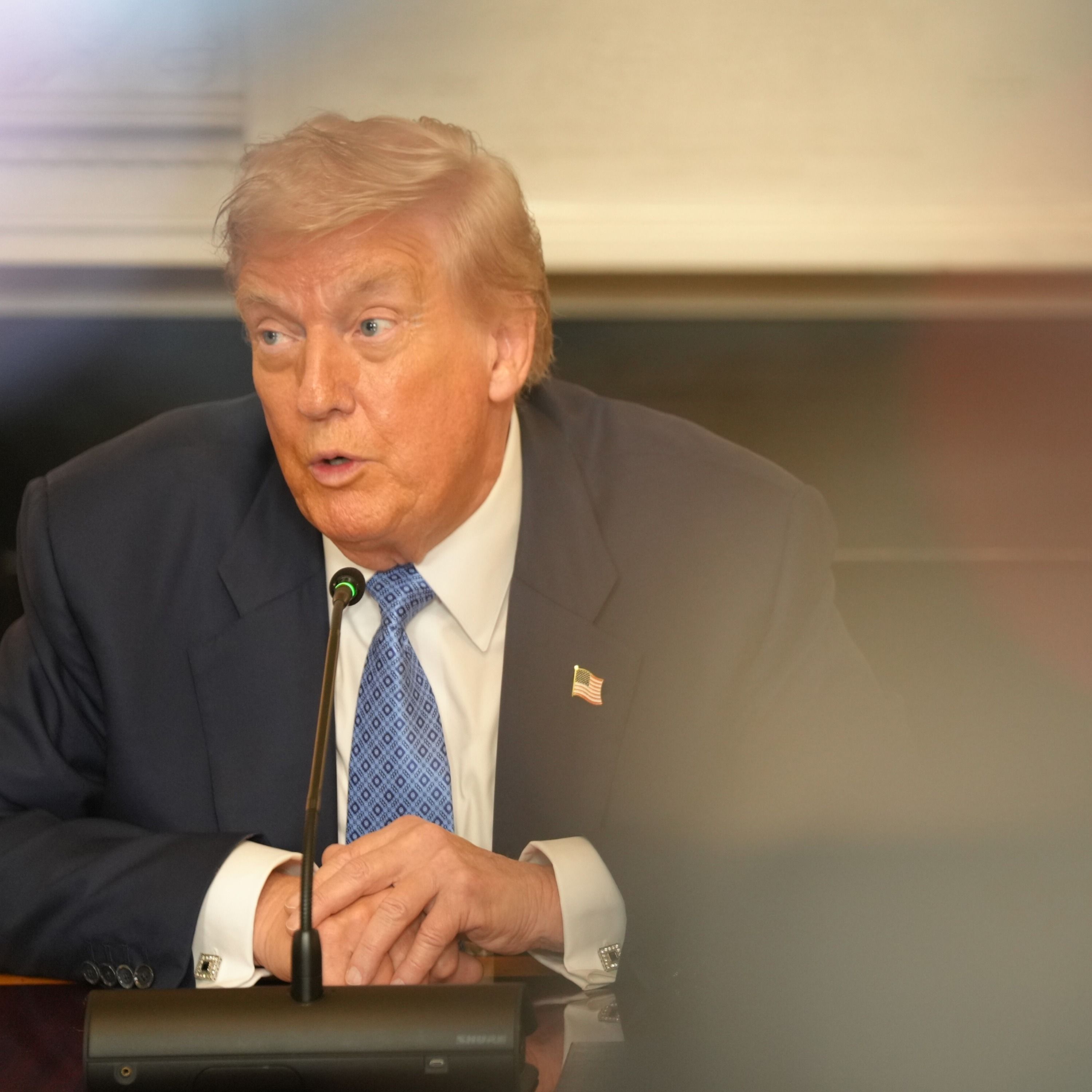
Photo: Tierney L. Cross/The New York Times
Unlock full access to New York Times podcasts and explore everything from politics to pop culture. Subscribe today at nytimes.com/podcasts or on Apple Podcasts and Spotify.