
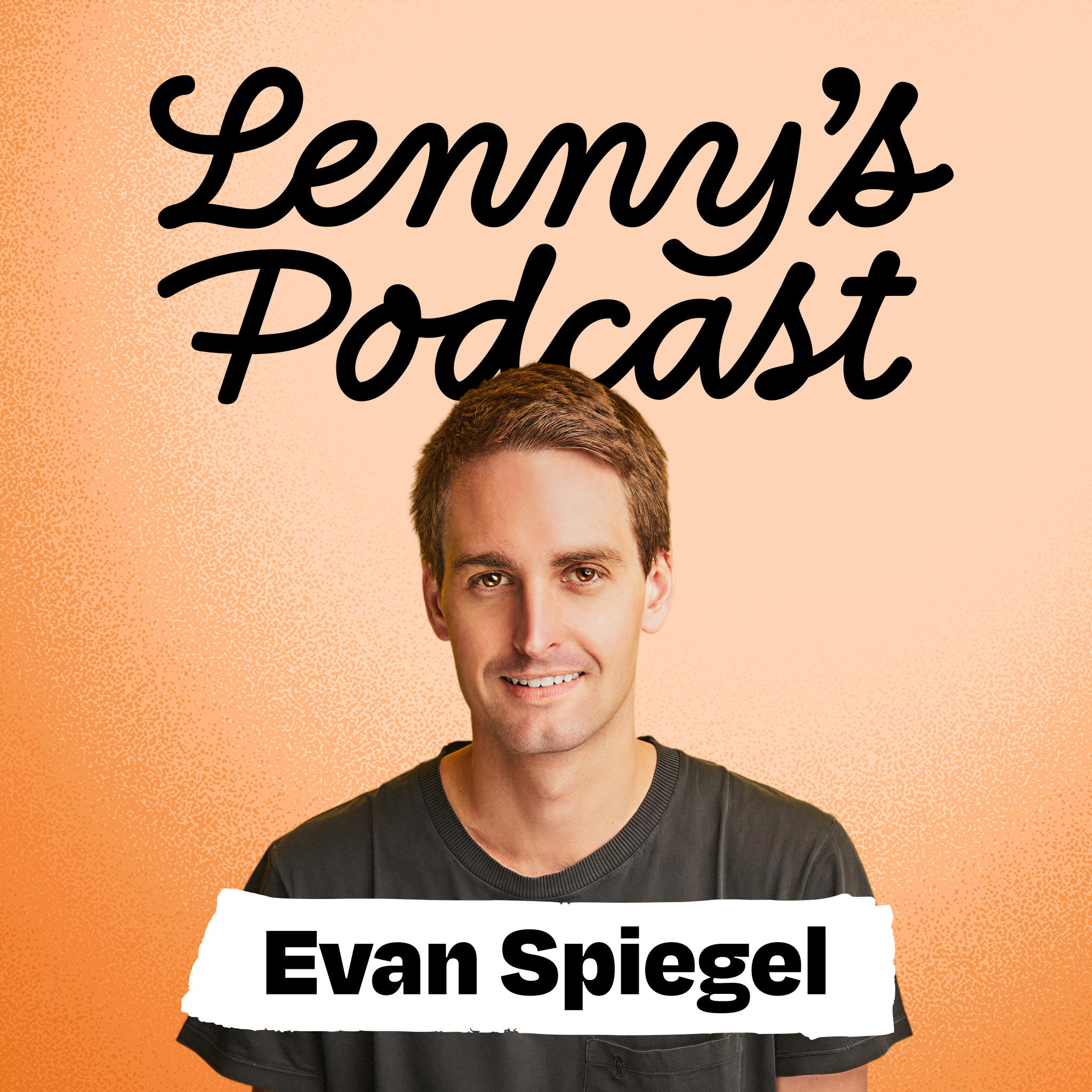
Snapchat CEO: Why distribution has become the most important moat | Evan Spiegel

🤖 AI Summary
Overview
Evan Spiegel, CEO and co-founder of Snap, shares insights on building a lasting consumer social product, the challenges of distribution, fostering innovation, and the evolving role of AI in design and product development. He also reflects on Snap's journey, its competitive strategies, and the future of computing with augmented reality glasses.
Notable Quotes
- If you want to have a good idea, you have to have lots of ideas.
– Evan Spiegel, on fostering innovation.
- Humanity is far more important than the technological developments because humanity dictates how technology is adopted.
– Evan Spiegel, on the societal impact of AI.
- Software is not a moat. It’s very easy to copy features, but ecosystems and platforms are much harder to replicate.
– Evan Spiegel, on building durable competitive advantages.
📱 Why Building Lasting Consumer Social Products is So Hard
- Distribution as the Key Challenge: Spiegel emphasizes that while product-market fit is crucial, distribution is often overlooked. He cites TikTok's massive spending and Meta's existing ecosystem as examples of successful distribution strategies.
- Snapchat’s Early Advantage: The app's focus on connecting users with their closest friends, rather than large networks, helped it grow despite competition from larger platforms.
- AI’s Role in Distribution: Spiegel and Lenny Rachitsky discuss how AI might not solve distribution challenges, making it an enduring moat for consumer products.
🎨 Snap’s Approach to Innovation
- Flat Design Team Structure: Snap’s design team, consisting of just 9-12 people, operates without hierarchy. Designers present work from day one and are encouraged to generate hundreds of ideas weekly.
- Critique Culture: Regular critique sessions foster rapid iteration and remove the fear of failure. Spiegel believes velocity in design work is critical to innovation.
- Balancing Innovation and Execution: Snap maintains a dual structure—small, flat teams for innovation and larger, hierarchical teams for operational rigor.
🛡️ Building Durable Moats Beyond Software
- Ecosystems and Platforms: Snap focuses on building ecosystems, such as its AR platform with millions of lenses, to create defensible advantages.
- Hardware Investments: Snap’s long-term investment in augmented reality glasses (Spectacles) reflects its strategy to integrate hardware and software for a unique user experience.
- Lessons from Being Copied: Snap’s features, like Stories and AR lenses, have been widely imitated. This has pushed the company to focus on harder-to-replicate elements like platforms and ecosystems.
🤖 AI’s Impact on Design and Product Development
- Empowering Designers: AI tools enable Snap’s designers to ship code and iterate faster, leveling the playing field for creative professionals.
- AI-Driven Workflows: Snap uses AI agents to streamline processes, from writing specs to creating visuals and conducting risk analyses.
- Human-Centric AI: Spiegel predicts societal pushback against AI adoption and stresses the importance of aligning technology with humanity’s goals.
🔥 Snap’s Crucible Moment and Future Vision
- 2024 as a Turning Point: Spiegel describes this year as pivotal for Snap, with a focus on achieving profitability and launching Spectacles after 12 years of development.
- Defining Snap’s Identity: As a “middle child” in the tech world, Snap aims to differentiate itself from larger incumbents and smaller competitors.
- Reimagining Computing: Spiegel envisions a future where AR glasses replace phones, enabling more natural and social interactions with technology.
AI-generated content may not be accurate or complete and should not be relied upon as a sole source of truth.
📋 Episode Description
Evan Spiegel, the co-founder and CEO of Snap, is one of the very few people in the world who has successfully built and scaled a lasting consumer social product. Snapchat has nearly 1 billion MAUs, and Evan and his team invented some of the most important consumer products and features, including Stories, AR glasses, swipe-based navigation, the camera as the primary UX, and a lot more.
In our in-depth conversation, we discuss:
1. Why distribution is now the biggest challenge for creating a consumer technology business
2. How Snap innovates at scale with a 9-to-12-person design team: no titles, no hierarchy, hundreds of ideas reviewed weekly with the CEO
3. Why a pure software business is no longer a moat, and what actually creates durable competitive advantages today
4. How AI is changing the way designers work and why they’re now shipping code
5. Why every major Snap feature was copied and how that forced the company to work differently
6. Evan’s prediction that humanity’s comfort with AI will be a bigger bottleneck than the technology itself
7. This year’s crucible moment for Snap
—
Brought to you by:
WorkOS—Modern identity platform for B2B SaaS, free up to 1 million MAUs: https://workos.com/lenny
Vanta—Automate compliance, manage risk, and accelerate trust with AI: https://vanta.com/lenny
—
Episode transcript: https://www.lennysnewsletter.com/p/snapchat-ceo-why-distribution-is
—
Archive of all Lenny's Podcast transcripts: https://www.dropbox.com/scl/fo/yxi4s2w998p1gvtpu4193/AMdNPR8AOw0lMklwtnC0TrQ?rlkey=j06x0nipoti519e0xgm23zsn9&st=ahz0fj11&dl=0
—
Where to find Evan Spiegel:
• X: https://x.com/evanspiegel
• Snapchat: https://www.snapchat.com/@evan
• LinkedIn: https://www.linkedin.com/in/evan-spiegel
• Website: https://www.spiegelfamilyfund.com
—
Where to find Lenny:
• Newsletter: https://www.lennysnewsletter.com
• X: