

🤖 AI Summary
Overview
This episode explores India's demographic and economic transformation as part of the Age of Work
series. With a median age of 29 and rapid GDP growth, India is positioned as a global economic powerhouse. The episode delves into inflation dynamics, the challenges of India's workforce, and the cultural and economic shifts shaping the country, with on-the-ground stories from Mumbai's bustling bazaars and young professionals.
Notable Quotes
- In India, we don’t retire, we only die. We are constantly on the move.
– Anil Jain, on the relentless drive of Indian entrepreneurs.
- The city is not quite my speed. It’s a bit too fast for me now.
– Akhil Tapia, reflecting on his return to Mumbai after living in the U.S.
- India’s economy is growing with its own playbook. It’s not replicating any other country’s development path.
– Nela Richardson, on India’s unique economic trajectory.
🌍 Inflation and Global Economic Pressures
- Inflation remains a key focus, with energy and food prices being highly volatile due to geopolitical uncertainties and supply chain disruptions.
- Nicole Servey highlighted the unpredictability of energy markets, while Jennifer Lee noted how tariffs are driving up costs for imported goods like electronics and clothing.
- Rising fuel prices are impacting transportation costs, leading to higher airfare and apparel prices.
👷♂️ India’s Workforce and Demographic Advantage
- India’s median age of 29 contrasts sharply with aging populations in Western nations, making it a hub for global investment and economic activity.
- Kai Ryssdal and Nela Richardson observed how India’s young workforce is driving productivity and innovation, particularly in urban centers like Mumbai.
- However, challenges persist, including infrastructure gaps and economic inequality, with the top 25% of the workforce thriving while the bottom 50% struggles to advance.
🏙️ Mumbai’s Economic Microcosm
- Mumbai serves as a microcosm of India’s economy, blending traditional markets with modern industries.
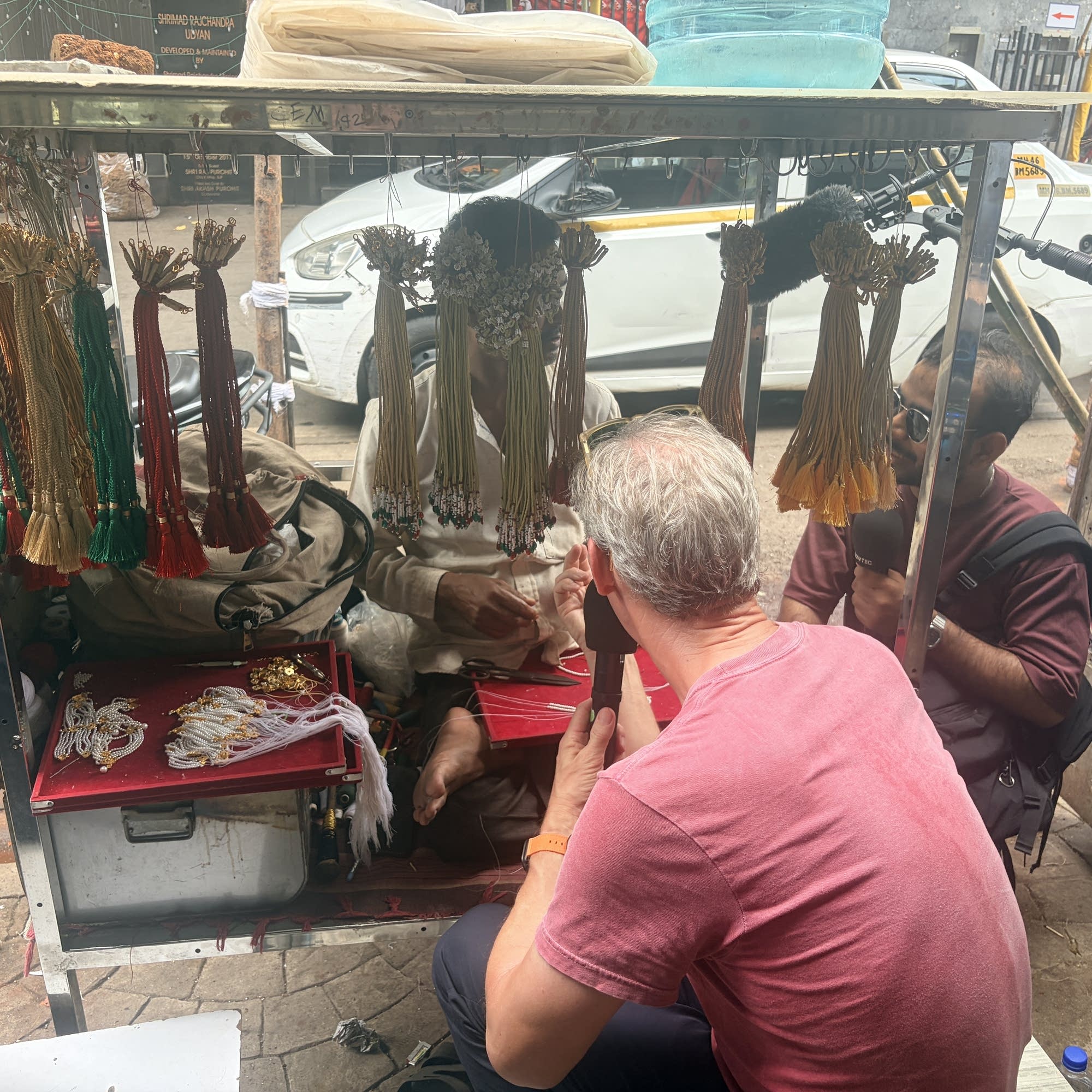
- The Zaveri Bazaar, a hub for jewelry and wholesale trade, exemplifies generational businesses adapting to modern challenges.
- Anil Jain, a jeweler, shared how government policies like discouraging gold purchases have impacted his business, yet he remains optimistic about the future.
🌐 Shifting Perceptions of the U.S. and Immigration
- Akhil Tapia, a software developer, shared his experience of returning to India after visa challenges in the U.S., highlighting how stricter immigration policies are reshaping aspirations among Indian professionals.
- Social media and news of layoffs have contributed to a more negative perception of working in the U.S., with many young Indians now reconsidering the appeal of moving abroad.
💎 Family Businesses and Cultural Legacy
- Generational businesses remain a cornerstone of India’s economy, with families like the Jains passing down trade knowledge and adapting to modern demands.
- Younger generations, like Dishang Jain, are bringing fresh ideas to traditional industries, balancing innovation with respect for legacy.
- The resilience and adaptability of these businesses reflect the broader dynamism of India’s economy.
AI-generated content may not be accurate or complete and should not be relied upon as a sole source of truth.
📋 Episode Description
As the workforces of the U.S., U.K., and similar wealthy Western nations age, other countries with younger populations grow at a clip. Nowhere is this more true than India, where the median age is 29 (a decade younger than the U.S.) and GDP is growing at nearly 8% annually. As part of our ongoing “Age of Work” series, “Marketplace” host Kai Ryssdal and ADP Chief Economist Nela Richardson visited Mumbai to understand a workforce and economy that is very different from our own. In this episode, they visit a bustling bazaar where young jewelers are inheriting family businesses.
Every story has an economic angle. Want some in your inbox? Subscribe to our daily or weekly newsletter.
Marketplace is more than a radio show. Check out our original reporting and financial literacy content at marketplace.org — and consider making an investment in our future.
Read the stories in today’s episode: