

🤖 AI Summary
Overview
This episode delves into the Trump administration's response to a New York Times investigation about the safety of the new Air Force One, including the issuance of subpoenas to journalists. The discussion explores the plane's security concerns, the implications for press freedom, and the broader context of government pressure on the media.
Notable Quotes
- This brazen act should be seen as nothing more than an attempt to prevent the public from knowing what is happening in their country by intimidating journalists from doing their jobs.
– David McCraw, New York Times newsroom lawyer, on the subpoenas.
- The Secret Service has grown concerned about the plane and has urged the president to switch his itinerary and not take this Qatari jet out of Turkey.
– Tyler Pager, on the security concerns surrounding the new Air Force One.
- If reporters are forced to divulge their sources, then those sources are not going to talk to us as journalists.
– Michael Barbaro, on the chilling effect of subpoenas on press freedom.
✈️ The New Air Force One and Its Security Concerns
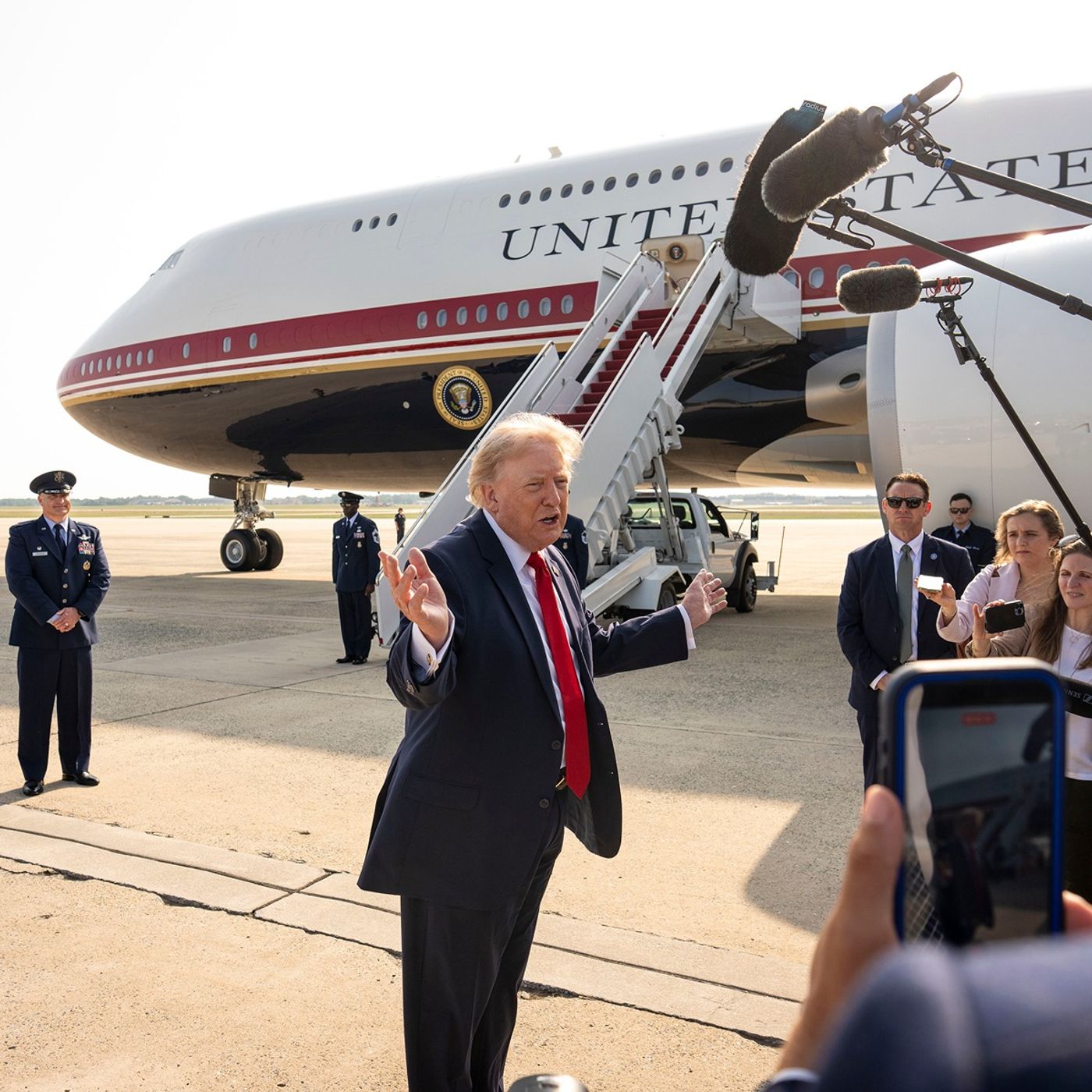
- The new Air Force One, donated by Qatar and retrofitted at great expense, lacks critical defensive countermeasures like advanced anti-missile systems, raising safety concerns.
- Tyler Pager highlighted that the retrofitting process was rushed, leaving the plane less secure than its predecessor, which was specifically designed for presidential safety.
- The Secret Service intervened during a NATO summit in Turkey, urging President Trump to switch back to the older Air Force One due to heightened risks amid U.S.-Iran hostilities.
📜 Subpoenas and Press Freedom
- Several New York Times journalists, including Tyler Pager, were subpoenaed by the FBI to testify before a grand jury about their reporting on Air Force One.
- The subpoenas, described as aggressive
and rushed
by lawmakers, represent a rare and controversial move against journalists, raising alarms about First Amendment protections.
- The Justice Department claimed the reporters were not targets but material witnesses, though Pager emphasized the chilling effect this has on journalistic work.
🏛️ The Trump Administration's Media Tactics
- The administration has escalated its pressure on the press, employing lawsuits, exclusion from press pools, and public criticism of media outlets as fake news.
- The subpoenas are seen as part of a broader pattern of undermining press freedom, with Tyler Pager noting the administration's disregard for norms separating the White House and the Department of Justice.
⚖️ Congressional Pushback
- Democratic senators criticized the subpoenas during confirmation hearings for key officials, questioning whether proper protocols were followed.
- Senator Kirsten Gillibrand called the actions unnecessary
and aggressive,
while Senator Ron Wyden questioned whether alternative methods to obtain information were explored.
🌫️ Broader Implications for Democracy
- The episode underscores the risks of eroding the independence of the press and the potential consequences for democracy.
- Michael Barbaro and Tyler Pager discuss how forcing journalists to reveal sources could deter whistleblowers, undermining the public's right to know.
- The episode concludes with a reflection on the broader significance of the Air Force One story, highlighting the tension between national security and transparency.
AI-generated content may not be accurate or complete and should not be relied upon as a sole source of truth.
📋 Episode Description
Last Friday night, F.B.I. agents showed up at the homes of several New York Times journalists and summoned them to testify before a grand jury.
The move was a response by the Trump administration to an article about the safety of the new Air Force One.
Tyler Pager, one of the journalists, discusses the story and the subpoenas.
Guest: Tyler Pager, a White House correspondent for The New York Times.
Background reading:
- Several Times journalists were subpoenaed as Trump escalates pressure on the media.
- Officials said the new Air Force One plane lacks defensive countermeasures of previous model.
Photo: Doug Mills/The New York Times
For more information on today’s episode, visit nytimes.com/thedaily. Transcripts of each episode will be made available by the next workday.
Subscribe today at nytimes.com/podcasts or on Apple Podcasts and Spotify. You can also subscribe via your favorite podcast app here https://www.nytimes.com/activate-access/audio?source=podcatcher. For more podcasts and narrated articles, download The New York Times app at nytimes.com/app.
Hosted by Simplecast, an AdsWizz company. See pcm.adswizz.com for information about our collection and use of personal data for advertising.