

🤖 AI Summary
Overview
This episode delves into the shifting power dynamics within Iran following the death of Ayatollah Ali Khamenei. It explores how the Revolutionary Guards have risen to dominate the country's leadership, sidelining the clerics, and examines the implications for Iran's internal governance, its negotiations with the U.S., and its broader geopolitical strategy.
Notable Quotes
- It's shifting away and transforming from a clerical theocracy to a military dictatorship with a cleric as its leader.
– Farnaz Fassihi, on the evolving power structure in Iran.
- These generals are basically appealing to President Trump's business side and deal-making side.
– Farnaz Fassihi, on the Revolutionary Guards' pragmatic approach to negotiations.
- The generals who are now in charge have a real interest in making a deal with the United States because they view this as survival.
– Farnaz Fassihi, on the motivations of Iran's new leadership.
🛡️ The Rise of the Revolutionary Guards
- The Revolutionary Guards, Iran's elite military force, have taken over decision-making, sidelining the clerics who traditionally held power.
- Historically a parallel power, the Guards have expanded their influence into politics, the economy, and now governance, becoming the dominant force post-war.
- The new Supreme Leader, Mojtaba Khamenei, is heavily reliant on the Guards due to his injuries and their role in securing his position.
📜 A Shift in Leadership Dynamics
- Decision-making in Iran has become more collective, resembling a board of directors
where the Supreme Leader acts as a figurehead.
- Mojtaba Khamenei's limited public presence and logistical challenges in communication have further empowered the Guards.
- The Supreme Leader's deep personal ties with the Guards, formed during the Iran-Iraq War, underpin this trust-based relationship.
💰 Pragmatism Over Ideology
- Unlike the clerics, the Revolutionary Guards are motivated by power and economic survival rather than religious ideology.
- They are open to pragmatic negotiations with the U.S., including inviting American companies to invest in Iran for reconstruction.
- This marks a significant departure from the previous Supreme Leader's ban on direct engagement with the U.S.
🌍 Strategic Leverage in the Strait of Hormuz
- Iran views the Strait of Hormuz as a strategic asset, using its control to gain leverage in negotiations.
- The Guards have explored monetizing the Strait by imposing tolls on passing ships, potentially generating more revenue than oil exports.
- This tactic underscores their calculated approach to securing economic and geopolitical advantages.
🤝 The Future of U.S.-Iran Negotiations
- The Guards are pushing for a grand deal
to end hostilities, lift sanctions, and stabilize Iran economically and politically.
- Both Iran and the U.S. face challenges in saving face during negotiations, complicating the path to an agreement.
- While the Guards' pragmatism offers hope for progress, their hardline tactics and Israel's unpredictable role remain significant obstacles.
AI-generated content may not be accurate or complete and should not be relied upon as a sole source of truth.
📋 Episode Description
Over the weekend, President Trump called off a trip to Pakistan by two of his negotiators for a potential additional round of talks with Tehran, leaving the fate of the cease-fire in limbo.
Farnaz Fassihi, who covers Iran for The New York Times, looks at who is in charge of the country after the killing of Ayatollah Ali Khamenei and what those leaders really want.
Guest: Farnaz Fassihi, the United Nations bureau chief for The New York Times. She also covers Iran and how countries around the world deal with conflicts in the Middle East.
Background reading:
- These are the generals who are running Iran.
- Here’s what to know about the U.S.-Iran peace talks.
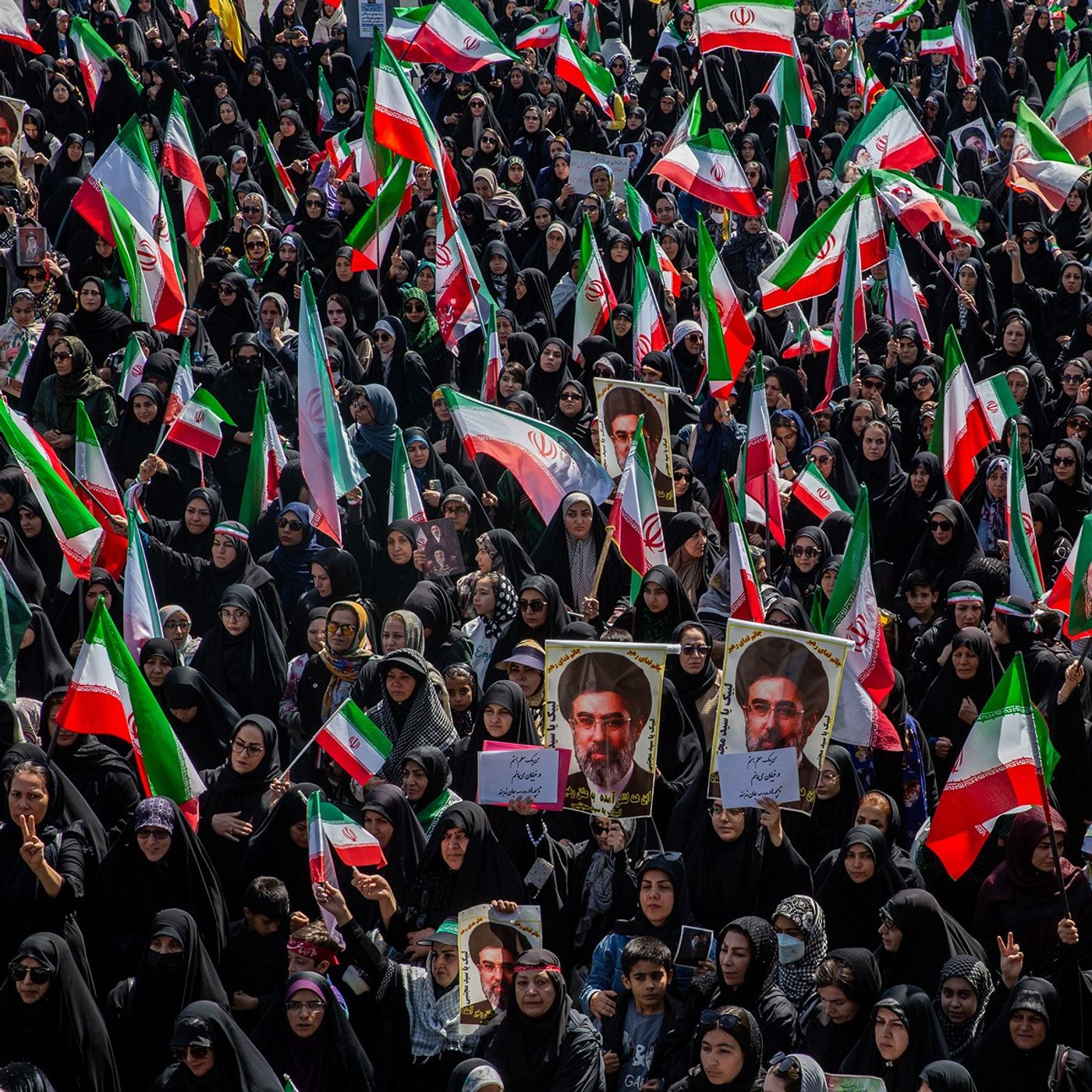
Photo: Arash Khamooshi for The New York Times
For more information on today’s episode, visit nytimes.com/thedaily. Transcripts of each episode will be made available by the next workday.
Subscribe today at nytimes.com/podcasts or on Apple Podcasts and Spotify. You can also subscribe via your favorite podcast app here https://www.nytimes.com/activate-access/audio?source=podcatcher. For more podcasts and narrated articles, download The New York Times app at nytimes.com/app.
Hosted by Simplecast, an AdsWizz company. See pcm.adswizz.com for information about our collection and use of personal data for advertising.