

🤖 AI Summary
Overview
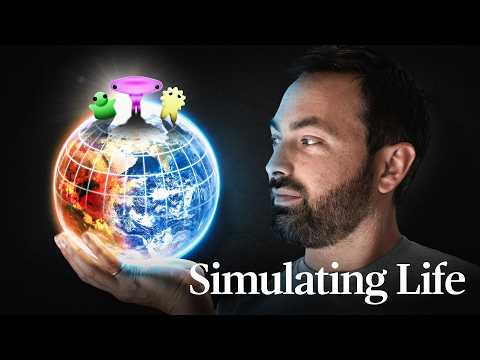
This episode explores the origins of life, the mechanics of evolution, and the concept of natural selection through the lens of replicators and genes. It delves into the emergence of life from simple molecules, the role of mutations, and the controversial selfish gene
theory, while addressing criticisms and misconceptions about evolution.
Notable Quotes
- We are survival machines, robot vehicles blindly programmed to preserve the selfish molecules known as genes.
– Richard Dawkins, as quoted in the discussion of his book The Selfish Gene.
- The feeling that you and every other living organism is being driven by some molecules deep in every cell is fundamentally unsettling.
– Host, on the implications of the gene-centric view of evolution.
- It doesn’t matter which individual helps the genes replicate, only that as many copies as possible survive.
– Host, explaining the concept of kin selection.
🦠 The Origins of Life
- Life likely began with simple molecules in a void
where random interactions, fueled by energy sources like UV light, led to the formation of more complex compounds.
- Over time, some of these compounds developed the ability to replicate themselves, marking the emergence of the first replicators.
- The law of stability
dictated that stable compounds endured, while unstable ones disintegrated.
🔬 The Role of Mutation in Evolution
- Mutations occur when errors happen during the replication process, leading to variations in replicators.
- These mutations can be harmful, beneficial, or neutral, and they introduce diversity into populations.
- The environment plays a critical role in determining which mutations thrive, as replicators compete for limited resources.
🧬 The Gene-Centric View of Evolution
- The gene, not the individual or species, is the fundamental unit of natural selection. Genes that enhance their own replication are more likely to persist.
- This perspective, popularized by Richard Dawkins in The Selfish Gene, explains behaviors like altruism as strategies for gene survival.
- For example, kin selection explains why animals like squirrels risk their lives to protect relatives, as it increases the chances of shared genes being passed on.
🎲 The Role of Chance in Evolution
- Not all evolutionary changes are driven by natural selection; some are the result of genetic drift, where gene frequencies change due to random sampling.
- This randomness can sometimes allow less advantageous traits to persist in a population.
- The interplay between natural selection and chance remains a topic of debate among evolutionary biologists.
🤖 The Complexity of Genes and Evolution
- Genes are not simple one-to-one determinants of traits; they can influence multiple traits and interact with other genes and environmental factors.
- The selfish gene
framework is a powerful but simplified model for understanding evolution. It emphasizes the role of genes in shaping traits that enhance their own replication.
- Despite its limitations and criticisms, this perspective provides valuable insights into the diversity of behaviors and forms in the natural world.
AI-generated content may not be accurate or complete and should not be relied upon as a sole source of truth.
📋 Video Description
Most people don’t fully understand evolution. Sponsored by Hostinger - visit https://ve42.co/hostingern8n and use the code VERITASIUM to get an extra discount on top of the sale prices.
If you’re looking for a molecular modelling kit, try Snatoms, a kit I invented where the atoms snap together magnetically - https://ve42.co/SnatomsV
Sign up for the Veritasium newsletter for weekly science updates - https://ve42.co/Newsletter
We have a tabletop game launching! Pledge your support now - https://ve42.co/KickStarterD
▀▀▀
0:00 Why does poop smell bad?
2:51 The Beginning Life
7:15 What is gene mutation?
8:01 Simulating Evolution
13:25 How natural selection works
16:39 What do we pass on?
19:40 Kin Selection
22:04 The Selfish Gene
25:35 It’s all a simulation
▀▀▀
A big thanks to Dr. Jack Szostak at the University of Chicago, Dr. John Sutherland at Cambridge University, Dr. Joanna Masel at the University of Arizona & Dr. Gerald Joyce at the Salk Institute for their expertise and help with the video.
And a huge thank you to Joe Hanson from @besmart for his help!
Check out @PrimerBlobs here!
Check out Richard Dawkins’ The Selfish Gene here - https://ve42.co/SGRD
▀▀▀
References: https://ve42.co/SelfishGeneRefs
Images & Video:
Emperor Penguins Chicks via National Geographic - https://ve42.co/NatGeoPenguin
Child in bed - https://ve42.co/FeverChild
Photo of G.C. Williams - https://ve42.co/GCWilliams
Photo of J. M. Smith - https://ve42.co/JMSmith
Photo of Bob Trivers - https://ve42.co/RTrivers
▀▀▀
Special thanks to our Patreon supporters:
Adam Foreman, Albert Wenger, Alex Porter, Alexander Tamas, Anton Ragin, Anupam Banerjee, armedtoe, Bertrand Serlet, Blake Byers, Bruce, Dave Kircher, David Johnston, David Tseng, Evgeny Skvortsov, Garrett Mueller, Gnare, gpoly, Ibby Hadeed, Jeromy Johnson, Jon Jamison, Juan Benet, KeyWestr, Kyi, Lee Redden, Marinus Kuivenhoven, Matthias Wrobel, Meekay, meg noah, Michael Bush, Michael Krugman, Orlando Bassotto, Paul Peijzel, Richard Sundvall, Robert Oliveira, Sam Lutfi, Tj Steyn, Ubiquity Ventures, wolfee
▀▀▀
Writers: Gregor Čavlović, Casper Mebius, Daniel Leonard & Derek Muller
Producer & Director: Gregor Čavlović
Editor: Peter Nelson
Camera Operator: Andrew Abballe
Animators: Fabio Albertelli, Andrew Neet, Emma Wright & Peter Nelson
Illustrator: Jakub Misiek
Simulations: Callum Cuttle
Researchers: Aakash Singh Bagga & Callum Cuttle
Thumbnail Designers: Abdallah Rabah, Ren Hurley & Ben Powell
Production Team: Josh Pitt, Matthew Cavanagh, Anna Milkovic & Zoe Heron
Executive Producers: Derek Muller & Casper Mebius
Additional video/photos supplied by Getty Images, Storyblocks
Music from Epidemic Sound