
A Consequential Supreme Court Term Begins With a Conversion Therapy Case

🤖 AI Summary
Overview
This episode explores the Supreme Court's new term, focusing on a pivotal case challenging Colorado's ban on conversion therapy for minors. The discussion delves into the legal arguments surrounding free speech, medical regulation, and the broader cultural and political implications of the case.
Notable Quotes
- The government can't turn this therapist into a mouthpiece for the state by forcing her to have the types of conversations the state thinks are appropriate.
– Lawyer for the therapist, arguing against Colorado's law.
- If a doctor says, ‘I know you identify as gay, and I’m going to help you accept that,’ that’s permissible. But if another doctor says, ‘I’m going to help you change that,’ it’s not. That seems like viewpoint discrimination.
– Justice Elena Kagan, questioning the law's neutrality.
- The harms from conversion therapy come from when you tell a young person, ‘You can change this innate thing about yourself,’ and they try and fail, leading to shame and misery.
– Colorado Solicitor General, defending the ban.
🧑⚖️ The Supreme Court's New Term and Key Cases
- Natalie Kitroeff and Ann E. Marimow highlight the term's significance, with cases addressing presidential powers, transgender athletes' rights, and religious freedoms.
- The docket includes challenges to Trump-era policies and broader cultural issues, signaling the court's continued engagement with divisive topics.
🗣️ Free Speech vs. Medical Regulation in Conversion Therapy
- The case centers on whether conversion therapy constitutes protected speech or regulated medical conduct.
- Therapist’s lawyer: Argues the therapy is voluntary speech protected by the First Amendment, distinct from medical procedures like administering drugs.
- Colorado’s lawyer: Contends the therapy is a harmful medical practice, not speech, and states have the authority to regulate licensed professionals.
⚖️ Judicial Perspectives and Key Questions
- Liberal justices, including Justice Jackson, questioned the distinction between speech and medical treatment, emphasizing the therapeutic context.
- Conservative justices, like Justice Alito, raised concerns about viewpoint discrimination, noting the law permits affirming LGBTQ identities but not changing them.
- Justice Barrett probed the evidence of harm caused by conversion therapy, while Justice Gorsuch and Justice Alito questioned the reliability of medical consensus.
📜 Broader Implications for LGBTQ Rights and Free Speech
- The case reflects ongoing tensions between LGBTQ protections and religious or free speech claims.
- A ruling against Colorado’s law could challenge similar bans in over 20 states and reshape the legal landscape for regulating professional speech.
- The court’s decision may further signal its ideological leanings, with potential ripple effects on other cultural and legal battles, including revisiting past LGBTQ rights rulings.
🌍 The Intersection of Law, Science, and Ideology
- The justices grappled with the role of scientific consensus in shaping laws, with historical examples of flawed medical beliefs cited as cautionary tales.
- The case underscores the court’s recurring engagement with the intersection of legal principles and evolving societal norms.
AI-generated content may not be accurate or complete and should not be relied upon as a sole source of truth.
📋 Episode Description
Warning: this episode contains mentions of suicide.
In one of the first cases of the Supreme Court’s new term, the justices considered whether to strike down a ban on conversion therapy, the contentious practice that aims to change a young person’s sexual orientation.
Ann E. Marimow, Supreme Court correspondent for The New York Times, talks us through the case.
Guest: Ann E. Marimow, who covers the Supreme Court for The New York Times from Washington.
Background reading:
- Read the main points of the conversion therapy argument at the Supreme Court.
- The case considering the Colorado law will have implications for more than 20 states with similar bans.
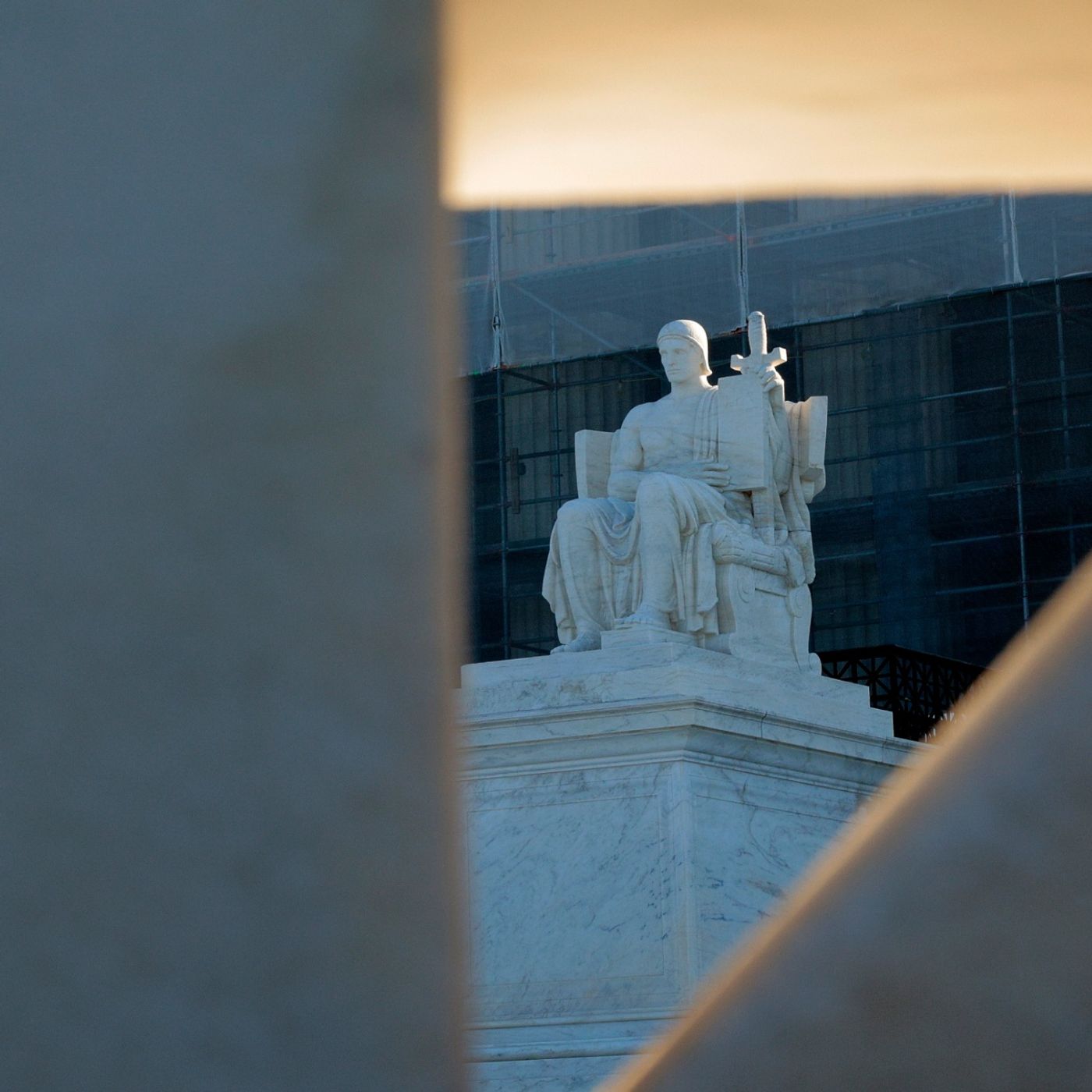
Photo: Chip Somodevilla/Getty Images
For more information on today’s episode, visit nytimes.com/thedaily. Transcripts of each episode will be made available by the next workday.
Subscribe today at nytimes.com/podcasts or on Apple Podcasts and Spotify. You can also subscribe via your favorite podcast app here https://www.nytimes.com/activate-access/audio?source=podcatcher. For more podcasts and narrated articles, download The New York Times app at nytimes.com/app.