

🤖 AI Summary
Overview
This episode explores the recent recognition of Palestinian statehood by several Western nations, the historical and personal significance of this moment for Palestinian Ambassador Riyad Mansour, and the broader geopolitical implications. It also examines the contrasting responses from Israel, the United States, and other global powers, highlighting the complexities of achieving a two-state solution.
Notable Quotes
- Statehood is the inalienable right of the Palestinian people, and the two states is the only path to security and lasting peace for Israelis and Palestinians alike.
– Riyad Mansour, on the necessity of Palestinian statehood.
- Murdering Jews pays off.
– Benjamin Netanyahu, criticizing the recognition of Palestinian statehood as rewarding Hamas.
- Netanyahu’s actions have never been geared toward allowing or encouraging the creation of a Palestinian state.
– Mark Landler, on Israel’s long-term strategy.
🌍 The Push for Palestinian Statehood
- Jessica Cheung recounts the historic moment at the UN where traditionally pro-Israel nations like the UK, France, and Canada recognized Palestinian statehood, signaling a shift in international sentiment.
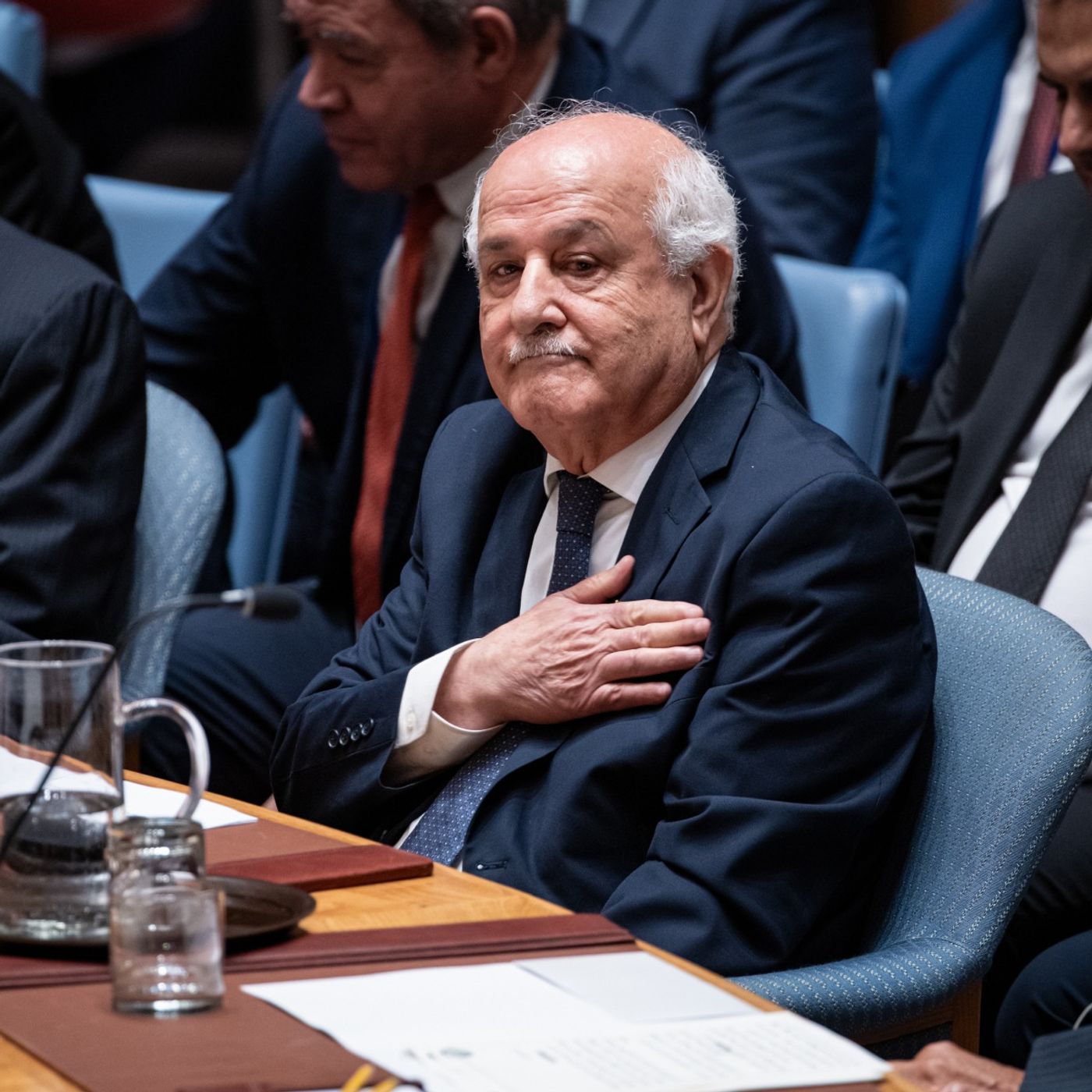
- Palestinian Ambassador Riyad Mansour reflects on his decades-long advocacy for statehood, drawing parallels to the global fight against apartheid in South Africa.
- Mansour emphasizes that this recognition is not a reward for Hamas but an investment in peace and harmony.
🕊️ The Humanitarian Crisis and Global Sympathy
- The worsening humanitarian situation in Gaza, with over 65,000 Palestinians killed, including 20,000 children, has galvanized international empathy, according to Mansour.
- Mansour’s emotional testimony at the UN highlighted the devastating impact of the war, including starvation, displacement, and the targeting of aid workers and journalists.
- Despite these tragedies, Israel denies allegations of genocide and continues its military campaign.
🇮🇱 Israel’s Defiance and U.S. Backing
- Israeli Prime Minister Benjamin Netanyahu condemned the recognition of Palestinian statehood, framing it as a reward for Hamas’s October 7th attacks.
- Netanyahu’s speech at the UN was met with walkouts, reflecting Israel’s growing isolation. However, he remains steadfast, bolstered by unwavering U.S. support under President Trump.
- The U.S. veto power in the UN Security Council ensures that Palestinian statehood remains largely symbolic without American endorsement.
📜 Trump’s Peace Plan and Its Limitations
- President Trump and Netanyahu unveiled a new peace plan, demanding Hamas disarm and release hostages while maintaining Israeli military dominance in Gaza.
- The plan vaguely acknowledges Palestinian aspirations for statehood but sets numerous conditions, leaving its implementation unlikely.
- European and Arab nations cautiously supported the plan, valuing U.S. engagement despite its pro-Israel bias.
🔍 The Reality of Statehood
- While over 150 countries now recognize Palestine, Mark Landler argues that the practicalities of statehood remain distant.
- Gaza is in ruins, the West Bank is fragmented by Israeli settlements, and the Palestinian Authority’s credibility is waning.
- Landler suggests that Netanyahu’s actions, including settlement expansion and division of Palestinian leadership, have consistently undermined the viability of a two-state solution.
AI-generated content may not be accurate or complete and should not be relied upon as a sole source of truth.
📋 Episode Description
The suffering in the Gaza Strip has fueled international pressure on Israel to end the war and pushed western powers to recognize a Palestinian state. The isolation was on display last week at the United Nations.
Jessica Cheung, a producer for “The Daily,” speaks to Riyad Mansour, the Palestinian ambassador to the U.N., about what Palestinian statehood means to him.
Then, Mark Landler, the London bureau chief of The New York Times, discusses what the recognition means without the support of the United States and Israel, which was underscored in their new peace plan.
Guest:
- Riyad Mansour, the Palestinian ambassador to the U.N.
- Mark Landler, the London bureau chief of The New York Times.
Background reading:
- World leaders recognized a Palestinian state, in a challenge to the United States and Israel.
- Read each point of President Trump’s plan for an Israel-Gaza cease-fire.
Photo: Angelina Katsanis/Associated Press
For more information on today’s episode, visit nytimes.com/thedaily. Transcripts of each episode will be made available by the next workday.
Subscribe today at nytimes.com/podcasts or on Apple Podcasts and Spotify. You can also subscribe via your favorite podcast app here https://www.nytimes.com/activate-access/audio?source=podcatcher. For more podcasts and narrated articles, download The New York Times app at nytimes.com/app.