

🤖 AI Summary
Overview
This episode delves into the escalating U.S. actions in Venezuela under the Trump administration, exploring the tension between official claims of targeting drug trafficking and the underlying push for regime change. It examines the historical context of U.S.-Venezuela relations, the internal White House battle over strategy, and the potential consequences of military intervention.
Notable Quotes
- This is about what happens when the most powerful country on earth chooses to designate a sovereign government...a criminal organization, a terrorist group, and then deal with it in any manner that it sees fit.
– Anatoly Kurmanaev, on the global precedent set by U.S. actions in Venezuela.
- Rubio is promising to Trump that he can kill two birds with one stone: topple Maduro and proclaim a victory in this fight against drugs.
– Anatoly Kurmanaev, on Marco Rubio’s strategy to align U.S. intervention with Trump’s priorities.
- History shows that only rarely do military interventions produce the kind of sustained democracy that Machado is advocating for.
– Anatoly Kurmanaev, on the risks of U.S. military intervention in Venezuela.
🇻🇪 The U.S. Push for Regime Change in Venezuela
- The Trump administration has escalated military actions, including bombing boats and authorizing CIA covert operations, under the guise of combating drug trafficking.
- Behind the scenes, the ultimate goal appears to be toppling Nicolás Maduro’s government, a regime long opposed by the U.S. due to its alliances with adversaries like Russia, China, and Iran.
- Marco Rubio has reframed the Venezuelan government as a drug cartel to align intervention with Trump’s focus on the U.S. drug crisis.
🛢️ Resource Diplomacy and Failed Negotiations
- Early in Trump’s term, negotiations with Maduro aimed to secure Venezuela’s natural resources for U.S. companies in exchange for allowing Maduro to remain in power temporarily.
- This deal collapsed due to internal opposition led by Marco Rubio, who leveraged political pressure to block the agreement.
- Rubio’s alternative plan supports opposition leader Maria Corina Machado, who aligns with U.S. economic interests but faces skepticism over her willingness to allow military intervention.
⚔️ Risks of Military Intervention
- While some in the U.S. administration envision a swift removal of Maduro, history suggests military interventions rarely lead to stable democracies.
- Potential outcomes include power vacuums, increased repression, or the rise of even more hardline leaders within Maduro’s coalition.
- Intervention risks destabilizing the region, spurring migration crises, and creating long-term chaos in Venezuela’s periphery.
🌎 Broader Implications of U.S. Actions
- The designation of Maduro’s government as a narco-terrorist cartel sets a dangerous precedent for U.S. foreign policy, potentially normalizing extrajudicial actions against sovereign nations.
- Critics warn this approach could escalate into a broader trend of interventionism, undermining international law and stability.
- The strikes on Venezuelan boats have already sparked tensions with neighboring countries, such as Colombia, highlighting the potential for regional fallout.
📊 Venezuelan Public Opinion and Machado’s Role
- While Venezuelans overwhelmingly desire political change, only a minority support U.S. military intervention.
- Machado’s alignment with U.S. interests and silence on controversial Trump policies have raised questions about her priorities and the potential costs of her leadership.
- The repression under Maduro makes it difficult to gauge true public sentiment, but the risks of intervention remain a divisive issue.
AI-generated content may not be accurate or complete and should not be relied upon as a sole source of truth.
📋 Episode Description
For months, President Trump has been ratcheting up the pressure on Venezuela with increasingly aggressive military actions that the administration claims are about targeting drug traffickers.
But behind the scenes, some U.S. officials are pushing toward a regime change.
Anatoly Kurmanaev, who has been covering the story, discusses the battle in the White House over whether to topple the government of President Nicolás Maduro.
Guest: Anatoly Kurmanaev, a reporter for The New York Times covering Russia and its transformation since the invasion of Ukraine.
Background reading:
- The United States attacked more boats as tensions with Venezuela continued to rise. Here’s what has happened so far.
- The Trump administration has authorized covert C.I.A. action in Venezuela.
- Trump officials say the mission aims to disrupt the drug trade. But military officials and analysts say the real goal might be driving Venezuela’s president from power.
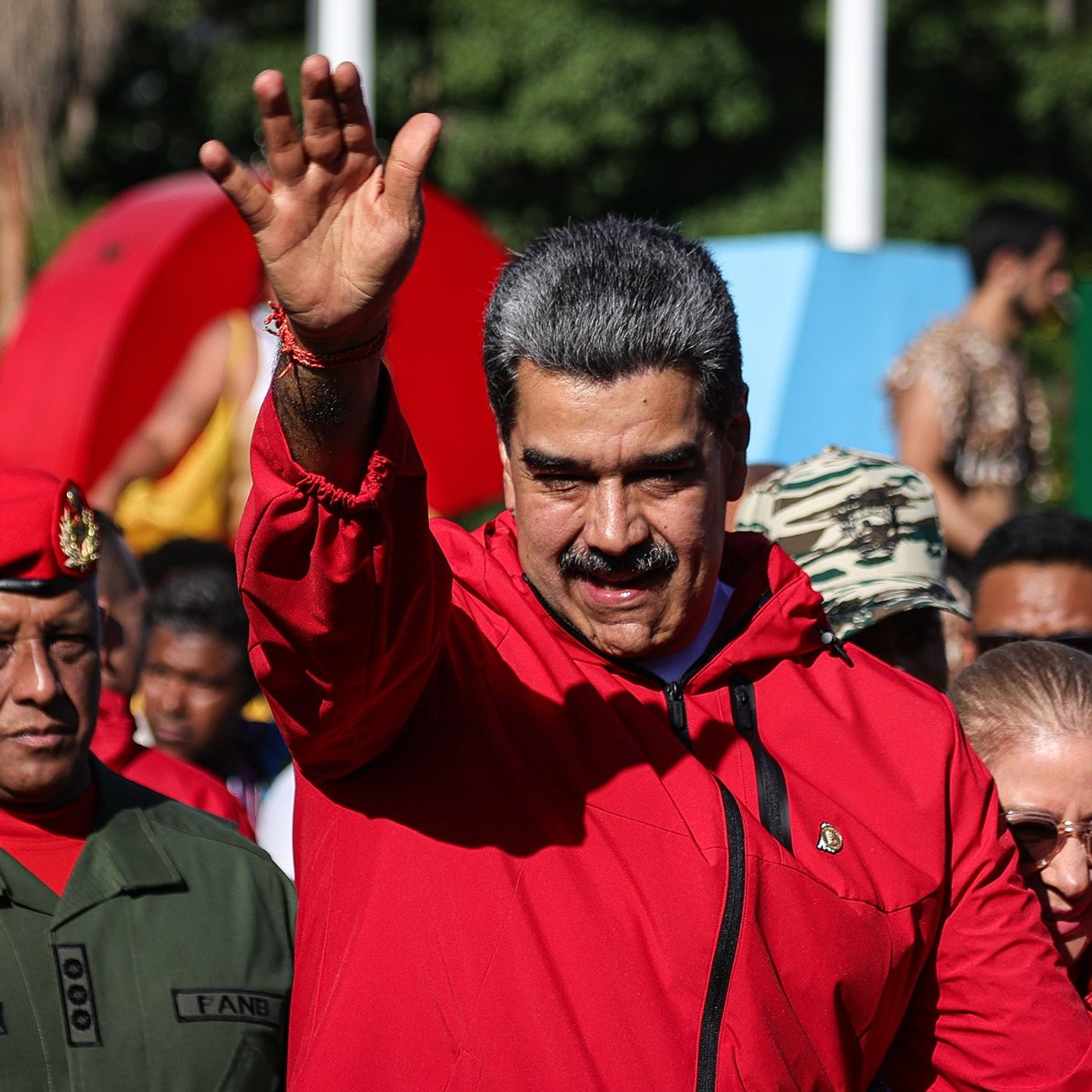
Photo: Jesus Vargas/Getty Images
For more information on today’s episode, visit nytimes.com/thedaily. Transcripts of each episode will be made available by the next workday.
Subscribe today at nytimes.com/podcasts or on Apple Podcasts and Spotify. You can also subscribe via your favorite podcast app here https://www.nytimes.com/activate-access/audio?source=podcatcher. For more podcasts and narrated articles, download The New York Times app at nytimes.com/app.