

🤖 AI Summary
Overview
This episode delves into the attempted assassination of President Trump at the White House Correspondents’ Dinner, exploring the suspect’s background, motivations, and the security measures in place. It also examines broader questions about political violence and the challenges of ensuring safety at high-profile events.
Notable Quotes
- There’s a sea of hostility out there online... making it harder to figure out who is really dangerous and who is just a keyboard commando.
— Devlin Barrett, on the challenges law enforcement faces in identifying credible threats.
- If a guy with a shotgun can storm a security checkpoint and cause panic, it may be becoming harder for law enforcement to prevent these incidents.
— Devlin Barrett, on the public perception of safety.
- This incident only shows how badly we need to finish construction of the White House ballroom.
— Devlin Barrett, summarizing the administration’s argument for enhanced security infrastructure.
🔫 The Assassination Attempt
- Cole Thomas Allen, a 31-year-old from California, was charged with attempting to assassinate President Trump, among other federal charges.
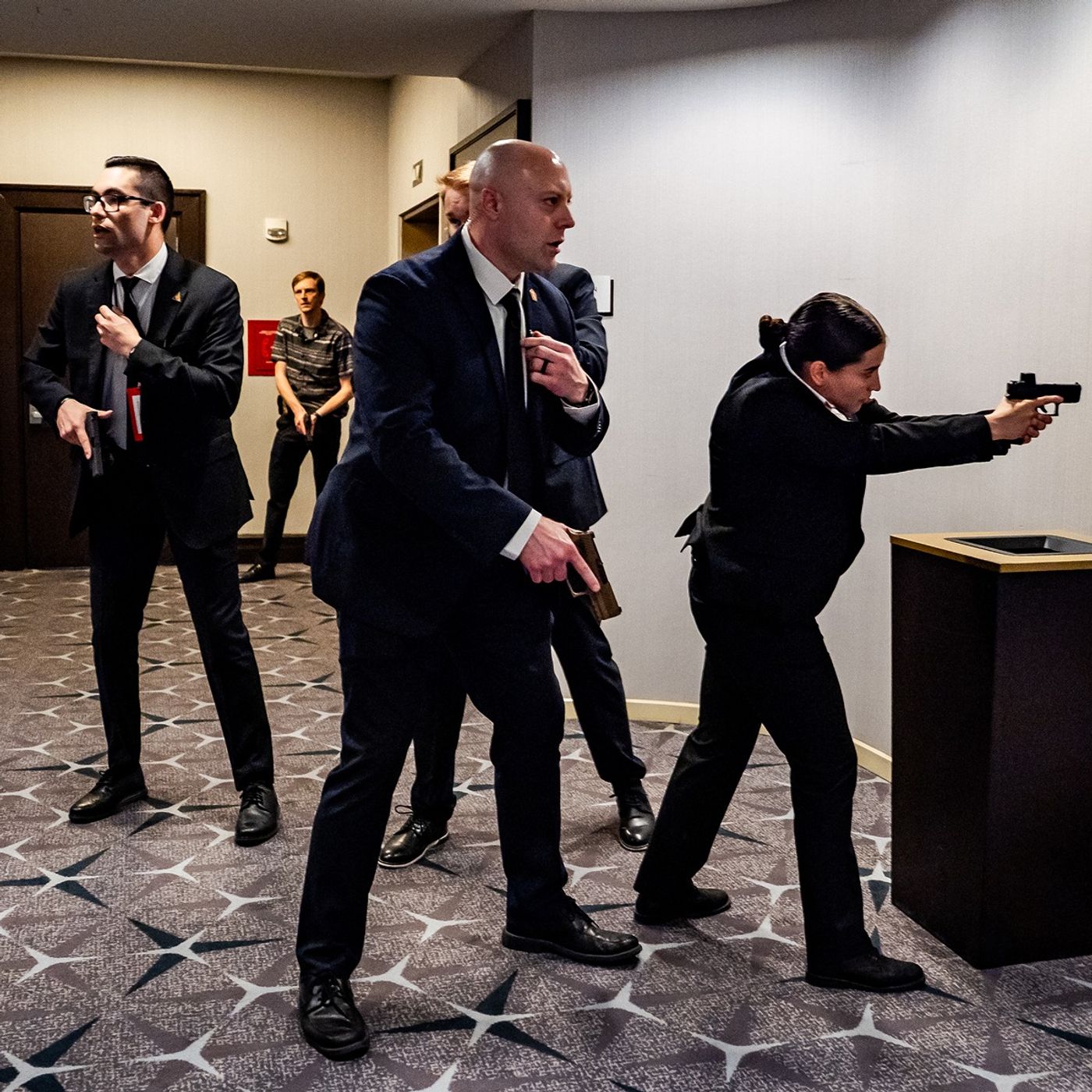
- The suspect stormed the White House Correspondents’ Dinner armed with a shotgun, pistol, and knives but was tackled and disarmed before reaching the event floor.
- Security footage showed Allen sprinting through the first checkpoint, prompting Secret Service agents to fire shots, none of which hit him.
🧠 The Suspect’s Background and Motivations
- Allen, described as intelligent and mild-mannered, held a master’s degree in computer science from Caltech and worked as a tutor.
- He left behind an apology letter, expressing anger at the Trump administration and outlining his grievances.
- The FBI is investigating his online activity, which suggests liberal political views and dissatisfaction with Trump’s policies, but the exact path to his radicalization remains unclear.
🛡️ Security Measures: Failure or Success?
- While some criticized the event’s security, experts argued the system worked as intended, stopping Allen before he could reach the president.
- The suspect’s letter criticized the hotel’s security, but officials noted he underestimated the multi-layered measures in place.
- Questions remain about whether law enforcement had prior intelligence on Allen’s intentions and whether the hotel’s design is suitable for such high-profile events.
📈 The Rise of Political Violence
- The U.S. has seen an increase in threats against politicians, judges, and public institutions, fueled by online hostility.
- While political violence has always existed, recent years have seen a rise in assassination attempts against Trump, raising concerns about the safety of public officials.
- Younger generations, accustomed to lockdown drills, may perceive such incidents differently than older Americans, reflecting a shift in societal norms around safety.
🏛️ The Debate Over Security Infrastructure
- The administration is using the incident to push for the completion of a White House ballroom, arguing it would enhance security for presidential events.
- Critics question the balance between public access to government officials and the need for heightened security in an era of increasing threats.
- Law enforcement faces dual challenges: ensuring the physical safety of officials and maintaining public confidence in their ability to do so.
AI-generated content may not be accurate or complete and should not be relied upon as a sole source of truth.
📋 Episode Description
What we know about the man in custody after the shooting at the White House correspondents’ dinner, and how the incident unfolded.
The man accused of storming the White House Correspondents’ Association dinner with multiple weapons was charged on Monday with trying to assassinate President Trump.
Devlin Barrett, who covers the Justice Department, explains what we know about the suspect, his plan to target the president and whether the incident should be seen as a security failure or success.
Guest: Devlin Barrett, a New York Times reporter covering the Justice Department and the F.B.I.
Background reading:
- ‘Shots Fired!’: Inside the pandemonium at the Washington Hilton.
- Charges against the assassination attempt suspect were based on a shotgun shell and a screed.
- Experts said the security at the White House correspondents’ dinner worked as intended.
Photo: Salwan Georges for The New York Times
For more information on today’s episode, visit nytimes.com/thedaily. Transcripts of each episode will be made available by the next workday.
Subscribe today at nytimes.com/podcasts or on Apple Podcasts and Spotify. You can also subscribe via your favorite podcast app here https://www.nytimes.com/activate-access/audio?source=podcatcher. For more podcasts and narrated articles, download The New York Times app at nytimes.com/app.
Hosted by Simplecast, an AdsWizz company. See pcm.adswizz.com for information about our collection and use of personal data for advertising.