

🤖 AI Summary
Overview
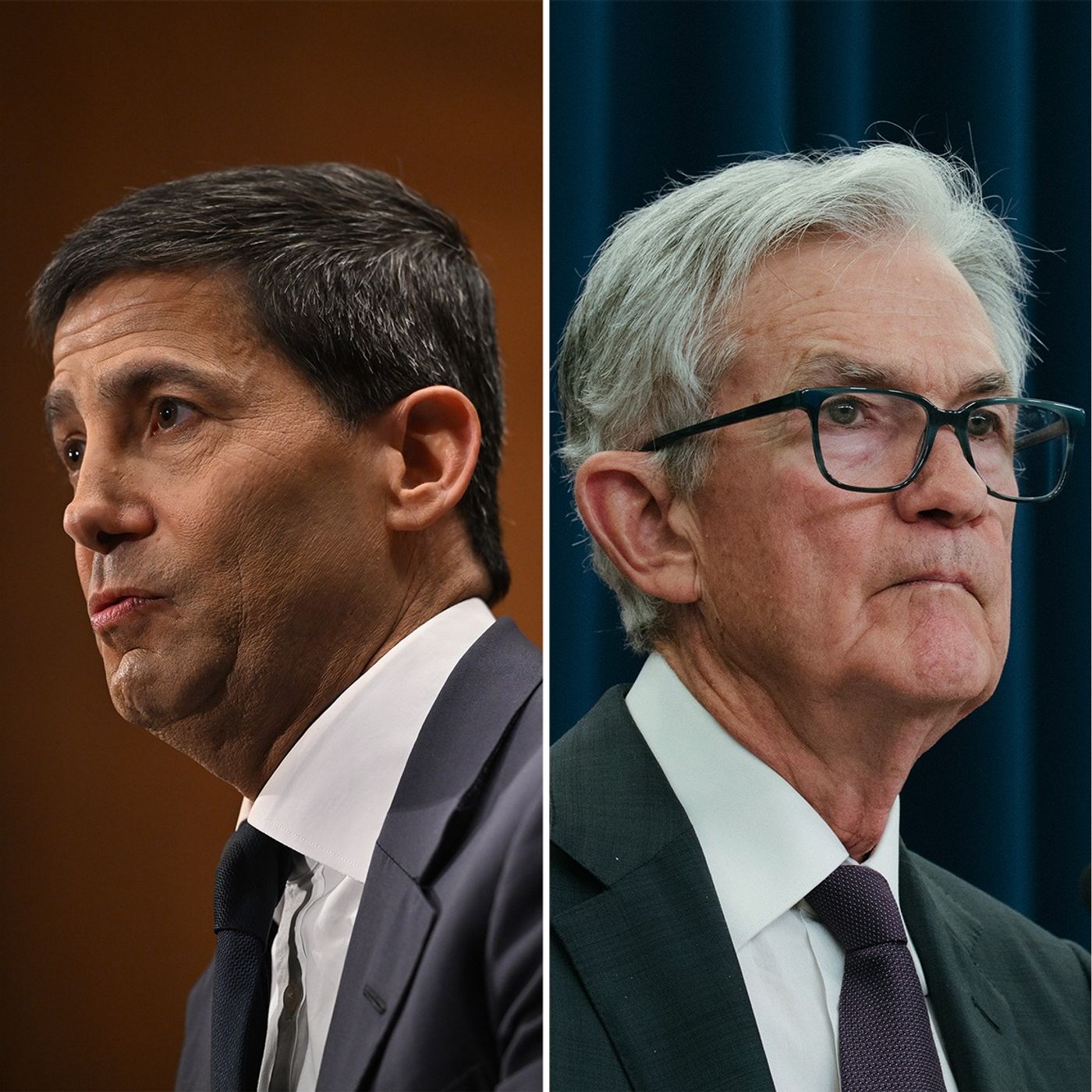
This episode delves into the dramatic transition at the Federal Reserve as President Trump replaces Jerome Powell with Kevin Warsh as chair. It explores the unprecedented decision by Powell to remain on the Fed's Board of Governors, the political and institutional tensions this creates, and Warsh's controversial economic philosophy. The discussion also examines the broader implications for the Fed's independence and credibility amidst political interference.
Notable Quotes
- "If you wanted to design a system to cause interest rates to go up and not down, you would have the Federal Reserve and the executive branch get into a ****** contest.* — **Colby Smith**, on the dysfunction caused by Trump's attacks on the Fed.
I worry that these attacks are battering the institution and putting at risk the thing that really matters to the public: the ability to conduct monetary policy without political influence.
- ** — **Jerome Powell**, on why he chose to stay on the Fed's Board of Governors.
The big balance sheet has become fiscal policy in disguise. The Fed needs to get out of the fiscal business and focus on the monetary business."* — Kevin Warsh, critiquing the Fed's interventionist policies.
- *
🪙 Trump vs. Powell: A Year of Conflict
- President Trump launched a relentless campaign against Jerome Powell, calling him grossly incompetent
and pressuring him to lower interest rates.
- The conflict escalated with a politically charged criminal investigation into Powell, which critics, including a federal judge, deemed baseless and an attempt to intimidate the Fed.
- Powell's decision to remain on the Fed's Board of Governors after his term as chair ended is unprecedented and seen as a move to safeguard the institution's independence.
⚖️ Kevin Warsh: The New Fed Chair's Vision
- Kevin Warsh, a former Fed governor, is a vocal critic of the Fed's post-crisis interventions, particularly its expanded balance sheet, which he argues exacerbates inequality and risks inflation.
- Warsh's confirmation marks a return to the Fed for him, but his past skepticism of low interest rates contrasts with Trump's demands for rate cuts.
- His recent shift in tone to support lower rates raises questions about political motivations behind his nomination.
🏛️ The Fed's Independence Under Threat
- Powell's decision to stay on the board blocks Trump from appointing another governor, limiting the president's influence over the Fed.
- Critics argue that Powell's move, while principled, risks politicizing the Fed further by framing his tenure as a direct response to Trump's attacks.
- The episode highlights the broader challenge of maintaining the Fed's credibility and independence in an era of heightened political interference.
📉 Inflation and the Fed's Role
- Warsh blames the Fed's prolonged interventions, particularly during the pandemic, for contributing to the current inflationary environment.
- Supporters of Powell counter that inflation was driven by pandemic-related supply chain disruptions and fiscal stimulus, not solely by Fed policy.
- The debate underscores differing philosophies on the Fed's role in managing economic crises and its long-term impact on the economy.
🤔 The Awkward Coexistence of Powell and Warsh
- Powell's continued presence on the board creates a unique dynamic, with the former chair working alongside his successor.
- Warsh's first major test will come in June, where he must navigate the tension between maintaining credibility and meeting Trump's expectations for rate cuts.
- The situation raises questions about how the Fed will function with two high-profile figures holding divergent views on its direction.
AI-generated content may not be accurate or complete and should not be relied upon as a sole source of truth.
📋 Episode Description
After a year of harassing and threatening Jerome Powell, the chairman of the Federal Reserve, President Trump replaced him on Wednesday.
Colby Smith, who covers the Fed, explains how the president ended one standoff only to create a new one.
Guest: Colby Smith, a New York Times reporter covering the Federal Reserve and the U.S. economy.
Background reading:
- The Senate confirmed Kevin Warsh as the new chair of the Federal Reserve.
- Video: How Jerome Powell managed a chaotic era.
Photo: Kenny Holston/The New York Times, Caroline Gutman for The New York Times
For more information on today’s episode, visit nytimes.com/thedaily. Transcripts of each episode will be made available by the next workday.
Subscribe today at nytimes.com/podcasts or on Apple Podcasts and Spotify. You can also subscribe via your favorite podcast app here https://www.nytimes.com/activate-access/audio?source=podcatcher. For more podcasts and narrated articles, download The New York Times app at nytimes.com/app.
Hosted by Simplecast, an AdsWizz company. See pcm.adswizz.com for information about our collection and use of personal data for advertising.