

🤖 AI Summary
Overview
This episode examines the Supreme Court's recent ruling that significantly weakens the Voting Rights Act of 1965, focusing on its legal rationale and the broader implications for American democracy. Legal expert Adam Liptak explains the court's decision, while political reporter Nick Corasaniti explores its impact on redistricting battles and minority political power.
Notable Quotes
- You don't throw away your umbrella just because you're not getting wet.
– Justice Ruth Bader Ginsburg, quoted by Adam Liptak, on the enduring need for the Voting Rights Act.
- This ruling starts a new chapter in what has become a national redistricting arms race.
– Nick Corasaniti, on the political fallout of the decision.
- Race and partisanship are just inextricably linked when it comes to how everyone will respond to this ruling.
– Nick Corasaniti, summarizing the hyper-partisan context of the decision.
🗳️ The Supreme Court's Ruling and Its Legal Logic
- The court's 6-3 decision further dismantles the Voting Rights Act, making it nearly impossible to protect minority voting districts.
- Adam Liptak explains the new legal standard: lawmakers must explicitly intend to discriminate against minorities for the Voting Rights Act to apply, a nearly impossible burden of proof.
- The ruling aligns with the conservative majority's broader philosophy that the Constitution is colorblind
and opposes race-based government interventions.
- Justice Alito argued that the Voting Rights Act had achieved its purpose, while Justice Kagan dissented, emphasizing its ongoing necessity to sustain racial equality in voting.
📍 Implications for Redistricting and Minority Representation
- The ruling accelerates partisan gerrymandering, with states like Louisiana, Tennessee, and Florida poised to redraw maps that dilute minority voting power.
- Nick Corasaniti highlights how Republican-controlled legislatures may use this decision to eliminate Democratic-leaning districts, particularly in the South.
- In Tennessee, for example, Republicans are eyeing the dismantling of Memphis' majority-Black district, while Florida's new map could eliminate half of its Democratic districts.
- The decision could lead to fewer Black-majority districts nationwide, eroding Black political representation at all levels of government.
⚖️ Broader Political and Partisan Dynamics
- The ruling intensifies the redistricting arms race,
with both parties likely to pursue more aggressive gerrymandering.
- Democratic-controlled states like New York, Illinois, and Maryland may respond by redrawing maps to eliminate Republican districts.
- Nick Corasaniti notes that this hyper-partisan environment could lead to extreme gerrymanders, further polarizing American politics.
📉 The Erosion of Black Political Power
- The decision threatens to reduce Black leadership in Congress and state legislatures by dismantling majority-Black districts.
- Nick Corasaniti warns that this could disrupt the pipeline of Black politicians advancing to higher office.
- However, he notes that Black voters remain a critical force within the Democratic Party, particularly in presidential primaries and general elections.
- The ruling underscores the deep entanglement of race and partisanship in American electoral politics.
AI-generated content may not be accurate or complete and should not be relied upon as a sole source of truth.
📋 Episode Description
On Wednesday, the Supreme Court dealt what may be a final blow to the landmark Voting Rights Act when it struck down Louisiana’s voting map as unconstitutional.
Adam Liptak explains the legal logic of the ruling, and Nick Corasaniti talks about how the decision will reshape American democracy.
Guest:
- Adam Liptak, the chief legal affairs correspondent of The New York Times and the host of The Docket, a newsletter on legal developments.
- Nick Corasaniti, a New York Times reporter covering national politics, with a focus on voting and elections.
Background reading:
- The Supreme Court struck down Louisiana’s voting map.
- Here’s what to know about the Voting Rights Act.
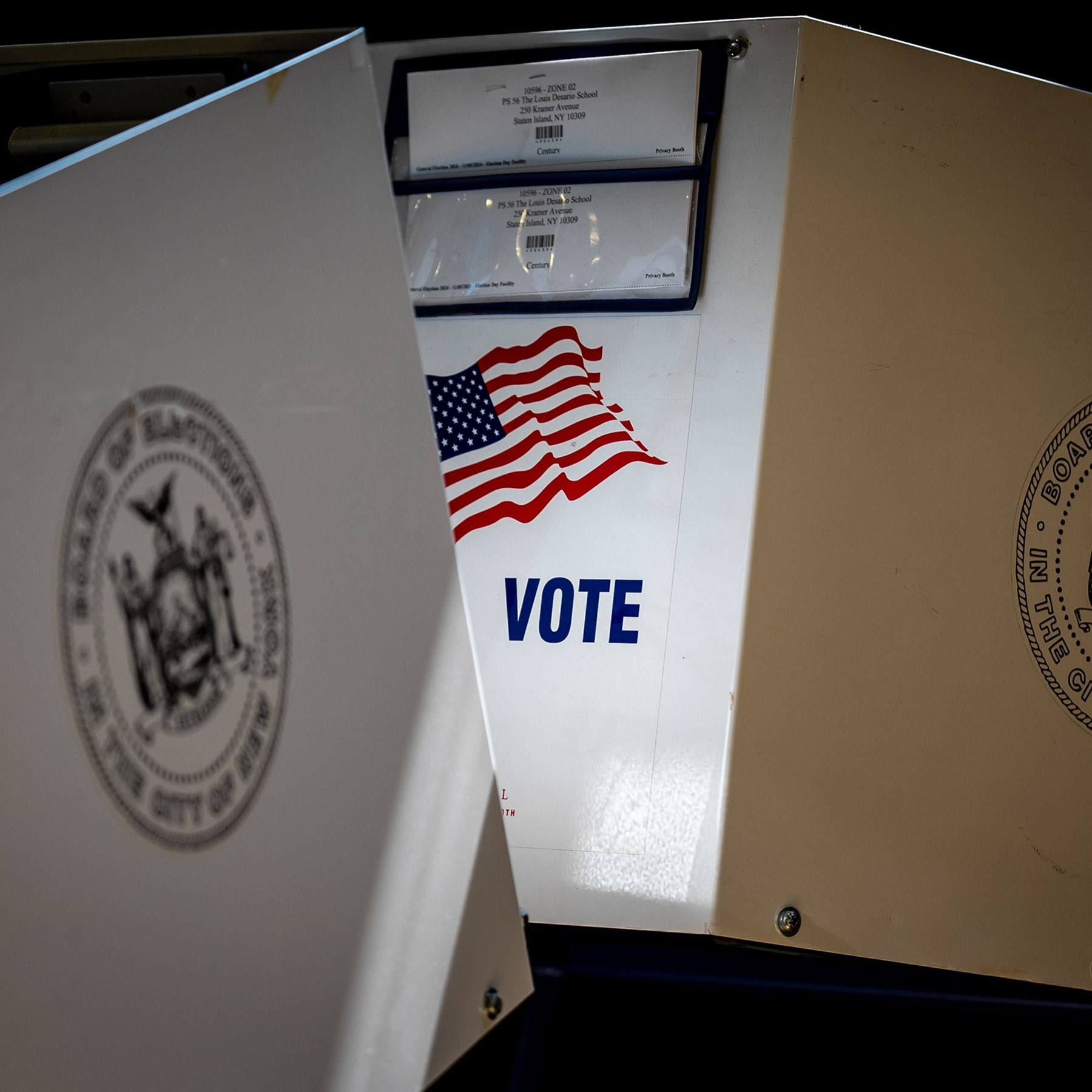
Photo: Angelina Katsanis for The New York Times
For more information on today’s episode, visit nytimes.com/thedaily. Transcripts of each episode will be made available by the next workday.
Subscribe today at nytimes.com/podcasts or on Apple Podcasts and Spotify. You can also subscribe via your favorite podcast app here https://www.nytimes.com/activate-access/audio?source=podcatcher. For more podcasts and narrated articles, download The New York Times app at nytimes.com/app.
Hosted by Simplecast, an AdsWizz company. See pcm.adswizz.com for information about our collection and use of personal data for advertising.