

🤖 AI Summary
Overview
This episode explores the dramatic transformation of college sports since the introduction of Name, Image, and Likeness (NIL) payments in 2021. It examines the chaos that ensued, including skyrocketing player salaries, unrestricted transfers, and the rise of donor-funded collectives. The discussion centers on the Protect College Sports Act, a bipartisan bill aimed at regulating this turbulent landscape.
Notable Quotes
- It looks like the NFL, if the NFL had no rules or ability to enforce their rules.
- Stewart Mandel, on the chaotic state of college sports.
- Indiana winning the national championship last year was the best college football story of my lifetime.
- Stewart Mandel, highlighting the upside of player mobility.
- This bill restricts what schools can spend on their players, but not their coaches. And by the way, the majority of college football players are Black, and the vast majority of coaches are white.
- Stewart Mandel, on criticisms of the bill's fairness.
🏈 The NIL Revolution and Its Fallout
- Stewart Mandel explains how NIL payments, legalized in 2021, allowed college athletes to profit from endorsements, leading to multimillion-dollar deals for top recruits.
- Boosters and donor-funded collectives quickly exploited NIL to pay athletes directly, creating a de facto free agency system.
- Unrestricted player transfers further destabilized the sport, with some teams replacing over half their rosters annually.
💰 The Financial Arms Race in College Sports
- Major programs now spend between $10 million and $50 million annually on football rosters, according to The Athletic's investigation.
- Wealthy boosters, like Texas Tech’s Cody Campbell, have transformed historically weak programs into champions by pouring money into player recruitment.
- Critics argue this spending disparity exacerbates inequities between schools, creating a growing divide between haves
and have-nots.
📜 The Protect College Sports Act
- The bipartisan bill seeks to rein in the chaos by capping school spending on athletes at $48 million annually, including third-party NIL deals.
- It reinstates a rule requiring players to sit out a year if they transfer more than once, aiming to curb the free agency frenzy.
- Critics, including the Congressional Black Caucus, highlight the bill’s failure to address coaching salaries and other major expenses, calling it unfair to players.
⚖️ The Pendulum Swing: From Player Empowerment to Regulation
- Stewart Mandel reflects on the rapid shift in public sentiment: from advocating for athlete compensation to calls for regulation amid the chaos.
- The bill represents a rare instance of bipartisan agreement, with Republicans supporting market restrictions and Democrats backing measures critics label anti-labor.
📺 The On-Field Impact of NIL and Transfers
- Despite the upheaval, Stewart Mandel argues that college football has never been more exciting, with increased parity allowing underdog teams like Indiana to win championships.
- TV ratings and attendance remain strong, suggesting that the sport’s core appeal endures despite—or perhaps because of—the changes.
AI-generated content may not be accurate or complete and should not be relied upon as a sole source of truth.
📋 Episode Description
In the five years since student athletes have been allowed to earn money, college sports have become a chaotic and murky marketplace where players can move from team to team chasing a payday.
Stewart Mandel of The Athletic explains why, this week, Washington decided to step in.
Guest: Stewart Mandel, the editor in chief of college football for The Athletic and a host of its college football podcast “The Audible.”
Background reading:
- The Protect College Sports Act wants to fix college sports. Here’s what it actually targets.
- Does your college football roster cost $8 million or $50 million? Read The Athletic’s report on 68 teams.
- Here’s how the football programs blow past limits on what they can pay players.
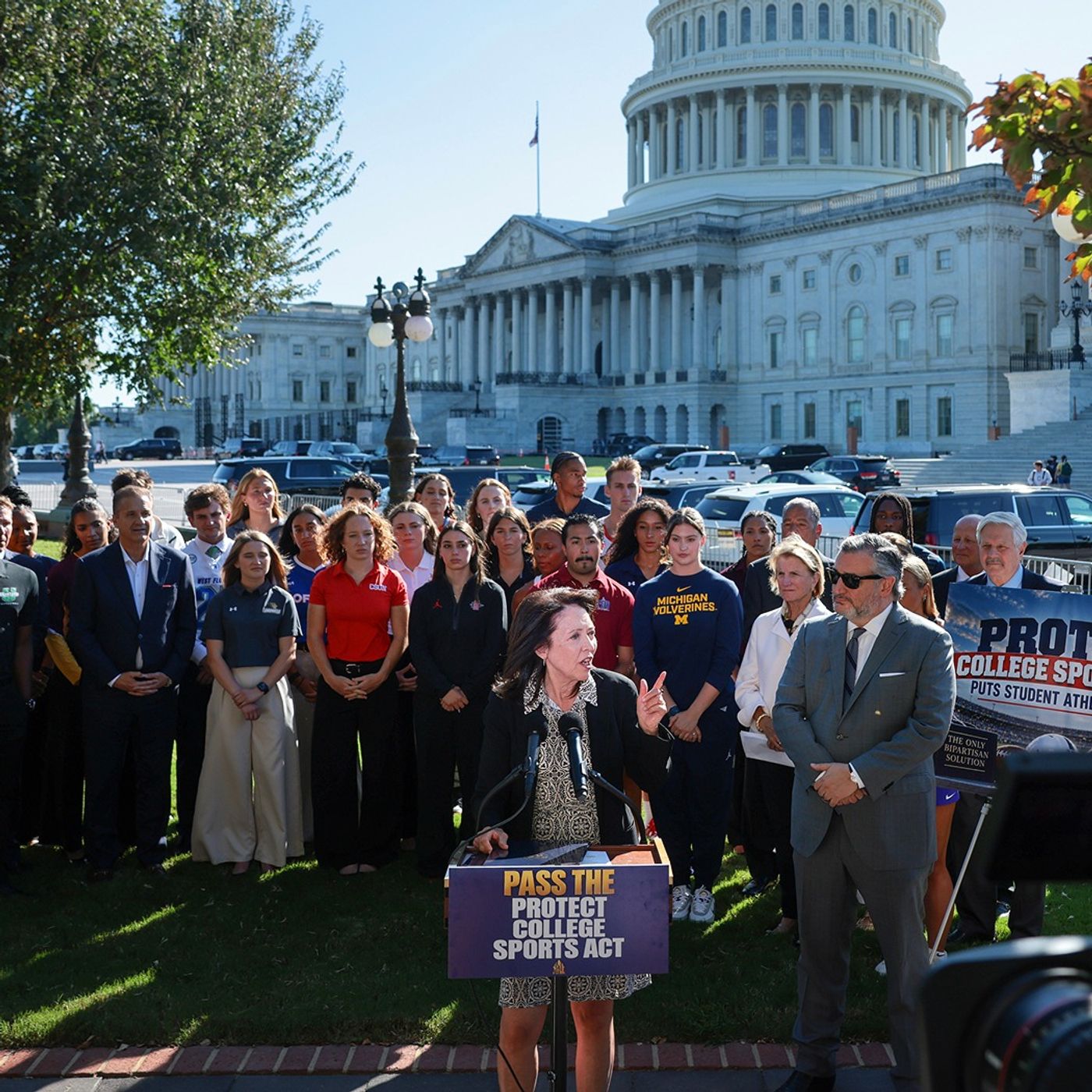
Photo: Chip Somodevilla/Getty Images
For more information on today’s episode, visit nytimes.com/thedaily. Transcripts of each episode will be made available by the next workday.
Subscribe today at nytimes.com/podcasts or on Apple Podcasts, Spotify and Amazon Music. You can also subscribe via your favorite podcast app here https://www.nytimes.com/activate-access/audio?source=podcatcher. For more podcasts and narrated articles, download The New York Times app at nytimes.com/app.
Hosted by Simplecast, an AdsWizz company. See pcm.adswizz.com for information about our collection and use of personal data for advertising.