

🤖 AI Summary
Overview
This episode explores the dynamics of the 2026 primary elections, focusing on the Republican Party's pursuit of loyalty and revenge under Donald Trump and the Democratic Party's internal struggle for identity and generational change. Key races in Indiana, Kentucky, Louisiana, Maine, and Michigan illustrate broader trends shaping both parties' futures.
Notable Quotes
- Donald Trump’s record has been pretty darn strong in Republican primaries for the last 10 years.
– Shane Goldmacher, on Trump’s enduring influence.
- The fury at the party establishment is so great that Democratic voters in Maine appeared willing to take a chance on an untested candidate.
– Lisa Lerer, on the Maine Democratic primary upset.
- Even the most ardent Trump supporters understand sometimes he gets bad advice.
– Shane Goldmacher, on Congressman Thomas Massie’s critique of Trump.
🗳️ Republican Revenge and Loyalty Tests
- Donald Trump is using the primaries to enforce loyalty, targeting Republicans who opposed him, particularly in Indiana, Kentucky, and Louisiana.
- In Indiana, Trump is backing challengers against state senators who resisted his redistricting demands, pouring millions into these races.
- Kentucky’s Thomas Massie, a conservative who occasionally opposes Trump, faces a Trump-backed challenger. Trump’s attacks on Massie highlight his zero-tolerance policy for dissent.
- Louisiana Senator Bill Cassidy, who voted to convict Trump during impeachment, is also in Trump’s crosshairs, despite his efforts to align with Trump on other issues.
🌊 Democratic Identity Crisis
- Democrats are grappling with internal divisions over generational change, strategy, and leadership.
- In Maine, grassroots anger at the establishment led to the rise of Graham Platner, an outsider candidate with a controversial past, forcing Governor Janet Mills to drop out of the Senate race.
- The Democratic base’s willingness to embrace flawed, anti-establishment candidates reflects frustration with traditional party leadership.
📍 Key Senate Race in Michigan
- Michigan’s Democratic primary features three candidates representing distinct paths for the party: progressive Abdul El-Said, moderate Haley Stevens, and centrist Mallory McMorrow.
- Republicans are fielding Mike Rogers, a strong candidate who narrowly lost in 2024, making this a critical battleground for Senate control.
- The race underscores broader debates within the Democratic Party about how to balance progressive ideals with electability in swing states.
🔥 The Role of Anger in Both Parties
- Trump’s anger fuels his loyalty tests, aligning with Republican voters’ frustrations and reinforcing his dominance in the party.
- On the Democratic side, voter anger at the establishment is driving support for outsider candidates, but it risks alienating moderate voters in general elections.
- Both parties face unpredictability as anger shapes candidate selection and voter behavior, complicating strategies for the midterms.
💰 The Cost of Political Battles
- Trump’s revenge campaigns are diverting resources from competitive general election races, such as targeting vulnerable Democrats.
- In Indiana, millions are being spent on statehouse primaries, an unusual level of investment for such races.
- Democrats face financial challenges as outsider candidates like Graham Platner struggle to build campaign infrastructure, while establishment candidates lose donor confidence.
AI-generated content may not be accurate or complete and should not be relied upon as a sole source of truth.
📋 Episode Description
In primary elections across the United States, the Republican Party will test its voters appetite for revenge, and the Democratic Party will test its voters appetite for change.
The New York Times journalists Shane Goldmacher, Lisa Lerer and Reid Epstein sat down with Michael Barbaro to explain which key elections to watch.
Guest:
- Shane Goldmacher, a national political correspondent for The New York Times.
- Lisa Lerer, a national political correspondent for The New York Times.
- Reid J. Epstein, a New York Times reporter covering politics.
Background reading:
- These seven elections on Tuesday will test President Trump’s power.
- Mr. Trump’s push for electoral retribution is heading to the ballot box.
- See a calendar of primary elections and read about some of the year’s most competitive races.
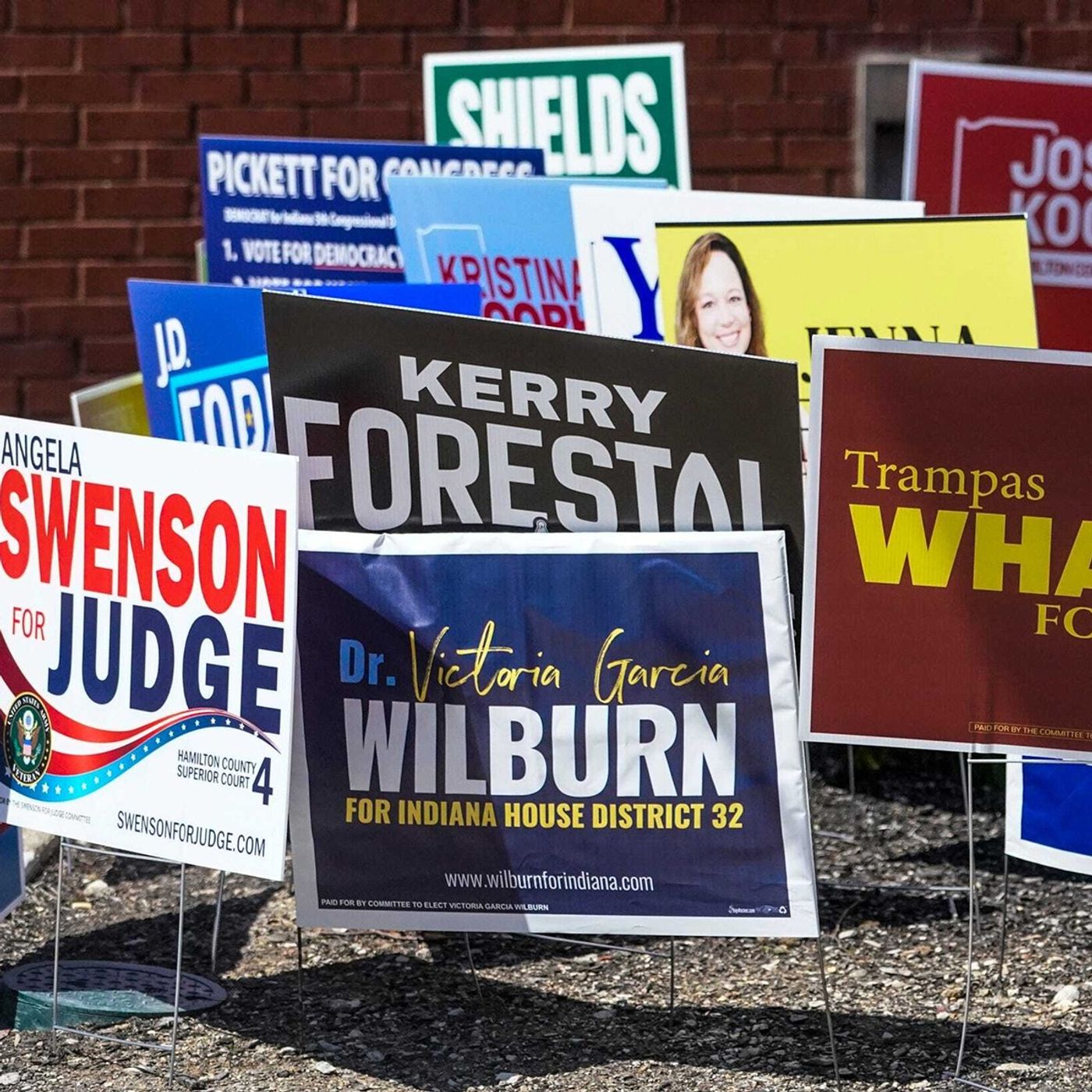
Photo: Michelle Pemberton/IndyStar/USA TODAY Network
For more information on today’s episode, visit nytimes.com/thedaily. Transcripts of each episode will be made available by the next workday.
Subscribe today at nytimes.com/podcasts or on Apple Podcasts and Spotify. You can also subscribe via your favorite podcast app here https://www.nytimes.com/activate-access/audio?source=podcatcher. For more podcasts and narrated articles, download The New York Times app at nytimes.com/app.
Hosted by Simplecast, an AdsWizz company. See pcm.adswizz.com for information about our collection and use of personal data for advertising.