

🤖 AI Summary
Overview
This episode explores the growing international outrage over the humanitarian crisis in Gaza, particularly the starvation of children, and examines how these events are perceived within Israeli society. Journalist Emmanuelle Elbaz-Phelps discusses the challenges of fostering empathy for Gaza's suffering amidst the trauma of the October 7th attacks and the role of Israeli media in shaping public sentiment.
Notable Quotes
- When you see the images coming out of Gaza, I don't understand how people can look at them and not get horrified.
– Emmanuelle Elbaz-Phelps, on the moral imperative to acknowledge Gaza's suffering.
- Maybe it's about time that we understand that the problem is not a problem of image, but it's a problem of morals.
– Yonit Levy, Israeli news anchor, addressing the ethical dimensions of the Gaza crisis.
- If we don't want to get to this point, we have to start to work on a political solution now.
– Emmanuelle Elbaz-Phelps, advocating for long-term change to prevent future cycles of violence.
📰 The Role of Israeli Media in Shaping Public Perception
- Emmanuelle Elbaz-Phelps criticized Israeli mainstream media for failing to show the human suffering in Gaza, focusing instead on destruction and military victories.
- Journalists, many of whom have personal ties to the military or victims of the October 7th attacks, struggle to separate their roles as civilians and reporters.
- A leaked internal discussion among journalists revealed debates about whether to cover Gaza's humanitarian crisis, highlighting the media's active role in shaping public discourse.
💔 The Emotional Toll of October 7th on Israeli Society
- The trauma of the October 7th attacks, including hostages and widespread casualties, remains raw for Israelis, making it difficult for many to empathize with Gaza's suffering.
- Elbaz-Phelps noted that this ongoing trauma has left much of Israeli society emotionally closed off to the plight of Palestinians, viewing them primarily as enemies.
📱 Social Media vs. Mainstream Media
- While images of Gaza's suffering are widely available on social media, many Israelis actively avoid engaging with this content.
- Rachel Abrams questioned whether this avoidance reflects a societal looking away,
to which Elbaz-Phelps agreed, citing emotional exhaustion and fear as key factors.
🌍 Shifting Public and Media Discourse
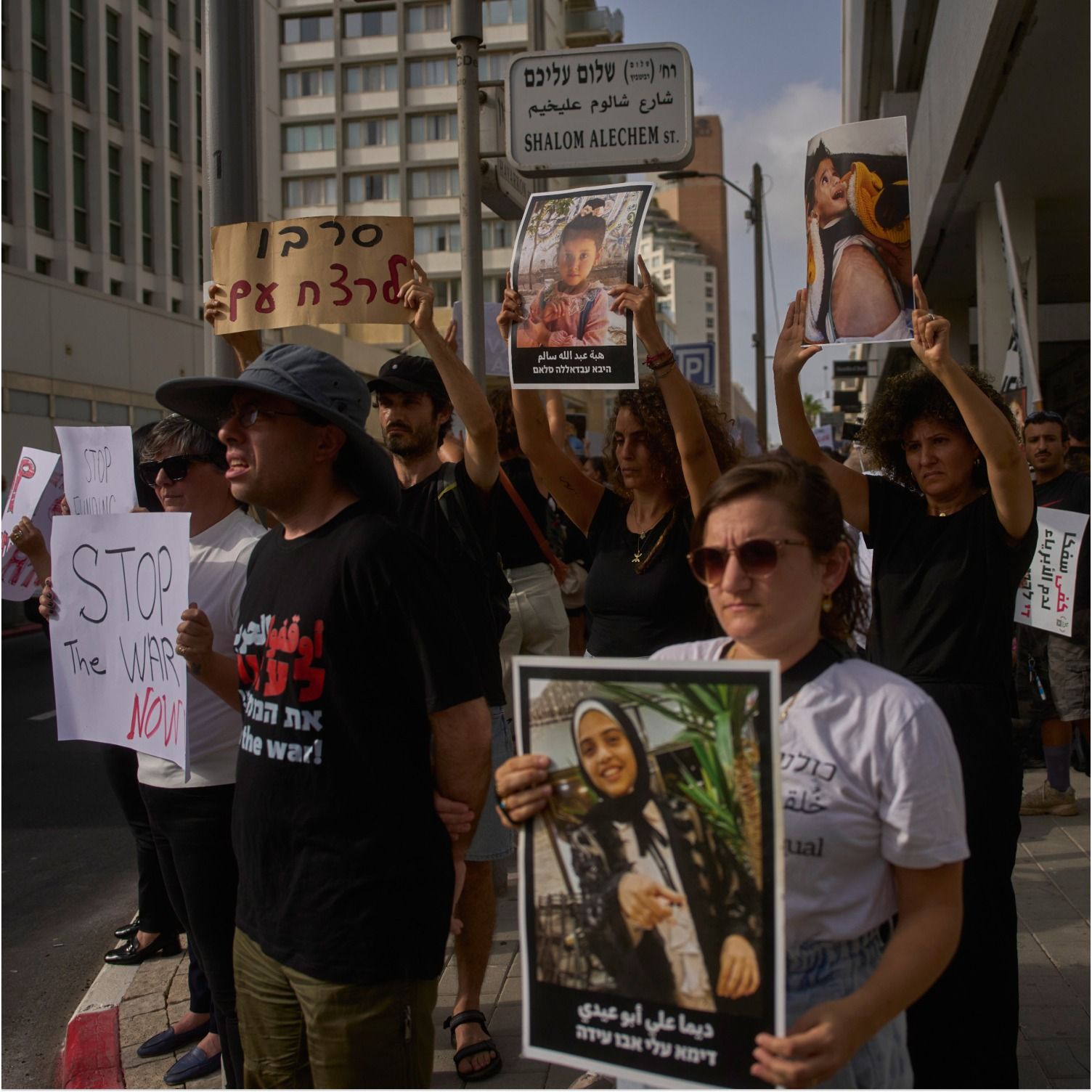
- Recent protests by peace groups like Standing Together
and public statements by prominent journalists have begun to crack the silence around Gaza in Israeli media.
- Elbaz-Phelps observed a small but significant shift, with more Israelis beginning to discuss Gaza's humanitarian crisis, though these conversations remain limited and fraught.
- International pressure and the vividness of the crisis have made it increasingly difficult for Israelis to ignore the situation, signaling the start of a broader reckoning.
🕊 Calls for Political Solutions
- Elbaz-Phelps emphasized the need for a political solution to address the root causes of the conflict, warning that without one, future generations will inherit the same cycle of violence.
- She argued that fostering empathy and acknowledging the suffering on both sides is essential for any meaningful progress.
AI-generated content may not be accurate or complete and should not be relied upon as a sole source of truth.
📋 Episode Description
As the images of starving Palestinian children continue to come out of Gaza and aid groups have confirmed a rising number of deaths from malnutrition, there has been a new round of international outrage, including from Israel’s own allies.
Emmanuelle Elbaz-Phelps, an independent Israeli journalist, discusses whether any of the outcry is resonating with Israeli society.
Guest: Emmanuelle Elbaz-Phelps, an Israeli journalist.
Background reading:
- Israelis are voicing dissent against the war in Gaza.
- Anger over the starvation in Gaza is leaving Israel increasingly isolated.
For more information on today’s episode, visit nytimes.com/thedaily. Transcripts of each episode will be made available by the next workday.
Photo: Ohad Zwigenberg/Associated Press
Unlock full access to New York Times podcasts and explore everything from politics to pop culture. Subscribe today at nytimes.com/podcasts or on Apple Podcasts and Spotify.