

🤖 AI Summary
Overview
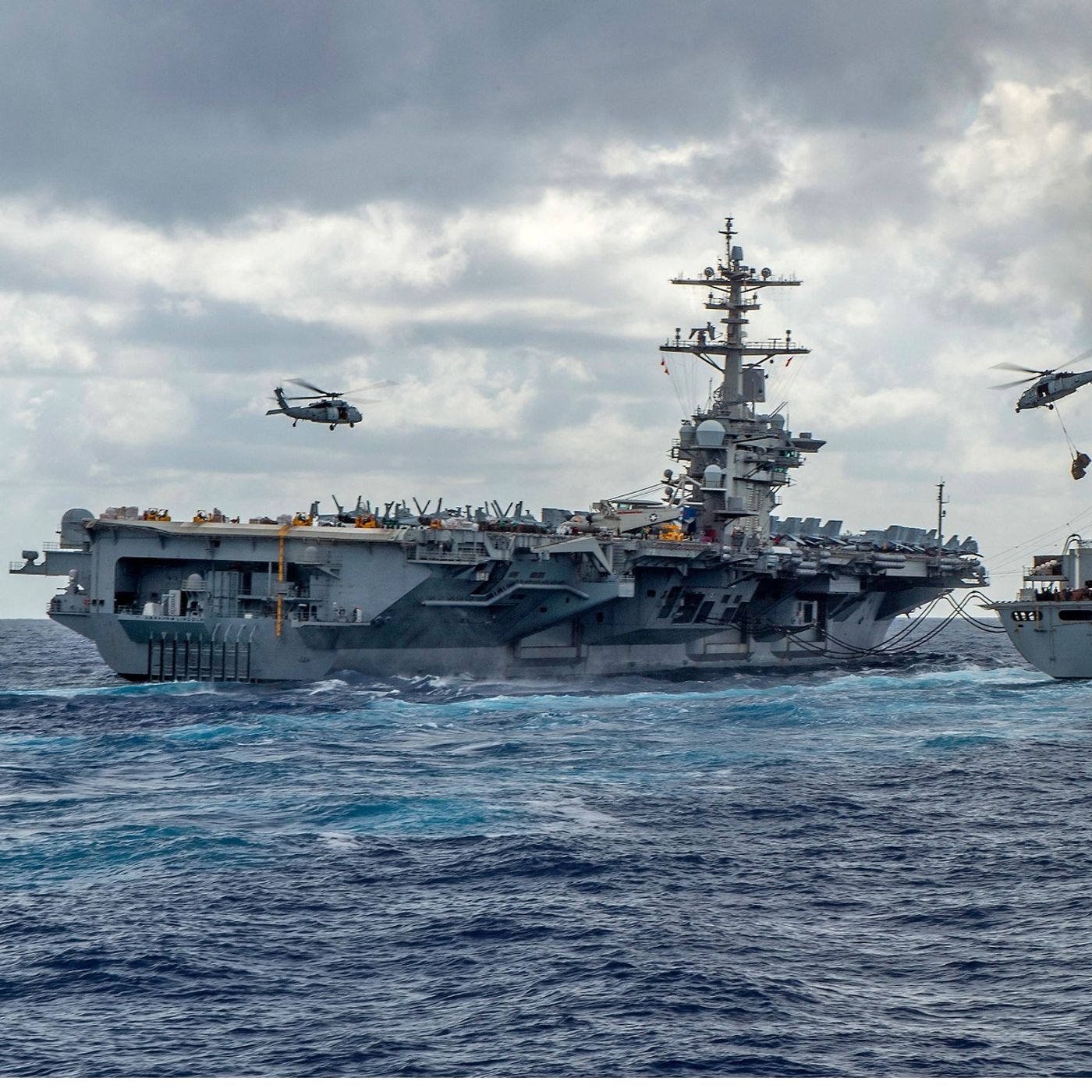
This episode delves into the dire conditions aboard the USS Abraham Lincoln, a U.S. Navy aircraft carrier that has been at sea for nearly nine months. The discussion explores the toll of extended deployments on sailors' mental and physical well-being, logistical challenges stemming from the destruction of a key naval base, and the broader implications for U.S. military readiness.
Notable Quotes
- We're expecting people to fight for our country, and yet we're not giving them a full meal. That blows my mind.
– Unnamed sailor's spouse, on the inadequate food provisions aboard the USS Lincoln.
- There is a difference between regular hardship and borderline abuse.
– John Ismay, on the extended deployment's impact on sailors.
- In soccer terms, it's like pulling the goalie.
– John Ismay, describing the strategic risks of deploying the USS George Washington to relieve the USS Lincoln.
🚢 Prolonged Deployment and Its Impact on Sailors
- The USS Abraham Lincoln has been at sea for 270 days without a port call, far exceeding the typical six-month deployment.
- Sailors and their families report severe mental and physical strain, with one spouse describing the ship as a floating box
and expressing concern over her husband's exhaustion and mental health.
- The lack of fresh food and inadequate meals, such as one square of a waffle and two sausage patties,
has further exacerbated morale issues.
🍽️ Food and Supply Shortages
- Photos of meals sent by sailors reveal meager portions, with fresh produce disappearing after just a few weeks at sea.
- The destruction of the U.S. Navy's logistics hub in Bahrain by Iranian forces has severely disrupted the supply chain, forcing resupply ships to travel over 2,000 miles to Diego Garcia, a remote island in the Indian Ocean.
- This logistical bottleneck has made it nearly impossible to provide adequate food and supplies to the crew.
🛠️ Maintenance and Safety Concerns
- Extended deployments without port calls prevent essential maintenance, such as repairing the flight deck's non-skid coating, which is critical for safety during aircraft operations.
- Chronic fatigue among sailors, caused by long working hours and lack of rest, increases the risk of accidents, especially in high-stakes environments like the flight deck.
- The ship's deteriorating condition will require extensive repairs in a shipyard, further straining the Navy's limited fleet of 11 aircraft carriers.
🌍 Strategic Implications of Carrier Deployment
- The USS George Washington, typically stationed in Japan as a deterrent in the Pacific, is being sent to relieve the Lincoln, leaving a strategic gap in the South China Sea.
- This zero-sum game
highlights the strain on U.S. military resources, with the Navy forced to make difficult trade-offs between global commitments.
- The situation underscores the challenges of maintaining military readiness in the face of prolonged conflicts and logistical vulnerabilities.
⚓ The Role of Logistics in Military Strategy
- The destruction of the Naval Support Activity Bahrain base by Iran has exposed critical weaknesses in the Navy's logistical planning.
- With Bahrain out of commission, the Navy must rely on Diego Garcia, significantly increasing resupply times and complicating operations.
- The lack of alternative logistics hubs in the region has left the Navy vulnerable, raising questions about the foresight and planning behind the U.S. military's strategy in the Middle East.
AI-generated content may not be accurate or complete and should not be relied upon as a sole source of truth.
📋 Episode Description
For the past two weeks, family members of sailors have been raising alarms about the conditions aboard the U.S.S. Abraham Lincoln, which has a crew of about 5,000 and has been at sea for almost nine months straight.
Today, John Ismay, a New York Times reporter who covers the Pentagon with a focus on armed conflict and the defense industry, discusses what went wrong on the ship and how it could affect the U.S. military’s ability to fight wars.
Guest: John Ismay, a New York Times reporter who covers the Pentagon with a focus on armed conflict and the defense industry.
Background reading:
- The U.S.S. Abraham Lincoln has been deployed for nearly nine months. Members of Congress are worried about the crew’s well-being.
- Admiral Brad Cooper, the head of U.S. Central Command, acknowledged the difficulty of the carrier’s lengthy deployment but said mental health issues were lower than on other vessels.
Photo: Jason Waite/Agence France-Presse, via Navy Office of Information
For more information on today’s episode, visit nytimes.com/thedaily. Transcripts of each episode will be made available by the next workday.
Subscribe today at nytimes.com/podcasts or on Apple Podcasts and Spotify. You can also subscribe via your favorite podcast app here https://www.nytimes.com/activate-access/audio?source=podcatcher. For more podcasts and narrated articles, download The New York Times app at nytimes.com/app.
Hosted by Simplecast, an AdsWizz company. See pcm.adswizz.com for information about our collection and use of personal data for advertising.