

🤖 AI Summary
Overview
This episode explores how China has emerged stronger in manufacturing despite the Trump administration's tariffs. It delves into China's strategic investments in automation, robotics, and advanced manufacturing, making the country nearly immune to trade barriers. The discussion highlights the global implications of China's dominance and the challenges faced by other nations in competing with its highly automated factories.
Notable Quotes
- China now installs more factory robots each year than the entire rest of the world combined.
- Keith Bradsher, on China's automation dominance.
- If we want to compete, we have to buy their equipment to do that. Either way, China wins.
- Keith Bradsher, on the global reliance on Chinese manufacturing technology.
- The result is a nation of not just high school graduates, but now more than half the young people are college graduates as well. The last thing they want to do is a rote job on a factory floor.
- Keith Bradsher, on the cultural shift in China's workforce.
🌍 China's Resilience Amid Tariffs
- Despite steep tariffs, China's trade surplus grew to $1.2 trillion, larger than most national economies.
- Keith Bradsher explains how China redirected exports to other regions like Africa, Latin America, and Europe, and leveraged indirect shipments through third countries to bypass tariffs.
- Currency devaluation made Chinese goods cheaper globally while increasing the cost of imports, further insulating its economy.
🤖 Automation and Advanced Manufacturing
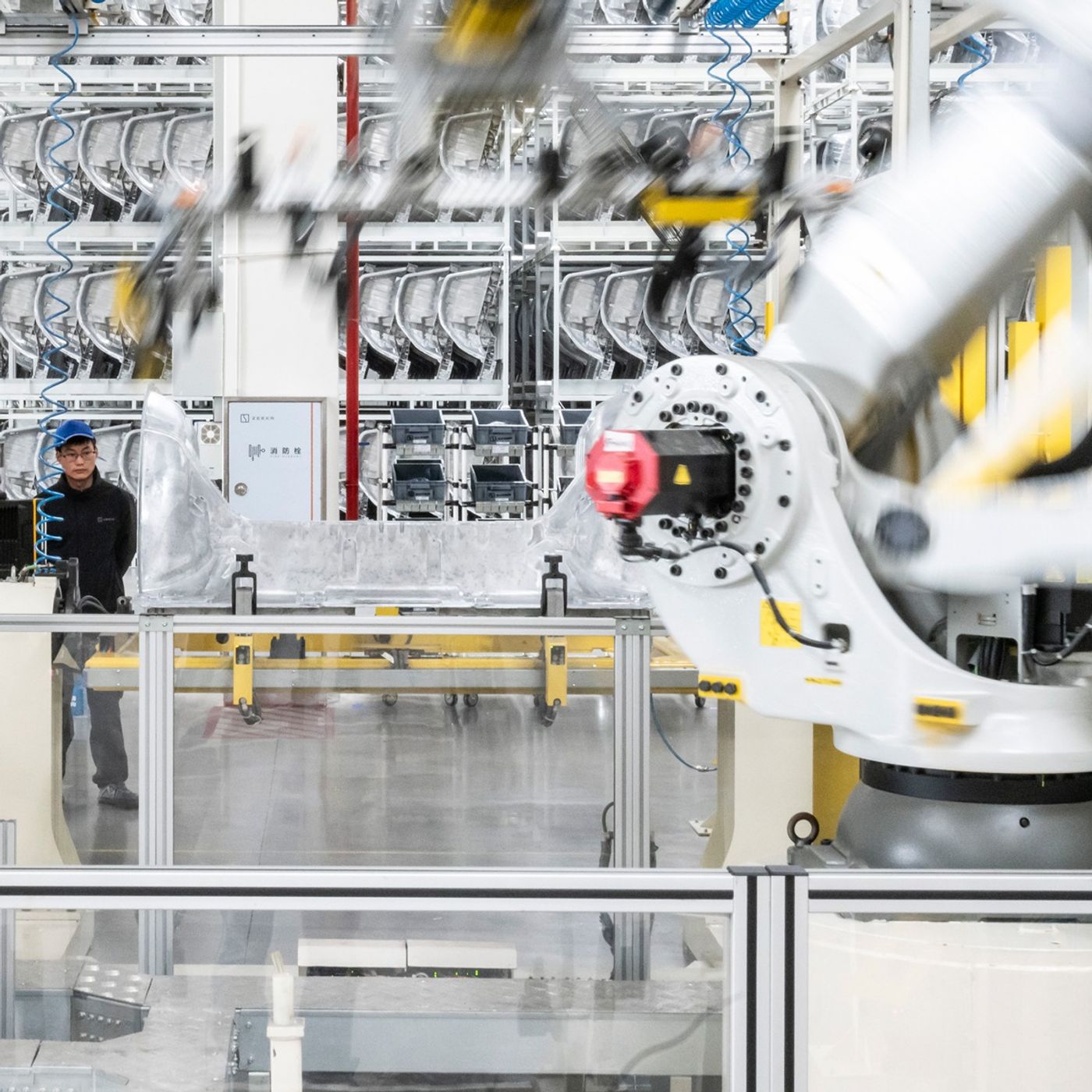
- China's factories are highly automated, featuring dark factories
where robots operate without human intervention or light.
- AI plays a critical role in quality control and process optimization, making China's manufacturing more efficient than competitors like Germany, Japan, and the U.S.
- China leads globally in robot density, with more robots per 10,000 workers than any other country.
📚 Workforce and Demographics
- The one-child policy led to a shrinking labor pool, pushing China to automate its factories to compensate for fewer workers.
- A cultural emphasis on education has resulted in a generation of college graduates unwilling to take factory jobs, further accelerating automation.
- Confucian traditions and aspirations for white-collar work have made manual labor less desirable among younger Chinese workers.
📈 Made in China 2025 Strategy
- China's ambitious plan aimed to dominate 10 major sectors, including robotics, semiconductors, and electric vehicles.
- Massive government investments and acquisitions, such as the purchase of Germany's Kuka Robotics, transferred expertise and technology to China.
- The strategy focuses on controlling the entire supply chain, from manufacturing products to producing the equipment that makes them.
🇺🇸 Implications for U.S. Manufacturing
- The U.S. struggles to compete with China's automation and often relies on Chinese-made factory equipment.
- Tariffs alone have not revitalized American manufacturing; broader measures like worker training and technology investments are needed.
- Automation may reshape factory jobs globally, creating roles in robot design and product innovation rather than traditional assembly-line work.
AI-generated content may not be accurate or complete and should not be relied upon as a sole source of truth.
📋 Episode Description
About a year into President Trump’s global trade war, China hasn’t just survived. It has emerged stronger than ever on the world stage.
Keith Bradsher, the Beijing bureau chief for The New York Times, discusses the domination of China’s robot-powered superfactories and how the country essentially made itself tariff-proof.
Guest: Keith Bradsher, the Beijing bureau chief for The New York Times.
Background reading:
- China’s secret weapon in the trade war is an army of factory robots.
- Beijing announced a record trade surplus in January as its exports flooded world markets.
Photo: Qilai Shen for The New York Times
For more information on today’s episode, visit nytimes.com/thedaily. Transcripts of each episode will be made available by the next workday.
Subscribe today at nytimes.com/podcasts or on Apple Podcasts and Spotify. You can also subscribe via your favorite podcast app here https://www.nytimes.com/activate-access/audio?source=podcatcher. For more podcasts and narrated articles, download The New York Times app at nytimes.com/app.
Hosted by Simplecast, an AdsWizz company. See pcm.adswizz.com for information about our collection and use of personal data for advertising.