

🤖 AI Summary
Overview
This episode examines the U.S. indictment of Raúl Castro, Cuba's former leader, for his role in the 1996 downing of two civilian planes, killing four people, including three Americans. The discussion explores the historical context of the charges, the Trump administration's broader pressure campaign on Cuba, and the geopolitical stakes involved.
Notable Quotes
- This isn't just a judicial or law enforcement event. This is a community event.
– Frances Robles, on the symbolic significance of the indictment announcement in Miami.
- If you want to do a deal with us, you got to kick our adversaries out. They're spying on us from your country.
– Julian E. Barnes, on U.S. demands for Cuba to remove Chinese and Russian intelligence posts.
- Trump may essentially just be looking for a win.
– Julian E. Barnes, on the administration's motivations for escalating pressure on Cuba.
🛫 The 1996 Incident and Its Aftermath
- The charges against Raúl Castro stem from the Cuban military's 1996 downing of two planes operated by Brothers to the Rescue, a nonprofit aiding Cuban rafters fleeing to the U.S.
- The planes were shot down in international airspace, killing four people. Castro, then Cuba's defense minister, is believed to have directly ordered the attack.
- The incident shocked South Florida's Cuban exile community and strained U.S.-Cuba relations.
🏛️ Symbolism of the Indictment Announcement
- The announcement was held at Miami's Freedom Tower, a historic site for Cuban exiles, on Cuban Independence Day, amplifying its symbolic weight.
- The event was attended by prominent figures in the Cuban-American community, underscoring its significance beyond legal proceedings.
- Frances Robles noted the community-oriented nature of the event, with speeches emphasizing solidarity with Cubans still on the island.
🇨🇺 U.S. Pressure Campaign on Cuba
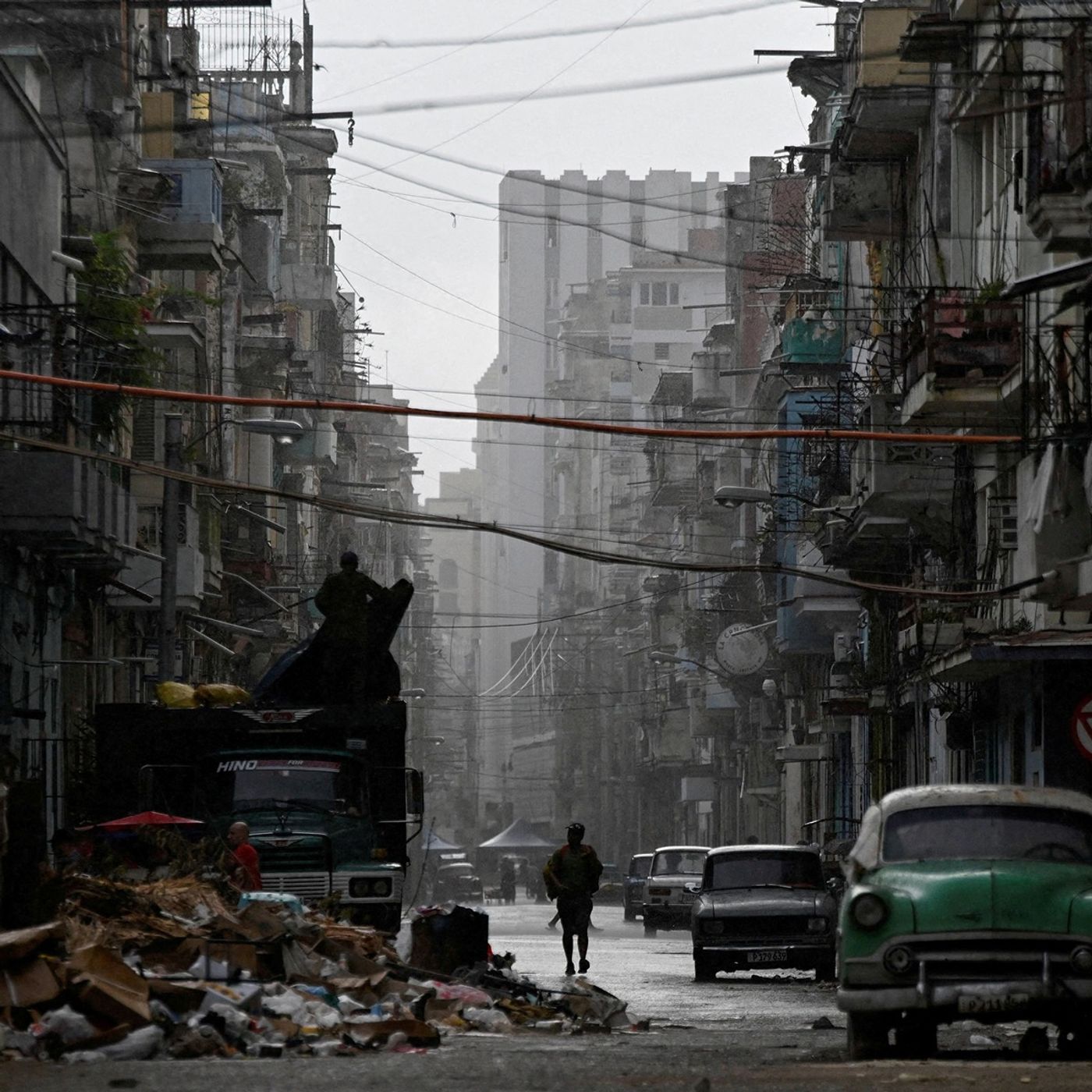
- The Trump administration has intensified sanctions, cutting off oil supplies and exacerbating Cuba's energy crisis, with power outages lasting up to 22 hours a day.
- Frances Robles highlighted generational divides in Cuba regarding blame: older Cubans fault the U.S., while younger Cubans criticize their own government.
- The Cuban government has labeled U.S. actions as genocide
and remains defiant, despite mounting hardships.
🎯 U.S. Strategic Goals in Cuba
- Julian Barnes revealed that the U.S. demands include shutting down Chinese and Russian intelligence posts in Cuba, reducing the military's economic control, and incremental political reforms like local elections.
- While regime change remains a long-term goal for many Cuban Americans, the administration appears to be pursuing more achievable, incremental objectives.
- The indictment of Raúl Castro is seen as a pressure tactic rather than a prelude to military action, given logistical and political constraints.
🌍 Broader Geopolitical Implications
- The U.S. views Cuba as a critical front in its competition with global adversaries like China and Russia.
- Trump’s administration sees potential success in Cuba as a way to offset challenges in other regions, such as the Middle East.
- Barnes emphasized that while the administration seeks a win,
achieving even modest reforms in Cuba could be framed as a significant foreign policy achievement.
AI-generated content may not be accurate or complete and should not be relied upon as a sole source of truth.
📋 Episode Description
The U.S. charged Raúl Castro, Cuba’s former leader and Communist general, with murder on Wednesday. It was the latest escalation in the Trump administration’s campaign to force political change on the island.
The New York Times reporters Frances Robles and Julian Barnes break down what is behind the charges against Mr. Castro and what the American government really wants from Cuba.
Guest:
- Frances Robles, an international correspondent covering Latin America and the Caribbean for The New York Times.
- Julian E. Barnes, a reporter covering the U.S. intelligence agencies and international security matters for The New York Times.
Background reading:
- The Justice Department charged the former Cuban president in fatal downing of planes.
- Here’s what happened on the day Cuba shot down two civilian planes.
Photo: Norlys Perez/Reuters
For more information on today’s episode, visit nytimes.com/thedaily. Transcripts of each episode will be made available by the next workday.
Subscribe today at nytimes.com/podcasts or on Apple Podcasts and Spotify. You can also subscribe via your favorite podcast app here https://www.nytimes.com/activate-access/audio?source=podcatcher. For more podcasts and narrated articles, download The New York Times app at nytimes.com/app.
Hosted by Simplecast, an AdsWizz company. See pcm.adswizz.com for information about our collection and use of personal data for advertising.