

🤖 AI Summary
Overview
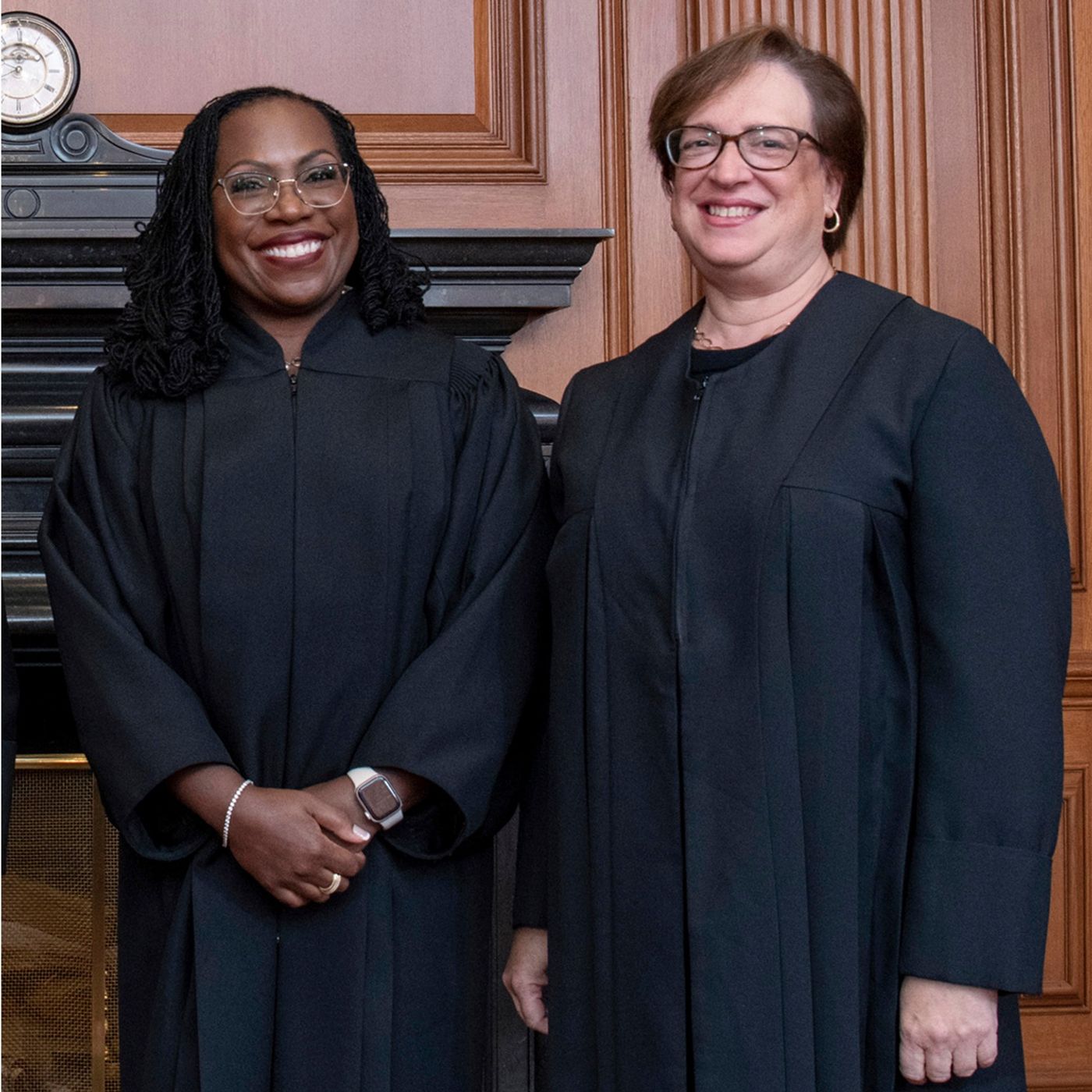
This episode delves into the ideological and strategic tensions among the Supreme Court's liberal justices, particularly between Justice Elena Kagan and Justice Ketanji Brown Jackson. It explores their differing approaches to countering the conservative majority, the challenges they face in a 6-3 court, and the broader implications for the judiciary and democracy.
Notable Quotes
- Things are changing. Is diplomacy still going to work? Or do I need to get more confrontational?
– Jodi Kantor, on Justice Kagan's internal struggle.
- This court is enabling our collective demise.
– Justice Ketanji Brown Jackson, in a dissent criticizing the court's direction.
- The difference between four votes and three votes is more than one.
– Jodi Kantor, highlighting the dramatic shift in power dynamics on the court.
🧑⚖️ The Diplomatic Approach of Justice Elena Kagan
- Justice Kagan, appointed in 2010, was recommended by conservative Justice Antonin Scalia for her reputation as a skilled diplomat.
- Her strategy involves building relationships with conservative justices, finding common ground, and narrowing rulings to mitigate losses.
- Examples include her role in preserving parts of President Obama’s health care law and narrowing the scope of the 2018 Masterpiece Cakeshop decision.
- Kagan’s approach requires restraint, as seen when she softened a dissent to maintain collegiality with Chief Justice Roberts.
⚖️ The Confrontational Strategy of Justice Ketanji Brown Jackson
- Justice Jackson, appointed in 2022, brings a different perspective as a former public defender and the first Black woman on the court.
- She rejects the deferential tone traditionally expected of junior justices, speaking extensively during oral arguments and writing separate, sharply critical opinions.
- Her dissents often address the public directly, aiming to raise awareness and influence long-term change.
- In a dissent on a case limiting judicial power, she warned of the erosion of constitutional checks, stating, Our beloved constitutional republic will be no more.
📉 The Impact of a 6-3 Conservative Majority
- The court’s rightward shift, solidified by Justice Amy Coney Barrett’s appointment, has left liberals with limited influence.
- Kagan’s consensus-building strategy faces diminishing returns, as seen in the overturning of Roe v. Wade and the reversal of compromises like the Masterpiece Cakeshop ruling.
- Justice Barrett occasionally shows independence, such as expressing discomfort with the timing of the Dobbs case, but remains aligned with the conservative bloc on major decisions.
🔥 Tensions Between Kagan and Jackson
- Justice Jackson’s blunt critiques risk alienating potential conservative allies like Barrett and Roberts, undermining Kagan’s strategy of compromise.
- Kagan’s supporters argue that her approach has yielded tangible, albeit temporary, victories, such as preserving federal agency power in a recent case.
- Jackson’s supporters counter that compromise is futile in the face of the court’s aggressive conservative agenda, pointing to the erosion of past liberal gains.
⏳ The Stakes for the Court and Democracy
- Both justices face critical decisions about their strategies as the court tackles cases defining the scope of presidential power under Trump.
- Kagan is reportedly agonizing over whether to maintain her diplomatic approach or adopt a more confrontational stance.
- The episode underscores the broader implications of these internal debates for the future of the judiciary and the country’s democratic institutions.
AI-generated content may not be accurate or complete and should not be relied upon as a sole source of truth.
📋 Episode Description
The Supreme Court’s liberal minority has voted, over and over again, to oppose the court’s conservative majority in what might look like a united front of resistance. But behind the scenes, there are growing tensions between those liberal justices over the best way to mitigate the rightward lurch of the court.
Jodi Kantor, who uncovered the story, explains what she found.
Guest: Jodi Kantor, a New York Times reporter whose job is to carefully uncover secrets and illuminate how power operates.
Background reading:
- Read about the debate dividing the Supreme Court’s liberal justices.
Photo: Fred Schilling/Collection of the Supreme Court of the United States, via Associated Press
For more information on today’s episode, visit nytimes.com/thedaily. Transcripts of each episode will be made available by the next workday.
Subscribe today at nytimes.com/podcasts or on Apple Podcasts and Spotify. You can also subscribe via your favorite podcast app here https://www.nytimes.com/activate-access/audio?source=podcatcher. For more podcasts and narrated articles, download The New York Times app at nytimes.com/app.