

🤖 AI Summary
Overview
This episode explores the parallels between nuclear non-proliferation efforts during the Cold War and the current challenges of regulating artificial intelligence (AI). David E. Sanger, a White House correspondent, discusses how lessons from the nuclear era could inform global strategies to mitigate the risks of AI, while highlighting the unique complexities of this new technological frontier.
Notable Quotes
- The atomic bomb with all its terrors did not carry us outside the scope of human control. In AI, we have no assurance of human control.
— David E. Sanger, on the fundamental difference between nuclear weapons and AI.
- We may not have 25 years this time. We may not have 2 1/2 years this time.
— David E. Sanger, on the urgency of addressing AI risks compared to the timeline of nuclear non-proliferation.
- Why would I sign a treaty that locks in U.S. AI advantages and makes it harder for us to catch up?
— Michael Barbaro, summarizing China's perspective on AI regulation.
🧠 The AI-Nuclear Parallels
- David E. Sanger draws a historical parallel between the Cold War nuclear arms race and the current AI race, noting that both involve transformative technologies with existential risks.
- The nuclear non-proliferation model succeeded in preventing widespread nuclear weapon development through treaties, inspections, and international cooperation.
- AI, like nuclear weapons, has the potential for catastrophic misuse, but its regulation is far more complex due to its decentralized development and lack of physical constraints like uranium or plutonium.
⚛️ Lessons from Nuclear Non-Proliferation
- The Nuclear Non-Proliferation Treaty (NPT) of 1968 was a landmark agreement where nuclear-armed states committed to eventual disarmament, while non-nuclear states agreed not to pursue weapons in exchange for peaceful nuclear technology.
- Key mechanisms included inspections by the International Atomic Energy Agency (IAEA) to ensure compliance.
- David E. Sanger highlights how this model could inspire AI regulation, such as independent oversight of AI development and agreements to limit its use in critical areas like nuclear or biological weapons.
🌍 Challenges in Applying the Model to AI
- Unlike nuclear weapons, AI development is not state-controlled; private companies and even individuals can create powerful systems.
- AI lacks the clear, tangible threat of nuclear weapons, making it harder to rally global consensus.
- Geopolitical tensions, particularly between the U.S. and China, complicate cooperation. China views U.S. export controls on advanced chips as a form of containment, fueling mistrust.
🚨 The Urgency of AI Regulation
- AI's rapid pace of development, including the potential for recursive self-improvement or artificial general intelligence, leaves little time for deliberation.
- David E. Sanger warns that a crisis akin to the Cuban Missile Crisis may be needed to spur global action, though such an event could have devastating consequences.
- Early steps, like the U.S. and China agreeing not to let AI control nuclear weapons, show progress but remain insufficient given the broader risks.
🔍 Proposals for AI Oversight
- Borrowing from the IAEA model, companies like Anthropic have proposed allowing independent inspectors to monitor AI development and flag potential dangers.
- Broader agreements could include bans on AI's use in hacking, biological weapons, and other destabilizing applications.
- However, David E. Sanger notes that treaties may be too slow to address AI's rapid evolution, suggesting alternative frameworks for international cooperation.
AI-generated content may not be accurate or complete and should not be relied upon as a sole source of truth.
📋 Episode Description
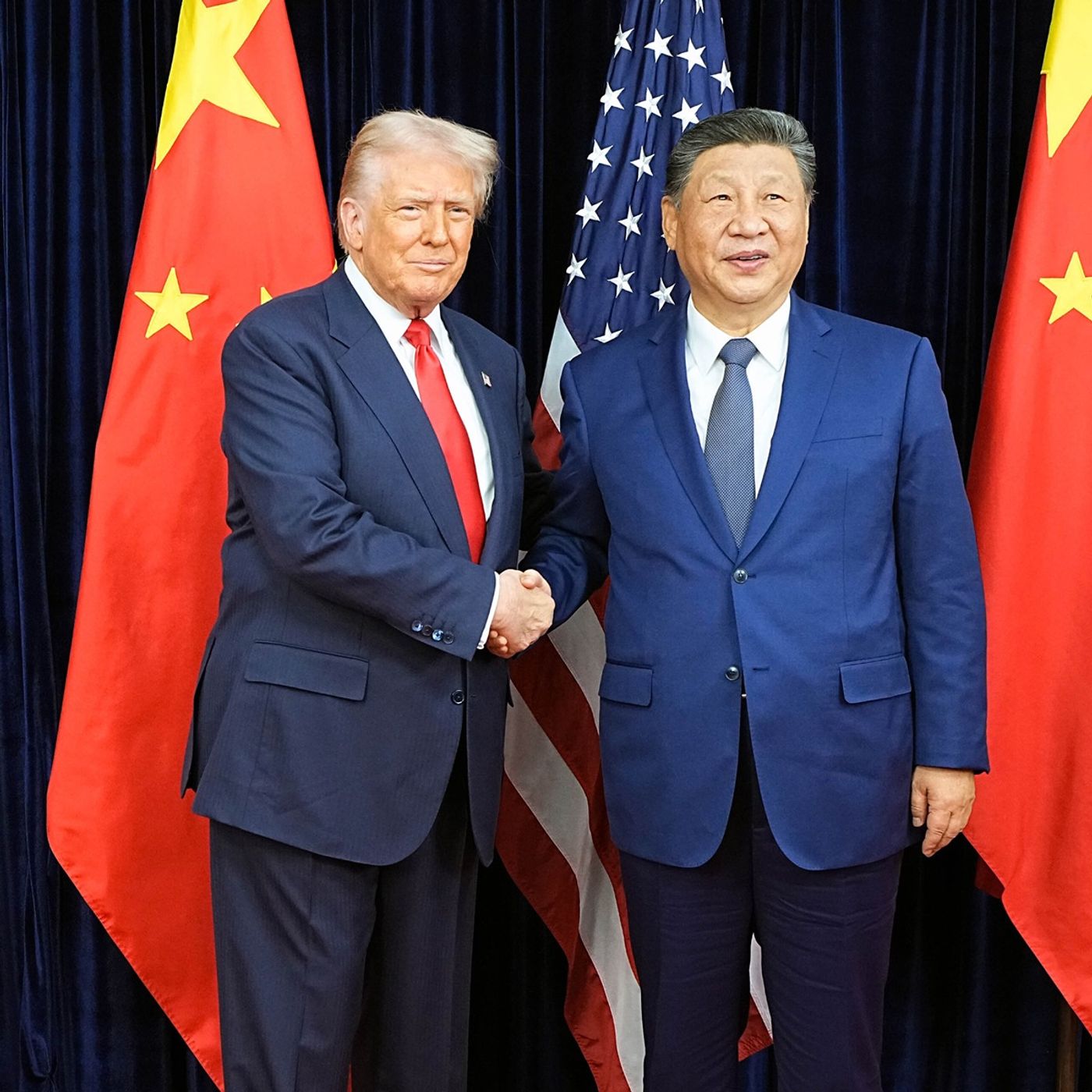
Last night, President Trump welcomed Xi Jinping, China’s top leader, in a lavish ceremony as he arrived for two days of closely watched negotiations.
Artificial intelligence — and what, if any, role the countries should play in regulating it as concerns mount about its risks — is expected to be on the agenda.
David E. Sanger, a White House correspondent for The New York Times, explains how nuclear nonproliferation could be a model for how to protect humanity from technological catastrophe.
Guest: David E. Sanger, the White House and national security correspondent for The New York Times.
Background reading:
- Mr. Trump greeted Mr. Xi for a state visit amid tensions.
- Video: Mr. Trump and Mr. Xi face the A.I. race.
- Analysis: As fears of A.I. catastrophe magnify, Washington stirs, but mostly slumbers.
Photo: Haiyun Jiang/The New York Times
For more information on today’s episode, visit nytimes.com/thedaily. Transcripts of each episode will be made available by the next workday.
Subscribe today at nytimes.com/podcasts or on Apple Podcasts, Spotify and Amazon Music. You can also subscribe via your favorite podcast app here https://www.nytimes.com/activate-access/audio?source=podcatcher. For more podcasts and narrated articles, download The New York Times app at nytimes.com/app.
Hosted by Simplecast, an AdsWizz company. See pcm.adswizz.com for information about our collection and use of personal data for advertising.