

🤖 AI Summary
Overview
This episode explores the enduring myth of America's founding, its evolution over 250 years, and its role in shaping national identity. Journalist Jia Lynn Yang examines how the myth has been embraced, challenged, and reimagined by different political and social movements, and why it remains central to debates about America's future.
Notable Quotes
- The truth of something and the facts of something don't really tell you what the founding means.
– Jia Lynn Yang, on the distinction between historical accuracy and the search for meaning.
- Frederick Douglass believed in the myth of America—not as it was, but as it could be.
– Jia Lynn Yang, on Douglass's aspirational use of the founding ideals.
- A successful political movement has to find a way to make meaning out of this history. It cannot just articulate flaws.
– Michael Barbaro, on the importance of storytelling in politics.
🗽 The Power and Purpose of Founding Myths
- Jia Lynn Yang explains that myths about America's founding, while not always factual, have historically served as a unifying force, offering a shared sense of identity and purpose.
- Early myths, like the cherry tree story about George Washington, were crafted to model virtue and inspire citizens, particularly children.
- The founding myth helped bind a diverse and fragmented early America, which lacked a common language, religion, or stable borders.
📜 Myths Under Scrutiny: The Rise of Fact-Checking
- The late 19th and early 20th centuries saw the emergence of professional historians who began debunking myths, such as Charles Beard's critique of the Founding Fathers as self-interested elites.
- This shift led to a left-right divide: conservatives clung to the myths as symbols of national virtue, while progressives used the same founding ideals to critique inequality and elite power.
- The bicentennial in 1976 highlighted these tensions, with marginalized groups like Black and LGBTQ+ activists invoking the revolutionary spirit to demand inclusion.
⚖️ The Left's Struggle with Myth-Making
- Yang observes that the American left has increasingly focused on exposing historical injustices, such as slavery and Indigenous dispossession, often at the expense of crafting a unifying narrative.
- While this fact-finding is essential, it risks fostering cynicism and disengagement by failing to offer an aspirational vision of America's future.
- Figures like Frederick Douglass and Barack Obama have demonstrated how to balance critique with hope, using the founding ideals as a roadmap for progress.
🇺🇸 The Right's Claim to the Founding Myth
- Since the Reagan era, the GOP has positioned itself as the guardian of America's founding ideals, emphasizing liberty, patriotism, and divine purpose.
- This narrative has been amplified by movements like Make America Great Again, which reject liberal critiques and embrace a nostalgic vision of the past.
- Yang notes that this has left the left without a cohesive counter-narrative, further polarizing the national conversation.
🌟 Reimagining the Founding for the Future
- Yang argues that Americans must return to foundational texts like the Declaration of Independence and the Gettysburg Address to spark new debates about liberty and equality.
- She highlights Frederick Douglass's ability to reinterpret the Declaration as a roadmap to destiny,
urging Americans to live up to its ideals.
- By engaging with these documents and their possibilities, Yang suggests, the country can move toward a more unified and hopeful vision of its identity.
AI-generated content may not be accurate or complete and should not be relied upon as a sole source of truth.
📋 Episode Description
Two hundred and fifty years ago, the founding fathers gave rise to a new nation. They also gave rise to an enduring myth about their virtue and what that meant about America’s virtue as a country.
Jia Lynn Yang, a New York Times journalist, discusses how the founding myth has evolved, why we are still fighting about it and why it may hold the key to America’s future.
Guest: Jia Lynn Yang, a New York Times journalist writing explanatory pieces about the ideas underlying the news.
Background reading:
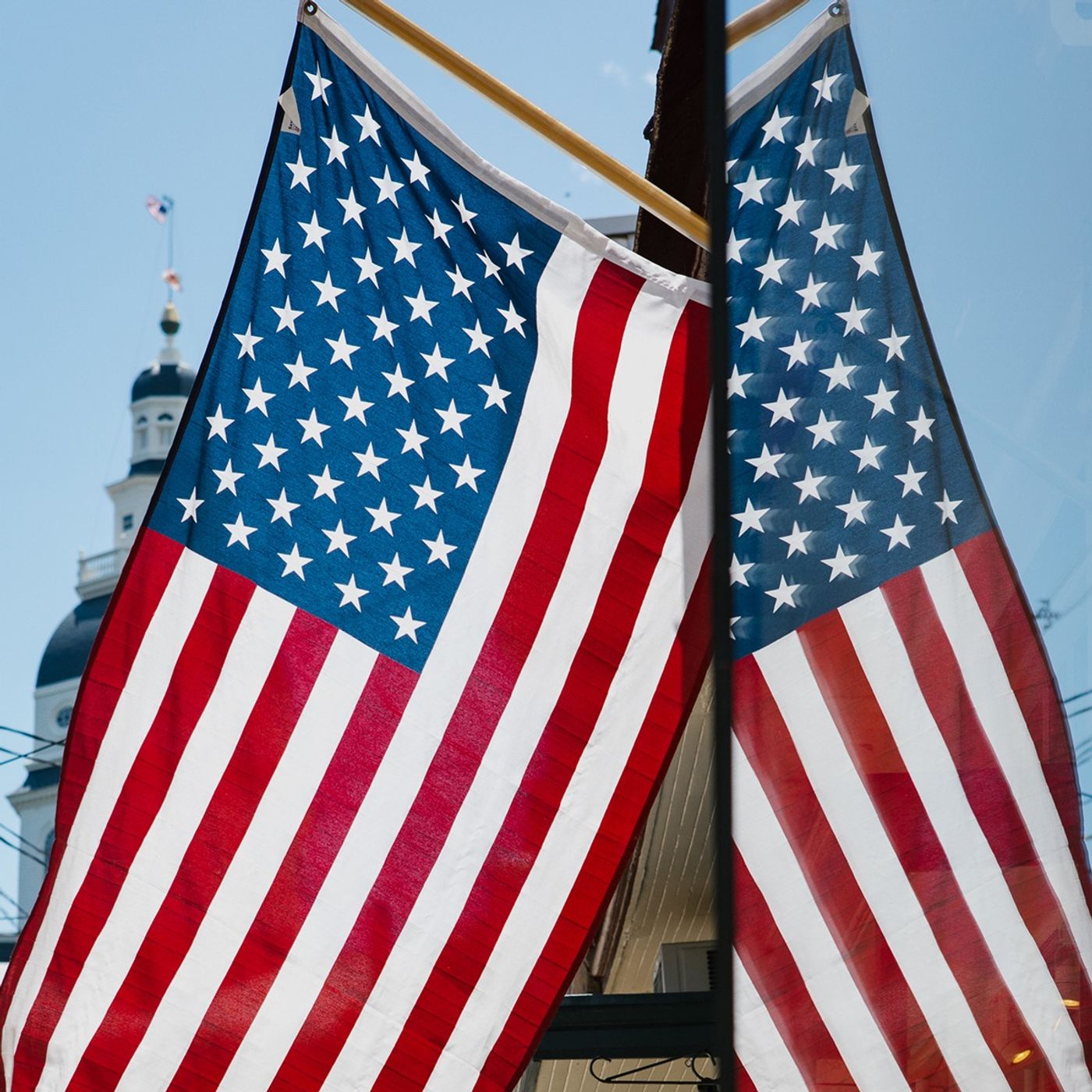
Photo: Michelle Gustafson for The New York Times
For more information on today’s episode, visit nytimes.com/thedaily. Transcripts of each episode will be made available by the next workday.
Subscribe today at nytimes.com/podcasts or on Apple Podcasts and Spotify. You can also subscribe via your favorite podcast app here https://www.nytimes.com/activate-access/audio?source=podcatcher. For more podcasts and narrated articles, download The New York Times app at nytimes.com/app.
Hosted by Simplecast, an AdsWizz company. See pcm.adswizz.com for information about our collection and use of personal data for advertising.