

🤖 AI Summary
Overview
This episode delves into the evolving understanding of Neanderthals, challenging long-held stereotypes of them as primitive and unintelligent. Through recent scientific discoveries, including DNA analysis and archaeological findings, Neanderthals emerge as complex, intelligent beings with behaviors and traits strikingly similar to modern humans.
Notable Quotes
- We badly underestimated the Neanderthal, and it's now time for an official reevaluation of the species.
– Michael Barbaro, on the need to rethink Neanderthals' place in human history.
- Imagine aliens finding LeBron James' skeleton and assuming all humans are 7 feet tall and super-athletic. That’s what happened with Neanderthals.
– Carl Zimmer, on how early misinterpretations shaped stereotypes.
- The story of Neanderthals speaks to humanity's tendency to denigrate those perceived as different.
– Franz Lidz, on the broader implications of Neanderthal misconceptions.
🧠 Rethinking Neanderthal Intelligence
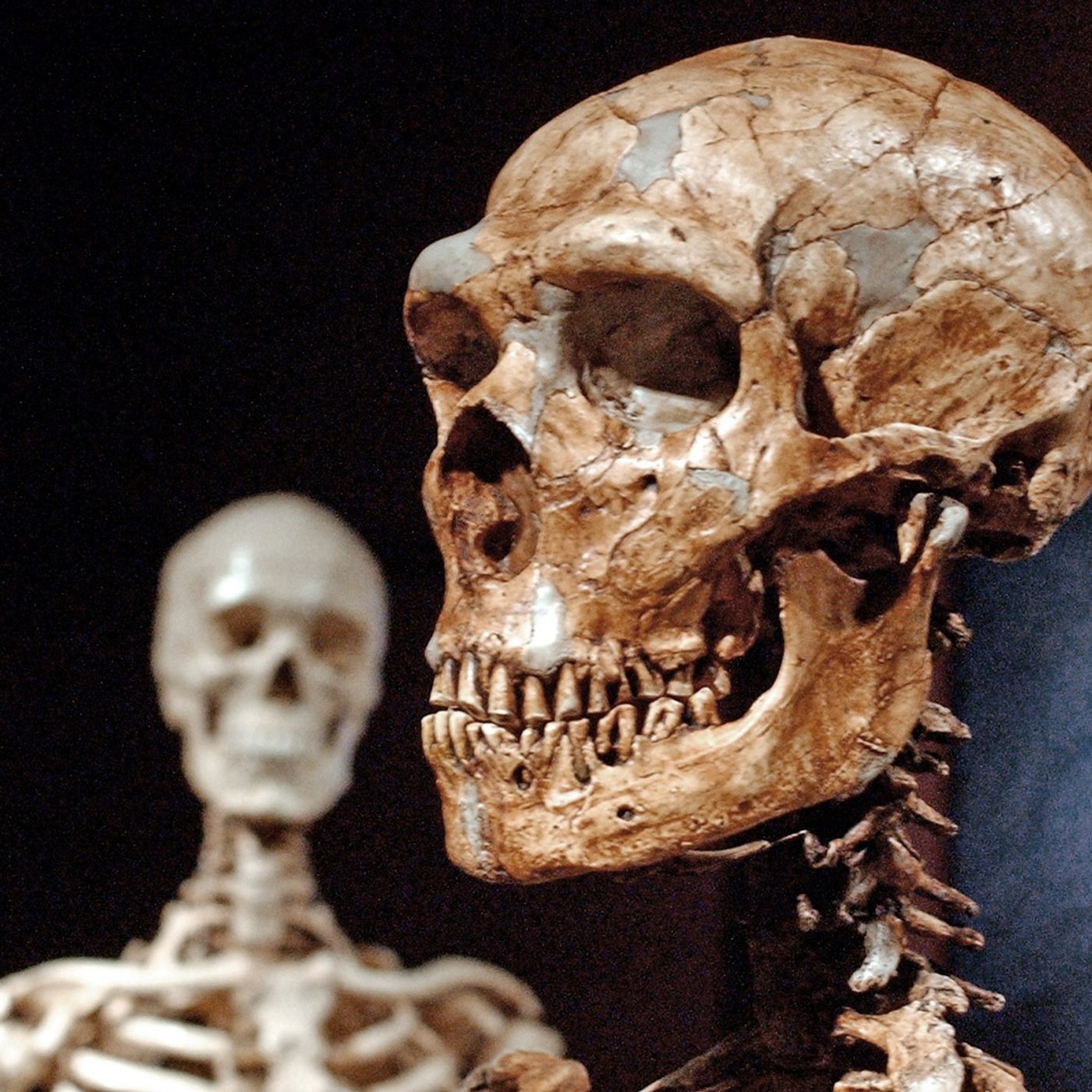
- Early depictions of Neanderthals as brutish stemmed from flawed reconstructions, like the Old Man of La Chapelle,
whose bent spine due to arthritis led to caricatures of Neanderthals as hunched and ape-like.
- Neanderthals had brains as large as modern humans and shared many genes related to intelligence, suggesting advanced cognitive abilities.
- Archaeological evidence reveals they buried their dead with flowers, made fire on demand, and created tools and art, including a 42,000-year-old crayon.
🧬 The Genetic Connection
- DNA analysis in the 2000s revealed that Neanderthals and Homo sapiens interbred, with modern humans carrying 1-4% Neanderthal DNA.
- This genetic overlap challenges the notion of Neanderthals as a separate, inferior species and highlights their integration into human ancestry.
- Even populations in Africa, once thought to lack Neanderthal DNA, show traces due to ancient migrations and interbreeding.
🎨 Neanderthal Culture and Creativity
- Neanderthals demonstrated cultural sophistication, wearing jewelry like eagle talon necklaces and possibly using symbolic art.
- They innovated with materials, such as melting tar to secure spear points, and likely had their own language for communication.
- These findings suggest Neanderthals were not only practical but also expressive and socially complex.
🌍 Denisovans: A New Human Lineage
- Denisovans, a newly identified human lineage, were discovered through DNA from a pinky bone in Siberia. They coexisted and interbred with both Neanderthals and modern humans.
- Fossils and DNA evidence place Denisovans across Asia, from Tibet to Laos, revealing their widespread presence and influence.
- Their discovery underscores the complexity of human evolution, with hints of other undiscovered human lineages still present in modern DNA.
🤔 Broader Implications for Humanity
- The reevaluation of Neanderthals forces a reconsideration of what it means to be human, blurring the lines between us
and them.
- The historical tendency to view Neanderthals as inferior reflects broader patterns of human prejudice and fear of difference.
- Embracing a richer, more interconnected view of humanity could dismantle outdated hierarchies and foster a deeper understanding of our shared history.
AI-generated content may not be accurate or complete and should not be relied upon as a sole source of truth.
📋 Episode Description
Pop culture has not been kind to the Neanderthal. In books, movies and even TV commercials, the species is portrayed as rough and mindless, a brutish type that was rightly supplanted by our Homo sapiens ancestors.
But even 40,000 years after the last Neanderthals walked the earth, we continue to make discoveries that challenge that portrayal. New research suggests Neanderthals might have been less primitive — and a lot more like modern humans — than we might have thought.
The Times science reporters Carl Zimmer and Franz Lidz discuss recent discoveries about Neanderthals, and what those discoveries can tell us about the origins of humanity.
On Today’s Episode:
Carl Zimmer writes the Origins column and covers news about science for The Times.
Franz Lidz writes about archaeology for The Times.
Background Reading:
Morning Person? You Might Have Neanderthal Genes to Thank.
What Makes Your Brain Different From a Neanderthal’s?
Photo: Frank Franklin II/Associated Press
Subscribe today at nytimes.com/podcasts or on Apple Podcasts and Spotify. You can also subscribe via your favorite podcast app here https://www.nytimes.com/activate-access/audio?source=podcatcher. For more podcasts and narrated articles, download The New York Times app at nytimes.com/app.